How Often To Replace Chainsaw Chain: Pro Guide 2026
Replace after 5–10 sharpenings or when teeth hit witness marks, stretch, or show damage.
If you wonder how often to replace chainsaw chain, you are not alone. After years of cutting, sharpening, and training crews, I have a clear, practical answer. In this guide, I’ll show you how to judge wear, avoid costly mistakes, and decide when a chain is done. You’ll learn the simple tests I use in the field and the rules pros follow to keep cuts fast, straight, and safe.

How often should you replace a chainsaw chain?
There is no fixed hour count. The real answer depends on your wood, your technique, and your maintenance. For most users, a chain lasts 5–10 sharpenings. Many pros sharpen lightly every tank and still get weeks of work from one loop. Homeowners may go a season or two.
Use these baselines as a starting point:
- Light homeowner use in clean softwood: Replace every 1–3 years or after 5–10 touch-ups.
- Regular landowner use in mixed hardwoods: Replace every few months or after 5–8 full sharpenings.
- Daily pro use in clean timber: Replace every 2–6 weeks, with frequent light touch-ups.
- Dirty wood, frozen logs, or sand exposure: Replace much sooner, sometimes the same day.
If you ask how often to replace chainsaw chain, the honest rule is this: replace when cutter length reaches the witness mark, the chain will not hold an edge, or it can no longer tension safely.

Signs your chainsaw chain needs replacing
Do not guess. Look and feel for these clear signs:
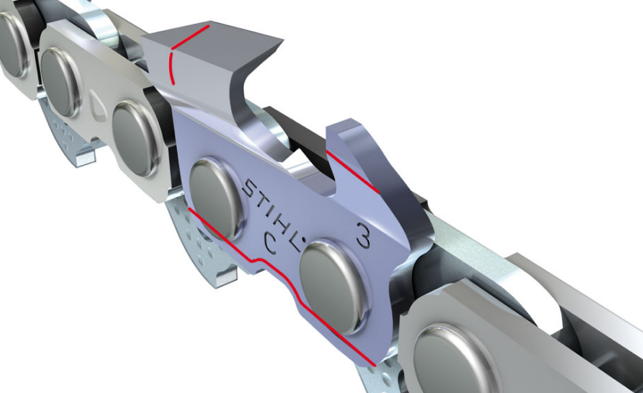
- Teeth at or below the witness mark. The small line on each top plate shows end of life.
- Cracked, chipped, or missing cutters. One or two can be ground out; many means replace.
- Stretched chain that cannot tension. If the adjuster is maxed out, the loop is done.
- Blue or black discoloration on cutters or drive links. That points to heat damage.
- Crooked cuts, heavy vibration, or smoke in clean wood. That means the edge is gone or the loop is uneven.
- Broken or loose rivets and shark-finned drive links. This shows severe wear.
- Won’t stay sharp for even one short cut in clean wood. The steel is fatigued.
Any two of these at once is a strong replace-now signal.
Factors that affect chain lifespan
How often to replace chainsaw chain changes with conditions:
- Wood species and condition. Dirty bark, hardwood knots, frozen wood, and storm debris eat cutters fast.
- Ground contact. One bump in soil or sand can dull a new chain in seconds.
- Foreign objects. Nails, wire, staples, and rocks are chain killers.
- Chain type. Full-chisel cuts fast but dulls faster; semi-chisel holds longer in grit.
- Maintenance habits. Sharpens little and often lasts longer than deep grinds.
- Depth gauge setup. Too low causes chatter and wear; too high makes slow, hot cuts.
- Bar oil and flow. Poor oiling overheats the loop and bar.
- Powerhead size and feed pressure. Overpowering or forcing the cut raises heat and wear.
- Storage and rust. Corrosion weakens edges and rivets.
Control what you can. Keep cuts clean. Touch up early. Oil well.

How to inspect and measure chain wear
You can check a loop in two minutes:
- Clean the chain. Wipe sap and grit. Oil lightly.
- Check top-plate length. Find the witness mark on a cutter. If the tooth is at the line, retire the loop.
- Inspect depth gauges. Use a raker gauge. File only to spec for your chain pitch.
- Scan cutters. Look for chips, cracks, and even length side-to-side.
- Check drive links and rivets. Look for burrs, peening, or looseness.
- Test tension range. If the adjuster screw runs out, the chain is stretched.
- Spin test. With brake off, pull the chain by hand (gloves on). It should slide smooth and oil should bead along the bar.
These steps anchor your decision on facts, not feel.
Maintenance tips to extend chain life
If you are thinking about how often to replace chainsaw chain, start with care that delays replacement:
- Touch up often. One or two strokes per cutter every tank beats deep grinds later.
- Use the right file. Match file diameter to chain pitch and hold the correct angle.
- Check depth gauges every 2–3 sharpenings. Use a guide for accuracy.
- Oil well. Use proper bar oil. Confirm flow by pointing at a light surface and revving; you should see a thin line of oil.
- Keep tension correct. Snug but able to pull by hand. Recheck when the chain warms.
- Flip the bar every chain swap. This evens rail wear and helps straight cuts.
- Avoid dirt. Use bucking stands. Wedge the kerf so the bar stays clear.
- Store dry and oiled. Lightly coat the loop after use to prevent rust.
These habits can double chain life and keep cuts smooth.

When to sharpen vs replace
Use this simple rule set:
- Sharpen if cutters are intact, above the witness mark, and the chain dulled in clean wood.
- Replace if three or more adjacent cutters are broken or cracked.
- Replace if fixing damage would remove more than one third of cutter length.
- Replace if the chain will not tension or shows loose rivets or kinks.
- Replace if the chain dulls again after a few cuts despite a proper grind. The steel may be heat-tired.
Asking how often to replace chainsaw chain gets easier when you follow these checks. You will know when a loop is past its safe, sharp life.

Safety, performance, and cost considerations
A tired chain is not only slow. It is risky and expensive:
- Safety. Dull or damaged chains kick more and grab fibers. That raises injury risk.
- Performance. A sharp loop self-feeds and cuts straight. You work less and finish faster.
- Tool life. A worn chain ruins bar rails and sprockets. That adds real cost.
- Money and time. Chains are cheap. Bars and downtime are not.
For most users, replacing a questionable chain saves both hands and dollars.
Choosing the right replacement chain
Match three specs first:
- Pitch. Common sizes are 3/8, .325, and 3/8 low-profile.
- Gauge. Typical gauges are .050, .058, and .063 inches.
- Drive link count. Check your bar stamp for the exact number.
Then choose features for your work:
- Cutter profile. Full-chisel for speed in clean softwood. Semi-chisel for longer edge in dirty wood.
- Low-kickback design. Good for new users and firewood saws.
- Skip or semi-skip. Longer bars and fewer cutters for easier filing and less drag.
- Carbide-tipped. Best for abrasive jobs, fence lines, or storm cleanup. More costly but durable.
Bring your old chain or bar to the shop so you get a perfect match.
Step-by-step: replacing a chainsaw chain
Follow this quick method I teach new crew members:
- Power down. Unplug, remove the battery, or pull the spark plug boot.
- Engage brake. Then loosen bar nuts and remove the clutch cover.
- Release brake on the cover, if required by your model.
- Remove the old chain and bar. Clean the groove and oil holes.
- Inspect the sprocket. Replace if teeth are hooked or sharp.
- Fit the bar and new chain. Ensure cutters face forward on the top run.
- Set tension. Snug until the tie straps just touch the bar. Pull by hand to check smooth travel.
- Tighten bar nuts while lifting the bar nose.
- Check oiling and run a warm-up cut. Recheck tension after the first cut.
This routine keeps you safe and protects the bar and sprocket.
Frequently Asked Questions of how often to replace chainsaw chain
How many times can I sharpen a chain before replacing it?
Most chains allow 5–10 sharpenings if you file lightly and keep rakers in spec. Replace when cutters reach the witness mark or damage is severe.
How often to replace chainsaw chain if I cut dirty logs?
Expect much faster wear. You may need to replace after just a few jobs, or even the same day, if you hit soil or sand.
Why does my new chain stretch so fast?
All new chains seat in and stretch a bit at first. Retension after the first cut and again after the first tank to protect the bar and sprocket.
Should I replace the drive sprocket with the chain?
It is smart to replace the rim or spur sprocket every two chains. A worn sprocket chews up new chains and causes fast, uneven wear.
Can I mix chain brands on my saw?
Yes, as long as pitch, gauge, and drive link count match your bar and sprocket. Always confirm specs on the bar stamp.
How tight should the chain be after installation?
It should snap back with light pull and not sag under the bar. You should be able to pull it by hand with gloves and feel smooth travel.
Is semi-chisel better if I cut firewood?
Often, yes. Semi-chisel stays sharp longer in mixed or slightly dirty wood. Full-chisel cuts faster in clean wood but dulls sooner.
Does bar wear change how often to replace chainsaw chain?
Yes. A worn or uneven bar will make a good chain cut crooked and wear fast. Dress or replace the bar to protect new chains.
Conclusion
There is no single calendar date for chain replacement. Watch the witness mark, check tension range, and judge edge life in clean wood. When in doubt, retire a tired loop and protect your hands, bar, and time. Make a habit of light, frequent touch-ups and clean cuts, and you will replace far less often.
Ready to dial in your saw care? Use this checklist on your next cutting day, share your results, and subscribe for more hands-on tips and field guides.