

1/2 Vs 3/4 Garden Hose: Which Size Is Best In 2026
Pick 3/4 inch for higher flow; choose 1/2 inch for lighter tasks.
Ever unroll a hose and watch the water crawl out like molasses? Or blast a sprinkler only to see a sad drizzle? The 1/2 vs 3/4 garden hose debate sits at the heart of that pain. Flow and pressure loss change a lot with hose size, length, and fittings. If you run long lines, use pressure washers, or feed big sprinklers, you likely need 3/4 inch. If you hand-water beds or fill pet bowls, 1/2 inch can be enough. Below, I break down adapters and fittings that make mixing sizes simple, safe, and leak-free.
Sanpaint 3/4 GHT to 1/2 NPT Male, 2-Pack

These Sanpaint adapters bridge 3/4-inch GHT hose threads to 1/2-inch NPT pipe threads. They help when your hose bibb or spigot is 3/4 GHT, but your plumbing run or device is 1/2 NPT. The brass build feels solid and resists corrosion. The threads arrive clean and easy to start by hand.
I use this kind of adapter for irrigation valves and filters that are native 1/2 NPT. It is a clean way to keep the 1/2 vs 3/4 garden hose system simple. You keep garden hose gear on one side and pipe gear on the other. The two-pack gives you a spare or a second hook-up for a split line.
Pros:
- Solid brass resists rust and wear
- Clean threads reduce cross-thread risk
- Standard 3/4 GHT to 1/2 NPT fit for common setups
- Two-pack offers value and backup
- Compact size fits tight spaces
- Good seal with tape and a gentle wrench
Cons:
- No included washers or tape
- Brass can mar if overtightened
- Not a swivel; fixed orientation
My Recommendation
Pick this if you need a simple bridge from a 3/4 GHT hose line to a 1/2 NPT device. It helps when you mix lawn sprinklers, filters, or valves. If you compare 1/2 vs 3/4 garden hose setups, this adapter lets you test both with the same backbone. It is a low-cost way to tune flow and layout before you buy more gear. Great for DIY irrigation and hose-to-pipe transitions.
| Best for | Why |
|---|---|
| Hose-to-pipe transitions | Matches 3/4 GHT to 1/2 NPT with a tight seal |
| Compact installs | Short body and clean threads save space |
| Testing 1/2 vs 3/4 garden hose | Switch gear without repiping |
YELUN 1/2 NPT to 3/4 GHT Ball Valve Bibb

This heavy brass YELUN bibb has a 1/2-inch NPT inlet and a 3/4-inch GHT outlet. The long-handle ball valve gives smooth on/off and fine control. Flow is strong due to the full-bore design. It threads onto a 1/2-inch pipe stub and turns it into a hose-ready spigot.
I like ball valves for fast control near drip lines. The long handle is great with gloves. If you compare 1/2 vs 3/4 garden hose setups, this bibb feeds either size hose with a 3/4 GHT outlet. Use a 1/2 hose for light tasks, or a 3/4 hose for long runs and high-flow gear.
Pros:
- Full-flow ball valve for strong output
- Long handle is easy to use
- Heavy brass body built to last
- Standard 3/4 GHT outlet suits most hoses
- Ideal for drip or sprinkler lines
- Good control over partial flow
Cons:
- Needs pipe thread sealant or tape
- Handle clearance may need space
- Heavier than basic bibbs
My Recommendation
This is a smart upgrade if you want strong, smooth control from a 1/2-inch pipe stub. It shines where you open and close lines many times a day. For 1/2 vs 3/4 garden hose choices, pair this bibb with 3/4 hose to power big sprinklers, or step down with adapters for fine watering. The value is high for a full-bore valve with a robust handle.
| Best for | Why |
|---|---|
| High-flow watering | Full-bore ball valve keeps pressure and volume |
| Glove use | Long handle is easy to grab and turn |
| Mixed hose sizes | 3/4 GHT outlet supports 1/2 vs 3/4 garden hose setups |
Horiznext 1/2 NPT-F to 3/4 GHT-M Spigot
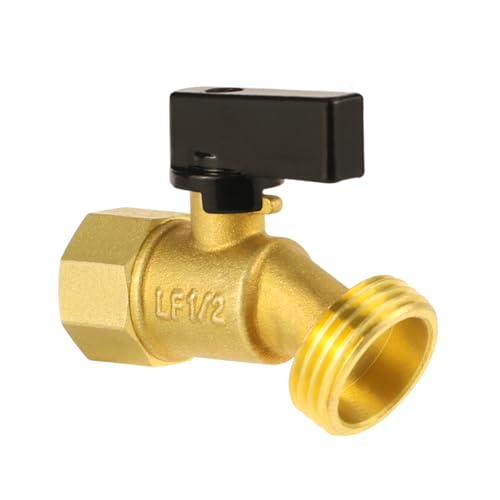
This Horiznext outdoor faucet converts a 1/2-inch NPT female connection to a 3/4-inch GHT male thread. It is a classic hose bibb layout for patios and gardens. Brass construction handles the weather and daily use. The compact body fits beside siding, brick, or block.
It is handy for new installs or swaps. If you eye the 1/2 vs 3/4 garden hose debate, this spigot keeps options open. Use a short 1/2-inch hose for hand watering. Or run a 3/4-inch hose for long feeder lines and less pressure drop.
Pros:
- Brass build for outdoor durability
- Standard 3/4 GHT outlet fits most hose ends
- Compact, simple, and easy to install
- Good base for sprinklers or drip manifolds
- Threads cleanly with tape
- Budget-friendly spigot upgrade
Cons:
- No built-in vacuum breaker
- Handle shape may vary by batch
- Needs careful sealing at NPT side
My Recommendation
Choose this when you need a basic, reliable faucet with a 3/4 GHT outlet. It is a clean base to test 1/2 vs 3/4 garden hose runs. Add a breaker if code needs it. For most yards, this gives enough flow at a fair price and leaves room to scale up later.
| Best for | Why |
|---|---|
| Simple hose hookups | Direct 1/2 NPT to 3/4 GHT conversion |
| Budget installs | Solid value without extra frills |
| Testing hose sizes | Lets you compare 1/2 vs 3/4 garden hose easily |
Sanpaint 1/2 Hose Mender Kit, 3/4 GHT, 3 Sets

This kit repairs 1/2-inch ID garden hoses and ends them with 3/4 GHT. You get three barbed menders and clamps. The brass parts feel sturdy and grip well. It is a fast fix for kinks, blowouts, or crushed ends.
I like that it upgrades a 1/2-inch hose with a proper GHT end. That makes mixing 1/2 vs 3/4 garden hose parts simple. The clamps bite cleanly with a nut driver or flathead. A 10-minute fix can save a season of use.
Pros:
- Extend life of 1/2-inch hoses
- 3/4 GHT end works with standard fittings
- Brass barbs grip tubing well
- Includes stainless clamps
- Three complete repair sets
- Quick DIY with simple tools
Cons:
- Clamp edges can be sharp
- Not ideal for very soft hoses
- Requires accurate hose ID sizing
My Recommendation
If you own light hoses that you do not want to toss, get this. It lets you fix leaks and standardize ends. That is key when you compare 1/2 vs 3/4 garden hose add-ons. The kit is a small spend that prevents big waste and keeps your gear uniform.
| Best for | Why |
|---|---|
| Repairing 1/2-inch hoses | Barbed menders and clamps hold tight |
| Standard fittings | 3/4 GHT end fits most accessories |
| Budget-friendly fixes | Three sets extend hose life |
3/4 GHT-F to 1/2 NPT-M Adapter, 2-Pack

This adapter turns a 3/4-inch GHT male spigot into a 1/2-inch NPT male pipe end. It is great when you want to feed a filter, regulator, or manifold that uses 1/2 NPT. The brass female GHT side includes a washer groove for a tight seal. The two-pack is handy for left and right yard spigots.
In the 1/2 vs 3/4 garden hose decision, this helps you keep the hose side standard and convert only where needed. Install is simple: hand snug the GHT, then wrench the NPT side with tape. It is a tidy way to add drip gear or a pressure gauge.
Pros:
- Female GHT seals with a flat washer
- Male 1/2 NPT works with many devices
- Solid brass construction
- Two-pack boosts value
- Quick tool-free start on GHT side
- Good for gauges and regulators
Cons:
- Washer not always included
- Fixed body, no swivel
- Not for potable use unless rated
My Recommendation
Use this when you want to insert 1/2-inch pipe gear at a hose spigot. It keeps your 3/4 GHT world intact but allows a neat NPT branch. In 1/2 vs 3/4 garden hose planning, it supports a hybrid setup. The result is clean, modular plumbing with easy service.
| Best for | Why |
|---|---|
| Adding filters/regulators | NPT side links to common devices |
| Modular setups | Quick GHT connection and removal |
| Hybrid hose systems | Ideal for 1/2 vs 3/4 garden hose mixes |
TALEGEN 1/2 PEX-M x 3/4 GHT-M, 3-Pack

These TALEGEN fittings connect 1/2-inch PEX tubing to a 3/4-inch GHT male outlet. They work with common crimp or clamp PEX tools. Brass bodies handle outdoor duty and UV exposure if shaded. Use them for irrigation taps, hose bibb branches, or test lines.
When you compare 1/2 vs 3/4 garden hose options, PEX adds a light, flexible backbone. You can run 1/2-inch PEX through a crawlspace, then exit with a 3/4 GHT for a hose. The 3-pack supports multi-zone installs. It is a neat way to tie house plumbing to hose gear.
Pros:
- PEX-compatible for fast installs
- Durable brass thread end
- 3-pack covers multiple outlets
- Great for drip or hose bibb branches
- Simple, tool-friendly design
- Good value for PEX systems
Cons:
- Requires PEX tools and rings
- Needs support and strain relief
- Not a swivel connector
My Recommendation
Get this if your supply is PEX and you want hose-ready taps. It makes 1/2 PEX to 3/4 GHT transitions quick and clean. In the 1/2 vs 3/4 garden hose choice, you can keep 1/2 PEX inside walls and use 3/4 hoses outside for flow. The 3-pack fits multi-zone yards at a smart price.
| Best for | Why |
|---|---|
| PEX-based yards | Direct 1/2 PEX to 3/4 GHT transition |
| Multi-zone setups | Three fittings for several branches |
| Flow upgrades | Use 3/4 hoses where you need volume |
Kbrotech 3/4 GHT-F x 1/2 NPT-M, 2-Pack

The Kbrotech pair adapts any 3/4-inch GHT spigot to a 1/2-inch NPT male pipe. It is useful when you add in-line devices, splitters, or a permanent manifold. Threads are cut well and seat with little effort. The brass feels dense and well machined.
If your plan weighs 1/2 vs 3/4 garden hose pros and cons, this lets you branch off with pipe-grade parts. It is a tidy, standard path into NPT gear. Add tape, snug it up, and you have a clean feed to filters or regulators.
Pros:
- Female GHT mates to standard hose bibbs
- Male 1/2 NPT for easy device hookup
- Two-pack for dual spigots
- Brass body for long life
- Clean machining and fit
- Works with gauges and tees
Cons:
- No swivel on the NPT side
- Washer fit may vary by gasket brand
- Not lead-free rated for drinking lines
My Recommendation
Use this if you want to blend hose gear with pipe-based controls. It is perfect at a spigot where you plan a more permanent setup. For 1/2 vs 3/4 garden hose planning, it keeps hose use easy but gives pipe-level flexibility. Good price for a solid, simple adapter pair.
| Best for | Why |
|---|---|
| Spigot-to-manifold | Clean path from GHT to 1/2 NPT |
| Drip conversions | Pair with filters and regulators |
| Hose/pipe hybrid builds | Supports 1/2 vs 3/4 garden hose mixes |
Litorange 3/4 GHT to 1/2 NPT Swivel, 2-Pack

Litorange adds a swivel female GHT to a 1/2-inch NPT connector. The swivel makes hose-side installs faster with less twist. The lead-free brass suits outdoor use and potable-safe projects if rated. You get two units for dual lines or spare parts.
The swivel is the hero here. It saves strain on hose ends and fittings. For the 1/2 vs 3/4 garden hose debate, this helps you test lines without fighting orientation. It is also great near timers or splitters where space is tight.
Pros:
- Swivel GHT side reduces torque
- Lead-free brass option
- Two-pack boosts value
- Good for tight spaces and quick swaps
- Standard 1/2 NPT male end
- Clean machining and seal
Cons:
- Swivel adds a moving part
- Washers may need periodic replacement
- Not for extreme pressure use
My Recommendation
Choose this if you reconfigure gear often or want less stress on joints. The swivel helps when you compare 1/2 vs 3/4 garden hose setups in spring. It is also friendly for timers and splitters that you remove in winter. The two-pack is great for front and back yards.
| Best for | Why |
|---|---|
| Frequent changes | Swivel makes on/off simple |
| Tight installs | Less twist in cramped spots |
| Hybrid hose systems | Supports 1/2 vs 3/4 garden hose tests |
GESHATEN 3/4 GHT-M x 1/2 NPT-M, 2-Pack

These GESHATEN adapters give you male threads on both ends: 3/4-inch GHT and 1/2-inch NPT. They can join a female GHT hose fitting to a female NPT device. The brass is hefty and the shoulders accept a wrench. The two-pack gives you flexibility for projects.
This format is less common but very useful for special cases. It is a quick bridge for filters, pumps, or custom manifolds. If you test 1/2 vs 3/4 garden hose performance, this adapter can slot between two female parts with ease. It is a time saver when you need it.
Pros:
- Male-to-male design fills a gap
- Strong brass body with wrench flats
- Two-pack for backup and multi-use
- Good for custom irrigation rigs
- Works for pump or filter hookups
- Clean threading and fit
Cons:
- Less common need vs standard adapters
- No swivel or washer included
- Needs careful alignment
My Recommendation
Grab this if your layout demands male threads on both sides. It shines in custom builds or when you adapt unique gear. In 1/2 vs 3/4 garden hose experiments, it lets you link female-only parts without a hardware run. The price for a two-pack is fair for what it solves.
| Best for | Why |
|---|---|
| Custom manifolds | Bridges female GHT to female NPT |
| Pumps and filters | Male threads where needed |
| On-the-fly fixes | Handy spare for problem spots |
Brass 1/2 NPT-M to 3/4 GHT Hose Bibb
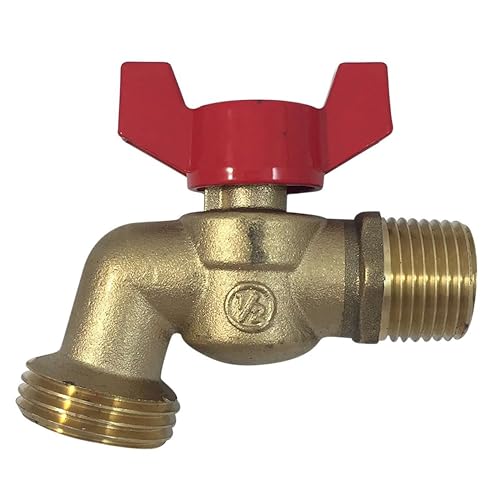
This brass ball hose bibb has a 1/2-inch NPT male inlet and a 3/4-inch hose outlet. The butterfly handle is compact and easy to flick. The valve body is tough and resists wear. It is a good replacement for older, leaky sillcocks.
The full-flow ball design supports high output. So you can pair it with 3/4-inch hoses for better flow across long runs. If you weigh 1/2 vs 3/4 garden hose setups, this bibb gives the hose side the best start. It is a smart, lasting upgrade at a fair cost.
Pros:
- Full-port ball valve boosts flow
- Compact butterfly handle
- 3/4 GHT outlet fits standard hoses
- Durable brass build
- Good for replacements or new installs
- Clear on/off control
Cons:
- No frost-free feature
- Butterfly handle may be tighter with gloves
- Needs thread sealant
My Recommendation
Use this if you want a stout, smooth hose bibb with strong flow. It is ideal for long hose runs, big sprinklers, or pressure washers. In 1/2 vs 3/4 garden hose debates, it helps 3/4 shine, yet still handles 1/2 for light tasks. The long-term value is strong for brass and a ball valve design.
| Best for | Why |
|---|---|
| High-demand watering | Full-port valve keeps volume high |
| Tight spaces | Butterfly handle is compact |
| Mixed hose use | Works with 1/2 vs 3/4 garden hose sizes |
Sanpaint 3/4 GHT to 1/2 NPT Male, 2-Pack
This is the same format as the first Sanpaint listing and deserves a second look. The 3/4 GHT male to 1/2 NPT male design bridges hose and pipe gear in seconds. Brass threads engage well and seal with tape. The compact size leaves room for other fittings.
As you compare 1/2 vs 3/4 garden hose performance, these are the sort of adapters that keep systems flexible. You can feed a 1/2-inch filter or regulator without changing your spigot. It is a small piece that unlocks a lot of layouts.
Pros:
- Standard bridge from hose to pipe
- Corrosion-resistant brass
- Two-pack for multi-point use
- Compact and easy to handle
- Good thread quality
- Works for permanent or test setups
Cons:
- No swiveling feature
- Requires sealant for NPT
- Not rated for hot water above spec
My Recommendation
If you move between hose and pipe gear often, keep these in your toolbox. They make 1/2 vs 3/4 garden hose experiments and upgrades simple. The cost is small compared to the time saved. A good staple for any hose-based yard system.
| Best for | Why |
|---|---|
| Toolbox essential | Common bridge size that solves many issues |
| Test benches | Rapid connect for devices and sensors |
| Seasonal changes | Easy to add or remove gear |
3/4 GHT-F x 1/2 NPT-M Adapter, 2-Pack
This variant converts a hose spigot with male GHT to a 1/2-inch male NPT. It is the inverse of some other adapters and fits a slightly different need. Brass keeps it strong in sun and rain. It threads smoothly and seals well with a flat washer on the GHT side.
I use this to drop into NPT gear like filters or pressure gauges. It also helps when you want to build a rigid manifold off a hose bibb. For the 1/2 vs 3/4 garden hose debate, this gives a neat way to control pressure and flow before a hose run.
Pros:
- Simple, robust construction
- Good thread engagement
- Two units for dual spigots
- Pairs with many NPT accessories
- Works with washers for easy sealing
- Budget-friendly set
Cons:
- No swivel action
- Needs the right washer size
- May need a wrench for removal
My Recommendation
Pick this adapter if you want to mount NPT devices at the spigot. It suits gauges, filters, and regulators. In 1/2 vs 3/4 garden hose planning, it lets you tune the system at the source. It is a practical, low-cost piece to keep on hand.
| Best for | Why |
|---|---|
| Gauge installs | Easy path from GHT to NPT threads |
| Filter setups | Clean alignment with standard housings |
| Source control | Adjust pressure before hose runs |
FAQs Of 1/2 vs 3/4 garden hose
Is a 3/4-inch hose always better than a 1/2-inch hose?
Not always. 3/4-inch gives more flow and less drop on long runs. 1/2-inch is lighter and fine for short, simple jobs.
How does hose length affect 1/2 vs 3/4 garden hose choice?
Longer hoses lose more pressure. A 3/4-inch hose keeps flow better over distance. For short runs, 1/2-inch is often enough.
Will a 1/2-inch spigot restrict a 3/4-inch hose?
It can. The narrow point limits total flow. But a 3/4-inch hose still cuts friction loss along the run.
What thread standards apply to garden hoses?
Garden hoses use 3/4-inch GHT (NH) threads. Pipe parts use NPT. Adapters bridge GHT to NPT sizes.
Is 1/2-inch better for drip irrigation?
Often yes. 1/2-inch lines feed emitters well. Use 3/4-inch feeders if the zone is large or long.
Final Verdict: Which Should You Buy?
Pick 3/4-inch if you run long hoses, big sprinklers, or a pressure washer. It holds flow and reduces drop. If you hand-water beds or fill buckets, 1/2-inch is simple and light.
The real win is flexibility. Use adapters to test 1/2 vs 3/4 garden hose on your yard, then lock in what works best.


