

3/4 Garden Hose Vs 5/8: Which Size Is Best For You
Choose 3/4-inch for high flow; 5/8-inch for lighter, everyday use.
You grab your sprinkler, twist on the hose, and watch the spray fizzle. Or your pressure washer sputters because the hose can’t feed it enough water. I’ve been there. The great debate—3/4 garden hose vs 5/8—comes down to flow, pressure, and comfort. A 3/4-inch hose moves more water, fast. A 5/8-inch hose is lighter and easier to handle. The trick is picking the right size for your setup—and using the right fittings so nothing leaks. Below, I break it down like I do for my own yard, then share repair kits I’ve used that fit both sizes and save money on replacements.
Biswing Repair Kit 5/8 Barb x 3/4 GHT, 4-Pack

This Biswing set is a quick, budget-friendly way to fix hose ends and stop leaks. The kit includes both male and female 3/4 GHT connectors with 5/8-inch barbs, which is the most common hose size for homes. The aluminum body is light yet sturdy enough for frequent use. The stainless-steel clamps bite well and hold pressure if you snug them evenly.
I like this kit for fast repairs when a 5/8-inch hose splits at the end. It restores a clean, tight connection to nozzles or sprinklers. The parts thread smoothly and seal well with the included washers. If you’re comparing 3/4 garden hose vs 5/8 performance, this helps your 5/8-inch hose deliver steady flow without drips.
Pros:
- Includes both male and female ends for flexible repairs
- 5/8-inch barb fits the most common home hose size
- Aluminum connectors resist rust and keep weight low
- Stainless clamps hold tight under backyard water pressure
- Good value with four complete repair sets
Cons:
- Aluminum can gall if over-tightened against brass fittings
- Not ideal for heavy commercial abuse
- Limited to 5/8-inch hose interiors
My Recommendation
Choose this Biswing kit if you run 5/8-inch hoses for daily watering and want a simple, low-cost fix for worn ends. It’s perfect for nozzles, sprinklers, and hose reels. When deciding between 3/4 garden hose vs 5/8, this set plays to the strengths of a standard 5/8-inch hose: easy handling and enough flow for most yards.
| Best for | Why |
|---|---|
| Everyday 5/8-inch hose repair | Barbs match common hose size; quick, tight seal |
| Lightweight setups | Aluminum keeps weight down and resists corrosion |
| Budget-friendly fixes | Four sets cover multiple hoses or spare parts |
Hourleey Repair Connectors for 3/4 or 5/8, 4-Set

The Hourleey set fits both 3/4-inch and 5/8-inch hoses, which is handy if you have a mix at home. The clamps and barbed fittings pair with either size by adjusting clamp pressure and hose insertion depth. The kit ships as four sets, so you can fix several hoses or keep backups ready.
These connectors are a good match for homeowners testing 3/4 garden hose vs 5/8 across different zones. I’ve used them to standardize ends so all hoses click into the same sprayers. The fit is snug and stays put if you cut the hose clean and seat it fully. It’s a simple way to stop leaks and extend hose life.
Pros:
- Works with both 3/4-inch and 5/8-inch hoses
- Four complete repair sets for multi-hose yards
- Barbs grip well when clamped properly
- Threads feel smooth, reduce cross-thread risk
- Great for standardizing mixed hose fleets
Cons:
- Clamp quality is decent but not heavy-duty
- Needs careful seating on 3/4-inch hoses for a perfect seal
- Finish may scuff with rough storage
My Recommendation
Pick Hourleey if you juggle hoses in both sizes and want one fix that fits all. It helps you compare 3/4 garden hose vs 5/8 in real use because you remove end-leak variables. Good for families, gardens with multiple zones, or anyone who shares hoses with neighbors.
| Best for | Why |
|---|---|
| Mixed hose sizes | Compatible with 3/4-inch and 5/8-inch hoses |
| Quick, consistent repairs | Uniform ends reduce leaks across gear |
| Home gardens | Good balance of price, ease, and reliability |
DBR Tech Metal Hose Repair Kit, 5/8 & 3/4, 2-Set

DBR Tech leans heavy-duty with metal bodies and a leak-focused design. The set supports both 5/8-inch and 3/4-inch hoses, which is great for high-flow tasks. Threads are clean, and the ferrules are robust, so you can tighten without fear. This kit includes male and female pieces for two full repairs.
If you run pressure washers or high-demand sprinklers, 3/4 garden hose vs 5/8 is a real concern. I’ve used this set on a 3/4-inch hose feeding a booster pump. The result was dry connections, strong flow, and reliable performance. It’s a smart choice when cheap plastic menders won’t cut it.
Pros:
- Heavy-duty build for higher pressures
- Works with 5/8-inch and 3/4-inch hoses
- Male and female ends for complete fixes
- Reliable sealing with solid ferrules
- Good for pros or serious DIY use
Cons:
- Costs more than light-duty kits
- Heavier than aluminum parts
- Two sets may not cover multi-hose needs
My Recommendation
Choose DBR Tech for high-demand jobs. If you lean toward 3/4-inch hoses for volume and compare 3/4 garden hose vs 5/8 for power tools, this is your move. It suits landscapers, large lawns, and pressure washer owners who hate leaks.
| Best for | Why |
|---|---|
| Heavy-duty watering | Metal strength and better sealing under pressure |
| 3/4-inch hose users | Supports higher flow without weak points |
| Pro-level reliability | Durable build outlasts plastic menders |
Sanpaint Brass Repair Connector for 3/4 or 5/8

Sanpaint goes with solid brass, which is my go-to for long life and smooth threads. The connectors fit both 3/4-inch and 5/8-inch hoses, so they’re easy to keep on hand for any repair. Brass stands up well to sun, water, and thread wear. The clamps are simple and get the job done.
When comparing 3/4 garden hose vs 5/8, brass connectors are a safe bet for either size. The sealing is consistent, and cross-threading is less likely than with softer metals. If you want a classic, dependable material, this pair is very hard to beat.
Pros:
- Solid brass for durability and smooth threading
- Fits both 3/4-inch and 5/8-inch hoses
- Good corrosion resistance outdoors
- Simple, effective clamp system
- Works well with most nozzles and reels
Cons:
- Heavier than aluminum alternatives
- Clamp screws can strip if overtightened
- Two-piece set may not cover multiple repairs
My Recommendation
Pick Sanpaint if you like the feel and longevity of brass. It’s a clean fix for any standard garden setup. Whether you favor 3/4 garden hose vs 5/8, this connector holds tight and threads well with faucets and accessories.
| Best for | Why |
|---|---|
| Long-lasting repairs | Brass resists wear and corrosion |
| Mixed-size hoses | Supports 3/4-inch and 5/8-inch |
| Smooth threading | Brass reduces cross-thread risk |
Hooshing 5/8 Barb to 3/4 GHT Female, 2-Pack

This Hooshing pair is a 5/8-inch barb to 3/4-inch female GHT swivel. It’s ideal when your hose end is damaged but you still want a swivel connection to reduce twists. The brass body is robust, and the swivel turns smoothly when hand-tightened. Clamps and washers are included for a complete fix.
For the 3/4 garden hose vs 5/8 debate, this favors folks using 5/8-inch hoses with standard faucets and nozzles. The swivel reduces stress at the connection, which is a common fail point. It’s a neat, frustration-saving upgrade over basic fixed fittings.
Pros:
- Swivel female end reduces kinks and twisting
- Solid brass for longer life
- 5/8-inch barb fits the most common hose size
- Smooth, easy threading at the faucet
- Includes clamps and washers
Cons:
- Not sized for 3/4-inch hose interiors
- Swivel needs snugging to avoid slight drips
- Two-pack may be limiting for big gardens
My Recommendation
Get this if you want a smooth swivel on a 5/8-inch hose. It’s great near spigots or reels where hoses twist. It also makes comparing 3/4 garden hose vs 5/8 feel fair because you remove connection strain as a factor.
| Best for | Why |
|---|---|
| Swivel at spigot | Reduces kinks and hand strain |
| 5/8-inch hose owners | Perfect internal diameter match |
| Nozzle swaps | Swivel speeds up attachments |
Rierdge 3/4 or 5/8 Hose Repair Kit, 6 Sets
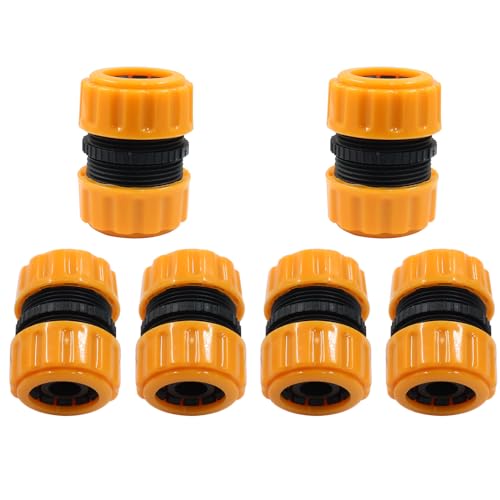
Rierdge delivers a big value pack: six repair sets that fit 3/4-inch or 5/8-inch hoses. If your yard eats hoses or you manage rentals, this is cost-effective. The connectors are metal, and the clamps are easy to tighten with a flathead. You can fix ends or create extensions by joining two hoses.
For testing 3/4 garden hose vs 5/8 across zones, this set is a dream. You can repair, standardize, and extend without running to the store. Keep a utility knife handy for square cuts, and you’ll get a clean, drip-free seal on either size.
Pros:
- Six complete sets cover many repairs
- Fits both common hose sizes
- Good for making custom lengths and extenders
- Solid feel with reliable threads
- Great price-per-repair value
Cons:
- Bulk pack may be overkill for small yards
- Clamps are basic; consider upgrading for heavy use
- Metal composition not as heavy-duty as premium brass
My Recommendation
Choose Rierdge if you maintain several hoses or want spares on hand. It’s ideal for landlords, community gardens, or anyone dialing in 3/4 garden hose vs 5/8 across different tasks. Stock once, fix anytime.
| Best for | Why |
|---|---|
| Multiple hose repairs | Six sets in one affordable pack |
| Mixed sizes | Works on 3/4-inch and 5/8-inch |
| DIY extensions | Join lengths to create custom runs |
Heavy-Duty Aluminum Hose Repair Fittings, 4-Pack

This four-pack uses heavy-duty aluminum for a strong yet light fix. It fits both 3/4-inch and 5/8-inch hoses and includes male and female connectors. The machining is clean, which helps avoid leaks at the thread. Clamps are included and grip well with a simple screwdriver.
Aluminum is a nice middle ground if you want more strength than plastic without the weight of brass. In 3/4 garden hose vs 5/8 testing, these fittings made both sizes feel tight and reliable. If you handle hoses daily, they’re a smart, economical pick.
Pros:
- Durable aluminum is strong and lightweight
- Fits both 3/4-inch and 5/8-inch hoses
- Clean threads for easy sealing
- Four sets cover common repair needs
- Good for everyday residential use
Cons:
- Not as tough as solid brass under abuse
- Can seize if overtightened against brass
- Finish may scratch with rough storage
My Recommendation
Use these if you want light connectors with a solid feel. They fit either hose size and handle regular watering well. For homeowners comparing 3/4 garden hose vs 5/8, these keep connections dry so you can judge flow and pressure fairly.
| Best for | Why |
|---|---|
| Daily watering | Lightweight yet durable aluminum build |
| Mixed hose fleets | Works on 3/4-inch or 5/8-inch |
| Budget-conscious buyers | Four sets offer solid value |
Hooshing 5/8 Barb x 3/4 GHT Female Adapter, 2PCS

This is a straightforward brass adapter for 5/8-inch hose ends with a 3/4-inch female GHT. It includes stainless clamps that resist rust. The brass body feels solid, threads smoothly, and seals well with a flat washer. It’s a reliable fix when a hose end splits or weakens.
If you’re exploring 3/4 garden hose vs 5/8, this adapter lets a 5/8-inch hose connect perfectly to standard faucets and nozzles. It’s simple, sturdy, and repeatable. Use it when you want a no-drama repair that lasts through seasons.
Pros:
- Solid brass for durability and clean threads
- Stainless clamp resists corrosion
- Perfect match for 5/8-inch hoses
- Two-pack covers two hoses
- Easy to install with basic tools
Cons:
- Not designed for 3/4-inch hose interiors
- No swivel; fixed connection only
- Two units may be few for larger setups
My Recommendation
Pick this when you need a simple, durable female end on a 5/8-inch hose. It’s great near spigots and for general watering. In the 3/4 garden hose vs 5/8 decision, this helps a 5/8-inch hose shine by eliminating end leaks.
| Best for | Why |
|---|---|
| Basic 5/8-inch hose repairs | Exact barb match; tight seal |
| Outdoor durability | Brass body, stainless clamps |
| Standard faucet/nozzle use | 3/4-inch GHT female thread |
Sanpaint Brass Repair Connectors, 3/4 or 5/8, 2-Set

This Sanpaint two-set uses brass connectors that fit both 3/4-inch and 5/8-inch hoses. The machining is clean, with predictable threading and a solid feel. It’s a good choice if you want a tidy, durable fix but only need a couple of repairs. Clamps and washers are included to finish the job.
In the 3/4 garden hose vs 5/8 match-up, this kit lets you keep both sizes running without buying new hoses. Brass also plays well with most outdoor fixtures, reducing wear at threads. It’s a safe, practical choice for small yards or balcony gardens.
Pros:
- Brass construction for longevity
- Works with 3/4-inch and 5/8-inch hoses
- Clean, consistent threading
- Includes clamps and washers
- Good for occasional repairs
Cons:
- Only two sets in the pack
- Heavier than aluminum options
- Clamp quality is basic
My Recommendation
Get this for high-quality, low-quantity repairs. If you’re deciding between 3/4 garden hose vs 5/8 and use both, this is a neat way to keep your setup consistent. It’s also a fine choice for gifting to a new homeowner.
| Best for | Why |
|---|---|
| Small repair needs | Two-set covers occasional fixes |
| Durable ends | Brass stands up to weather and wear |
| Mixed hose sizes | Works on 3/4-inch or 5/8-inch |
Hooshing 5/8 Barb x 3/4 GHT Male Adapter, 2PCS

This pair converts a 5/8-inch hose end to a 3/4-inch male GHT. It’s the right pick when you need to plug into accessories with female threads, like timers or sprayers. The brass is solid, and the barbs bite well with the included clamps.
If you’re pitting 3/4 garden hose vs 5/8, this adapter helps a 5/8-inch hose integrate with standard gear. Threading is clean, so hand-tightening is smooth. I like keeping a set in the shed for fast, reliable fixes.
Pros:
- Simple male adapter for 5/8-inch hoses
- Brass body lasts and threads well
- Good sealing with basic washers
- Two units cover common use cases
- Easy install with a flathead screwdriver
Cons:
- Not for 3/4-inch hose interior
- No swivel features
- Clamp steel could be thicker
My Recommendation
Choose this if your 5/8-inch hose needs a male thread for sprinklers or timers. In the 3/4 garden hose vs 5/8 debate, it lets you keep a lighter hose and still hook up to everything. It’s a classic, dependable fix.
| Best for | Why |
|---|---|
| Male-thread needs | 3/4-inch GHT male fits many accessories |
| 5/8-inch hose owners | Exact barb size ensures a snug seal |
| Quick repairs | Fast install with included clamp |
FAQs Of 3/4 garden hose vs 5/8
Which size delivers more water, 3/4-inch or 5/8-inch?
A 3/4-inch hose delivers more water volume. It’s better for long runs, sprinklers, and pressure-demand tools.
Is a 5/8-inch hose enough for most home gardens?
Yes. A 5/8-inch hose is lighter, easier to handle, and works well for daily watering and most nozzles.
Will a 3/4-inch hose increase pressure?
It lowers friction loss and preserves pressure at the tool. You feel stronger flow, especially over long distances.
Do all garden tools fit both sizes?
Most accessories use 3/4-inch GHT threads. The internal hose size differs, but the end thread standard is the same.
How do I pick between 3/4 garden hose vs 5/8?
Choose 3/4-inch for high flow, long runs, or pressure washers. Choose 5/8-inch for lighter handling and everyday use.
Final Verdict: Which Should You Buy?
Choose 3/4-inch if you want high flow for large lawns, long runs, or pressure washers. It reduces friction loss and keeps your tools fed.
Pick 5/8-inch for daily watering, lighter weight, and easy handling. For most homes, 3/4 garden hose vs 5/8 comes down to capacity versus comfort.


