Best Sand For Gardening: Top Picks And Uses 2026
Washed, sharp silica sand with uniform grains is best for gardening.
You want better drainage, fewer fungus gnats, and stronger roots. Yet every bag says “play,” “leveling,” or “construction,” and it gets confusing fast. I’ve tested sands in raised beds, pots, and even tricky clay. I’ve learned what clumps, what drains, and what burns a budget. Below, I break down the best sand for gardening, how to use it, and how to avoid common pitfalls. I include smart add-ons like sifters and amendments to fine-tune your mix. By the end, you’ll know which bag to buy, what to pair it with, and the simplest way to build a well-draining mix that plants love.
Sun Joe Ultra-Fine Silica Play Sand (50 lb)

This Sun Joe bag is an ultra-fine, uniform silica. It is clean, washed, and free of debris. It works for crafts and sensory tables. It also helps with seed-starting blends and top-dressing. The grains feel soft and consistent in hand.
For gardening, ultra-fine grains act more like silt. So I use it with care. I add a small share to seed trays. It evens moisture at the surface and stops algae crusts. It also discourages fungus gnats when used as a thin top layer.
Pros:
- Very clean, low dust, consistent silica grains
- Great for seed-starting and gentle top-dressing
- Helps reduce surface gnats in pots
- Easy to spread and level due to fine texture
- Large 50 lb bag offers strong value for coverage
Cons:
- Too fine for heavy drainage work in pots
- Can compact if used in large amounts
- Not ideal for cactus or succulent mixes alone
My Recommendation
If you need a clean, fine silica for seed trays or top-dressing, this fits. It is not the best sand for gardening when you want strong drainage. But it shines as a surface layer and blend finisher. Pair it with coarse sand or perlite for roots that crave air.
| Best for | Why |
|---|---|
| Seed-starting trays | Fine grains help with even moisture on top |
| Fungus gnat control | Thin top layer dries faster and blocks emergence |
| Leveling pot tops | Ultra-fine texture creates a neat, clean finish |
Boniosz 1–3mm Horticultural Silica Sand (2.4 lb)

This Boniosz bag hits the sweet spot for grain size. The 1–3mm range is right for drainage. It is a good pick for succulents, bonsai, and cacti. The bag is smaller, but it is tidy and easy to store. It is labeled for horticultural use.
I mix this sand into potting soil for airflow. I also use it as a top dressing that dries fast. That helps stems stay dry and firm. For many indoor plants, this is the best sand for gardening in small batches.
Pros:
- Ideal 1–3mm grain size for drainage and aeration
- Clean silica with low dust and no dyes
- Perfect for succulents, bonsai, and cacti
- Great as a breathable top dressing
- Easy to store and dose for small projects
Cons:
- Small bag is not cost-effective for large beds
- May need sifting for very uniform grain size
- Limited volume for big repotting days
My Recommendation
If you repot houseplants or succulents, pick this. It strikes a balance between flow and hold. It is the best sand for gardening in pots where you want better drainage. Start with a 1:1:1 mix of soil, this sand, and perlite for many arid plants.
| Best for | Why |
|---|---|
| Succulent potting | 1–3mm grains drain fast yet anchor roots |
| Top dressing indoors | Keeps stems dry and neat |
| Small-batch mixes | Compact bag is easy to store and pour |
2-Pack Gardening Soil Sifters (0.15/0.2 in Mesh)

Uniform sand makes better soil mixes. These sifters help you get there. The 0.15 and 0.2 inch meshes remove stones and clumps fast. Stainless handles add strength. The frames feel steady in hand.
I run sand and compost through them before mixing. That gives me even grain and fewer fines. Roots spread better in that blend. If you want the best sand for gardening, a sifter set like this is a smart add-on.
Pros:
- Two mesh sizes for custom screening
- Sturdy frames and stainless handles
- Speeds up prep for clean potting mixes
- Removes wood bits and small stones
- Improves drainage by removing fines
Cons:
- Manual sifting takes time for big jobs
- Mesh may clog with wet material
- Not sized to sit on standard buckets
My Recommendation
Choose this if you fine-tune every pot. It makes sense for bonsai and cacti fans. You will get even, airy media. That is key when chasing the best sand for gardening results in pots and trays.
| Best for | Why |
|---|---|
| Sifting sand and compost | Two mesh options clean and sort fast |
| Bonsai prep | Uniform media boosts root ramification |
| DIY soil labs | Control particle size for repeatable mixes |
Coarse Sand Stone for Succulents (5 lb)
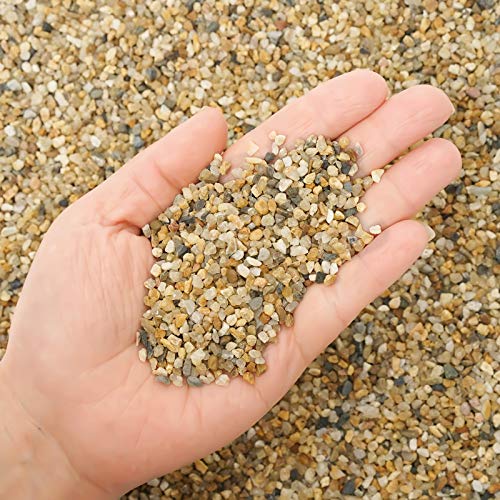
This is a coarse, rocky sand blend. It works as a top dressing and mix-in. The stones give fast drainage and a sharp look. In small pots, it keeps the crown dry. It also reduces soil splash when you water.
For succulents, I like rough texture near the surface. It helps air flow and dries fast. The bag is great for small projects. Use it in mixes for arid plants to chase the best sand for gardening indoors.
Pros:
- Coarse blend adds strong drainage
- Sharp look for finished pots
- Reduces splash and algae on top
- Useful for terrariums and bonsai
- Easy, clean 5 lb bag
Cons:
- Not pure silica sand; more gravel-like
- Can be too coarse for seed-starting
- Small volume for large planters
My Recommendation
Get this for looks and drainage. It pairs well with a 1–3mm silica core. It is not a full soil on its own. But it helps you build the best sand for gardening for succulents and cactus displays.
| Best for | Why |
|---|---|
| Top dressing succulents | Stays neat and dries fast around stems |
| Drainage boost | Coarse particles add air pockets |
| Terrarium accents | Natural look with stable placement |
UMUACCAN Kids Garden Tools Sand Set (6 pcs)
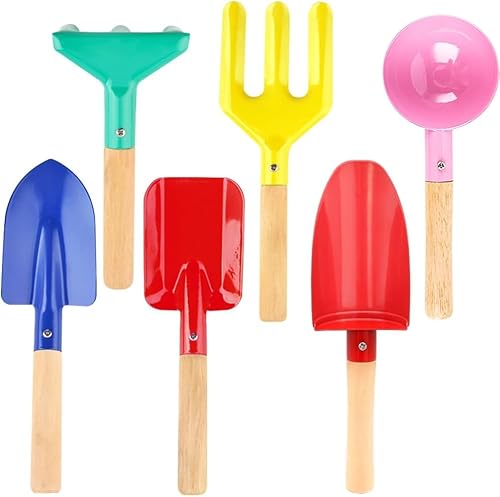
This set is a fun add-on for family gardens. The metal tools are small yet sturdy. Kids can help spread sand, scoop soil, and rake top dressings. The wood handles are smooth and fit small hands well.
When I add sand to beds, kids love to join in. These tools make it safe and fun. It turns chores into time together. While not the best sand for gardening, this kit supports the work.
Pros:
- Durable metal heads for real garden tasks
- Comfortable wooden handles for kids
- Six useful tool shapes, including shovel and rake
- Encourages learning and teamwork
- Great value gift for garden families
Cons:
- Not sized for heavy-duty adult use
- Metal can rust if left wet
- Tools are small for large garden jobs
My Recommendation
Pick this if your kids or grandkids love to help. It fits sandbox play and light garden work. It also helps teach soil care, like how sand aids drainage. It supports your hunt for the best sand for gardening by making setup a team win.
| Best for | Why |
|---|---|
| Family gardening days | Real tools sized for small hands |
| Spreading top dressings | Easy scooping and raking |
| Sandbox and yard play | Durable metal heads hold up |
Soil Sifter Pack, 3.8mm & 5mm Mesh (2 pcs)

This two-pack offers medium and coarse screens. The 3.8mm and 5mm meshes are great for sand work. They remove fines and bump up airflow. Handles give a solid grip when shaking. The set feels light but durable.
I use the 5mm to remove sticks and clods fast. Then I pass through 3.8mm for a tidy finish. That gives me the best sand for gardening blends that drain well. Pots stay lighter and roots breathe better.
Pros:
- Two mesh sizes for staged sifting
- Good fit for sand, compost, and soil
- Boosts drainage by trimming fines
- Comfortable grips reduce hand strain
- Solid value for frequent use
Cons:
- Smaller screens mean more batches
- Not designed to nest on buckets
- Fine dust may pass through without pre-wetting
My Recommendation
Choose this if you want a two-step sift. It makes sense for anyone chasing a very even media. You will see faster drain and fewer soggy pots. That is part of the best sand for gardening routine for exacting growers.
| Best for | Why |
|---|---|
| Two-stage screening | Removes clods, then fines for clean media |
| Succulent mixes | Consistent particle size aids root health |
| Compost finishing | Turns rough compost into pot-ready fines |
Svincolare Bucket Sifters, 1/4 in & 1/8 in Mesh
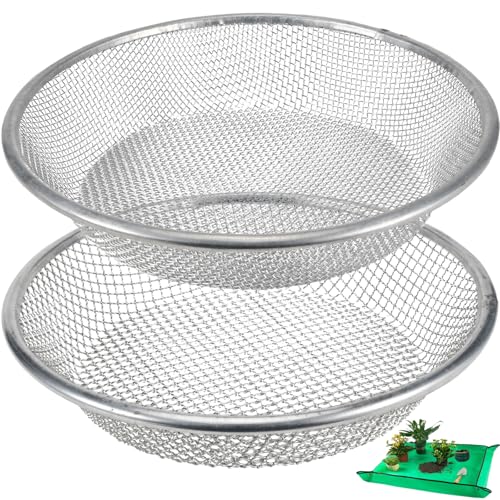
These round sifters sit on a 5-gallon bucket. That saves your back and speeds the job. The 1/4 inch and 1/8 inch meshes cover coarse and medium passes. A foldable repotting mat is included. The metal feels sturdy and fine for frequent use.
I like the bucket fit for less mess. It keeps sand, gravel, and fines contained. You can process a lot with less cleanup. For the best sand for gardening, this setup is efficient and tidy.
Pros:
- Fits standard 5-gallon buckets
- Two mesh sizes for better control
- Includes a handy repotting mat
- Reduces mess and cleanup time
- Great throughput for small spaces
Cons:
- Round frame limits area per shake
- Heavier loads can flex the mesh
- Not ideal for very wet materials
My Recommendation
Pick this if you want a bucket-based station. It is perfect for patios and balconies. Sift sand and soil with less sprawl. That keeps your search for the best sand for gardening clean and quick.
| Best for | Why |
|---|---|
| Balcony gardeners | Compact setup over a bucket |
| Frequent repotting | Low mess, fast sifting workflow |
| Medium sand sorting | 1/8 in screen produces even grains |
11.8 in Bucket Soil Sifter, 2mm Mesh (Black)

This single-mesh sifter fine-tunes sand to about 2mm. It fits buckets and keeps dust down. Stainless mesh offers strength and rust resistance. The size works well for steady, small batches. It is simple and focused.
For cactus mixes, I like the 2mm target. It hits that “sharp sand” profile many guides note. Use it to refine bulk sand or blends. If precise grain size matters, this tool supports the best sand for gardening goals.
Pros:
- 2mm mesh yields great horticultural sand
- Fits a 5-gallon bucket for neat work
- Rugged stainless mesh resists wear
- Simple, no-frills operation
- Good control for small-batch sifting
Cons:
- Single mesh size offers less flexibility
- Slow for very large volumes
- Not ideal for very coarse screenings
My Recommendation
Choose this if you want a dedicated 2mm pass. It is perfect for cactus and alpine mixes. It also refines play sand into sharper media. It helps you create the best sand for gardening when exact texture counts.
| Best for | Why |
|---|---|
| Horticultural sand making | 2mm mesh hits the sharp sand zone |
| Cacti and alpine pots | Even drainage and root aeration |
| Play sand refining | Removes fines to avoid compaction |
MAQIHAN Vermiculite, Horticultural Grade (14 oz)

Vermiculite is not sand, but it pairs with it well. It holds moisture and nutrients while sand boosts flow. This bag is a horticultural grade with a small, even particle size. It is great for seed-starting and light potting blends.
I use vermiculite when I need a softer, more even moisture curve. With sharp sand, you get both air and water. That helps tender roots find a home. It supports your mix as you test the best sand for gardening for each plant type.
Pros:
- Enhances water and nutrient holding
- Balances sand-heavy mixes
- Great for seed-starting blends
- Lightweight and easy to mix
- Improves root contact in plugs
Cons:
- Can hold too much water for arid plants if overused
- Particles break down over time
- Small bag for larger projects
My Recommendation
Use this as a complement, not a core. It shines in seed trays and with thirsty herbs. Add a little to sharp sand mixes for better nutrient hold. It rounds out your kit as you build the best sand for gardening across plant needs.
| Best for | Why |
|---|---|
| Seed-starting | Even moisture helps germination |
| Herbs and greens | Balances drainage with water retention |
| Mixed media | Pairs with sand and perlite for control |
Garden of Sand (Paperback)

This is a novel, not a garden product. The title may catch your eye while you shop for sand. It offers a story break between projects. As a paperback, it is light and easy to carry.
It will not help drainage or soil texture. But a calm mind helps you plan better mixes. If you love to read between tasks, this is a side pick. The best sand for gardening still comes from quartz, not a book.
Pros:
- Engaging break from yard work
- Portable paperback format
- Makes a thoughtful gift
- Pairs with a chill day in the garden
- Inspires reflection and creativity
Cons:
- Not a gardening supply or amendment
- No impact on plant health or drainage
- Title may mislead shoppers seeking sand
My Recommendation
If you want a reading break, go for it. If you want better soil, skip it. Focus on sharp silica sands and sifters instead. That is the path to the best sand for gardening and healthy roots.
| Best for | Why |
|---|---|
| Leisure reading | Relax between garden tasks |
| Gifts for readers | Thoughtful add-on for book lovers |
| Quiet weekends | Pairs with tea and a sunny bench |
How to Choose the Best Sand for Gardening
Not all sand helps plants. The right choice keeps your soil loose. The wrong one compacts and suffocates roots. Here is how I break it down in simple steps.
- Go for washed, sharp silica or quartz. Avoid beach sand due to salts.
- Aim for 0.5–2mm grains for pots. That balances air and water.
- Skip very fine play sand as a core mix. Use it only in thin top layers.
- Never “fix” clay by adding a little sand. Use lots of compost or create raised beds.
- Blend by plant. Succulents: 40–60% coarse in the mix. Herbs: 20–30% is fine.
- For seed-starting, use sterile media. Add a dusting of fine sand on top.
- Look for grain size on the bag. In 2026, more labels show this data.
How I Test Sand in Real Gardens
I run small trials before big changes. I fill two identical pots. One has regular soil. The other has soil with the new sand blend. I track water flow, weight, and leaf health.
I watch how fast water drops through and how fast the pot dries. I also check roots during repotting. If roots are white and spread out, that is a win. That is how I know I have the best sand for gardening in that case.
Real-World Mix Recipes That Work
These are simple mixes I use a lot. Adjust them to your climate and watering style. Warmer areas may need more water-holding parts. Cooler homes may need more air in the mix.
- Succulents and cacti: 1 part potting soil, 1 part 1–3mm silica sand, 1 part perlite or pumice.
- Herbs and Mediterranean plants: 2 parts potting soil, 1 part 1–3mm silica sand, 1/2 part compost.
- Seed-starting: Sterile seed mix with a 1/4 inch layer of ultra-fine sand on top.
- Indoor foliage: 3 parts potting soil, 1 part 1–3mm silica sand, 1 part perlite.
Common Mistakes to Avoid
I see the same pitfalls again and again. These are easy to fix. They save money and plants.
- Using beach sand: Salt can harm roots and microbes.
- Adding a little sand to clay: That can make concrete-like soil. Use lots of compost instead.
- Relying on fine play sand for drainage: It compacts and can slow water.
- Skipping sifting: Mixed particle sizes drain better and resist compaction.
- Forgetting top dressing: A thin sand layer reduces gnats and algae.
FAQs Of best sand for gardening
What grain size is best for garden sand?
About 0.5–2mm is ideal. That range drains well yet holds roots. It is a key trait of the best sand for gardening.
Can I mix sand into clay soil?
Not a little. You need a lot and plenty of compost. Better yet, build raised beds with a loamy mix.
Is play sand okay for succulents?
Only in small amounts or as a top layer. Choose 1–3mm sharp sand for the main mix. That is the best sand for gardening succulents.
Does sand stop fungus gnats?
Yes, a thin dry top layer helps. Use clean, fine sand. It dries fast and discourages gnats.
What should I pair with sand for pots?
Use perlite or pumice for air. Add compost for nutrients. That combo supports the best sand for gardening goals.
Final Verdict: Which Should You Buy?
For most pots, Boniosz 1–3mm silica is the best sand for gardening. It hits the right size, stays clean, and blends well.
Use Sun Joe fine sand as a top layer for seeds and gnat control. Add a sifter to refine bulk sand. That trio builds the best sand for gardening in any home setup.