

Best Leaf Blowers For Grass: Top Picks & Buying Guide 2026
After you mow, the real chore begins: grass clippings stuck to the turf, smeared across the driveway, and clinging to your shoes. A blower is the fastest fix — but not every blower moves grass well.
Clippings are denser, damper, and more likely to clump than dry leaves. That changes what you should buy. The best leaf blowers for grass pair enough air volume (CFM) to lift clippings off the lawn with enough velocity (MPH) to knock them loose from edges and cracks — all in a package you can handle for a ten-minute cleanup. You can also read our guide on best backpack blowers for the price.
In 2026, the position for most homeowners is a lightweight cordless blower in the 400–700 CFM range, with corded models still holding value near an outlet. Below, we break down the top picks, explain the specs that actually matter, and show you how to clear clippings without making a bigger mess. If you're also weighing options for general yard work, our look at everyday home yards covers that territory in more depth.
Why Grass Clippings Are Harder to Move Than Leaves
Dry leaves are light, flat, and sitting loose on the surface. Fresh grass clippings are moist, slightly sticky, and settle low into the grass canopy. They also come off the mower deck in a dense trail rather than a scattered layer. You can also read our guide on best backpack blowers for homeowners.
That's why a blower with a huge MPH number but weak CFM underperforms on turf. It sends a narrow, high-speed stream that scatters clippings instead of lifting and carrying them away.
Here's a practical rule of thumb:
- Under 250 CFM — fine for patios, driveways, and garage floors; frustrating on open turf.
- 350–550 CFM — the sweet spot for weekly post-mow cleanup on small to mid-size lawns.
- 600+ CFM — strong coverage per pass; ideal for big lawns, long driveways, and heavy debris.
MPH still matters, especially for clippings wedged in sidewalk seams and edging. Look for a balanced spec: at least 120–150 MPH to dislodge, plus solid CFM to carry the load. A focused nozzle helps, too — a narrow, slightly flat tip traces edges without blasting mulch out of nearby beds. You can also read our guide on best cordless blowers for the money.
What to Look For: 2026 Buying Guide
CFM vs MPH: Which Spec Comes First
For grass clippings, prioritize CFM. It determines how wide a path you can clear in one pass. MPH determines impact force. If a blower lists only MPH and hides CFM, treat that as a warning sign — compare models using the same metric, not the loudest number on the box.
Battery Power and Runtime
Cordless kits dominate the 2026 market, and battery size now ranges from 2.0Ah to 5.2Ah in handheld models. Two-battery kits reduce downtime: one charges while the other works.
A few things we've learned in practice:
- Larger batteries (4.0Ah and up) support longer sessions but take longer to recharge. Plan charging between uses.
- High-speed modes drain packs noticeably faster. Use low or mid speed for dust and light clippings.
- If you already own a battery platform from a lawn mower or trimmer, buying a bare blower is the cheapest route. For a realistic idea of how long those packs hold up, review typical battery life expectations before you invest.
Noise, Weight, and Comfort
The same blower feels much heavier at arm's length than it does on a store shelf. Weight matters more on grass duty because you're sweeping the nozzle back and forth at an angle, not just pointing it.
Cordless blowers on low and mid speeds are noticeably quieter than gas models; turbo modes get loud. If you use a blower regularly, follow the CDC's noise guidance and wear hearing protection for anything more than a quick pass.
Corded, Cordless, or Gas in 2026
- Corded — steady power, unlimited runtime, low cost. The trade-off is range and cord management.
- Cordless — freedom, easy startup, and enough power for most home lawns. The trade-off is battery cost and runtime planning.
- Gas — declining for home use because of noise, fumes, and upkeep. Gas equipment also faces tightening restrictions, and more municipalities have limited or banned gas blowers in recent years as part of the EPA's emissions work.
For grass clippings specifically, a modern cordless blower or a simple corded unit is enough for nearly every home. A gas backpack is overkill unless you manage large acreage or dense fall leaves.
Speed Settings and Nozzle Design
A variable-speed trigger or multiple speed modes gives you control near flower beds and mulch. On grass, a wider nozzle moves more clippings per pass; a narrow nozzle works better along edges. The best setup for clippings is a mid-width nozzle with a flat tip and a blower that keeps its power when you angle it downward.
Stick With One Battery Platform
If you already own a battery-powered mower or trimmer, staying in the same ecosystem saves you money and charger clutter. Homeowners invested in Ego equipment, for example, often prefer matching bare tools to the Ego battery platform rather than starting a second battery system.
The Best Leaf Blowers for Grass: Top Picks for 2026
The models below were chosen for how well they handle fresh grass clippings — not just for peak speed ratings. The comparison table gives you a quick overview; detailed notes follow.
| Model | Power | Airflow | Best For |
|---|---|---|---|
| BLACK+DECKER LB700 | Corded 7-amp | 180 MPH / 180 CFM | Small yards and patios near outlets |
| Cordless 2×4.0Ah (Yellow) | Cordless, 3-speed | 150 MPH (CFM n/a) | Mid-size lawns needing extra runtime |
| 2-Speed Cordless Kit | Cordless, 2-speed | Not stated | Quick post-mow tidy-ups |
| MZK 20V | Cordless, 2×2Ah | Not stated | Light daily cleanups |
| 21V Cordless | Cordless, 2-speed | Not stated | New homeowners on a budget |
| BLACK+DECKER BV3600 | Corded 12-amp, 3-in-1 | 230 MPH | Blow, vacuum, and mulch versatility |
| Comchoi 680 CFM | Cordless, 5-speed | 680 CFM | Large lawns needing fast coverage |
| Cordless 2×4.0Ah (Green) | Cordless, 3-speed | 150 MPH (CFM n/a) | Edges, walkways, and value buyers |
| YUQUESEN High-RPM | Cordless, 2×4.0Ah | Not stated | Tight landscaping and quick bursts |
| 650 CFM Kit with Strap | Cordless, 3-speed, 2×5.2Ah | 650 CFM | Large yards and extended sessions |
BLACK+DECKER LB700: Best Budget Corded Pick

The LB700's narrow nozzle makes it easy to trace edges without scattering clippings back onto the lawn.
The LB700 is the tool you hang in the garage for a ten-minute cleanup after mowing. It's deliberately simple: a 7-amp motor, 180 MPH, 180 CFM, and no battery to charge.
Those numbers look modest next to 600+ CFM flagships, but for dry clippings on hard surfaces and short turf, they're enough. The narrow nozzle is a genuine feature here — you can follow a sidewalk seam or garden edge without flinging mulch or soil. Corded operation means no runtime anxiety: you can blow the front walk, sweep the driveway, and keep going.
The trade-off is the cord. Use a heavy-gauge outdoor extension lead and route it away from the path you're working. A common mistake is buying a high-CFM flagship for a 40-foot driveway; the LB700 finishes that job at a fraction of the price.
Specs at a glance: 7-amp corded motor • 180 MPH • 180 CFM
Pros
- Lightweight and easy to carry for quick jobs
- Unlimited runtime with steady corded power
- Narrow nozzle targets clippings along edges
- Simple pull-the-trigger operation
Cons
- Cord limits range and needs management
- 180 CFM won't handle wet, heavy piles
- Noisier than many modern cordless units
Best for: small yards, patios, garage floors, and budget-minded buyers.
Cordless Blower 150 MPH, 2×4.0Ah (Yellow): Best Runtime-to-Portability Balance
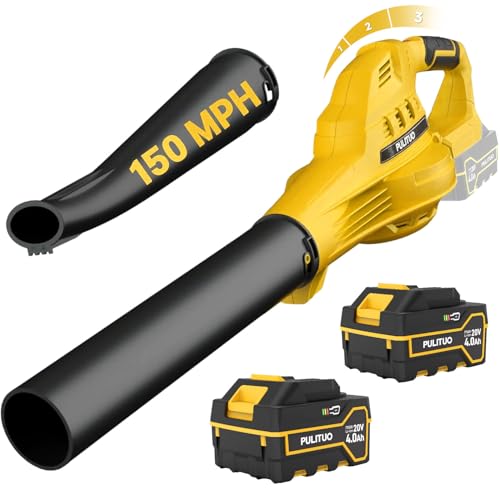
Two 4.0Ah batteries let you swap packs and keep working without waiting for a charge.
This cordless kit fixes the main annoyance of budget blowers: running out of power halfway through the yard. Two 4.0Ah batteries and three speed settings give you flexibility, and 150 MPH is enough to push fresh clippings off concrete and out of the top of the turf.
CFM isn't listed, which makes spec-sheet comparisons tricky. In practice, airflow feels in line with other mid-size cordless kits: fine for dry, fresh clippings, less effective on wet mats. Use low and mid speeds for most of the job, then reserve high for heavy edges and driveway seams.
The lightweight body and balanced grip make it friendly for new cordless users. You won't mistake it for a pro-grade tool, but for weekly mow-and-blow duty, it's a reliable companion.
Specs at a glance: 3-speed cordless • 150 MPH • two 4.0Ah batteries
Pros
- Two 4.0Ah batteries support longer sessions
- Three speeds match power to the task
- Lightweight and easy to store
- Good control along garden edges
Cons
- CFM not specified
- Plastic housing can scuff with rough use
- High speed drains batteries quickly
Best for: mid-size suburban yards and homeowners who want cordless freedom.
Compare today's price on Amazon
Cordless Leaf Blower, 2-Speed with 2 Batteries: Simplest Tool for Quick Tidy-Ups

Two speeds and two batteries keep the learning curve near zero.
No gimmicks here: two speeds, two batteries, and a lightweight body. Low is for dust on the patio; high handles fresh clippings and dry leaves along edges. It's the "finish the mow, grab the blower" tool for a quick walk-around cleanup.
The two-battery setup helps you avoid downtime, and the compact size stores easily in a shed corner or garage shelf. Air volume isn't specified, but for light yard tasks it performs acceptably. If you want one of the best leaf blowers for grass without a learning curve, this is a friendly pick.
Specs at a glance: 2-speed cordless • two batteries included
Pros
- Simple two-speed operation
- Two batteries and charger in the box
- Compact and light for quick use
- Good control on sidewalks and driveway seams
Cons
- Not designed for heavy, soggy leaves
- No detailed CFM spec for comparison
- May feel underpowered on large acreage
Best for: patios, walkways, and small-to-mid lawns.
Check the current price on Amazon
MZK 20V Cordless Leaf Blower: Lightest Daily-Driver Option
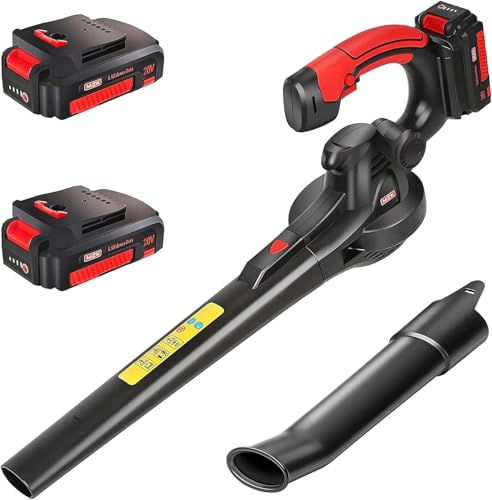
A compact 20V kit with two 2Ah packs — one can charge while you blow.
The MZK focuses on portability. Two 2Ah batteries keep the weight down while still letting you swap packs between tasks. It shines for moving clippings off decks, paths, and tight corners where a bigger blower feels clumsy.
The compact tube reaches into spots larger nozzles can't, and the body is light enough for frequent short cleanups. Battery size is the limiting factor: high-speed runtime is short, so use lower speeds where you can. For everyday lawn edge work, though, it's a nimble helper.
Specs at a glance: 20V cordless • two 2Ah batteries • charger included
Pros
- Very lightweight and easy to maneuver
- Two batteries included for back-to-back use
- Quieter than most corded units
- Compact tube reaches tight spots
Cons
- Smaller 2Ah batteries limit high-speed runtime
- Not built for heavy leaf piles
- Some versions lack a variable trigger
Best for: frequent light cleanups, decks, patios, and users who dislike heavy tools.
See the latest price on Amazon
21V Cordless Leaf Blower, 2-Speed: Easiest Learning Curve

A straightforward two-speed control layout keeps assembly and setup minimal.
This 21V blower targets regular lawn care without overcomplicating it. Two speeds and two batteries cover weekly clippings, dust on hard surfaces, and dry leaves. Assembly is straightforward, so you can start cleaning within minutes of opening the box.
It's not a high-CFM beast, but it handles weekly touch-ups well. Low speed suits patios and garage floors; high speed manages clippings and light debris. For new homeowners who want steady, simple performance, this ranks among the best leaf blowers for grass.
Specs at a glance: 21V cordless • 2-speed • two batteries included
Pros
- Two speed modes match task and noise level
- Two batteries extend session time
- Lightweight and easy to store
- Quick startup with minimal maintenance
Cons
- Less effective in wet conditions
- Not ideal for large piles or acorns
- Runtime depends strongly on speed setting
Best for: new homeowners and anyone who values comfort over maximum airflow.
Compare today's price on Amazon
BLACK+DECKER BV3600 3-in-1: Most Versatile for Mixed Cleanup

The vacuum tube and collection bag convert this blower into a mulcher for beds and borders.
If you want one tool to handle clippings, leaves, and garden-bed prep, the 3-in-1 BV3600 makes sense. It blows at up to 230 MPH, then swaps to vacuum and mulching modes for areas where you don't want to blast mulch around.
The blower mode clears clippings along edges; the vacuum mode is useful in flower beds, and the mulching function reduces volume so bagging takes less space. The trade-offs are weight and cord management. With the collection bag attached, the unit is heavier, and switching modes takes an extra minute. Corded power means steady output with no battery worry.
Specs at a glance: 12-amp corded motor • 230 MPH • blower/vac/mulcher
Pros
- Three functions in one tool
- Unlimited runtime with consistent power
- Strong velocity for stubborn debris
- Mulching reduces yard waste volume
Cons
- Cord limits range
- Heavier when the bag is attached
- Mode changes take time
Best for: all-season yard work and homeowners who want to avoid buying separate tools.
Comchoi Cordless Blower, 680 CFM: Best High-Airflow Cordless for Big Lawns

Five speed settings and 680 CFM make this a strong choice for open turf.
The Comchoi is built for airflow. Rated at 680 CFM with five speed modes, it clears a wider path per pass than most handhelds — which matters when you're blowing clippings across a large lawn without repositioning constantly.
The speed range gives you control: gentle airflow for beds, mid settings for typical cleanup, and high or turbo for heavy edges and thick clippings. Two batteries and a charger are included, which helps on bigger properties.
Expect more thrust at higher speeds, but also more noise and faster battery drain. Turbo is useful in bursts rather than for an entire yard. If airflow per pass is your priority, this is a top pick.
Specs at a glance: 680 CFM • 5-speed • two batteries included
Pros
- High airflow clears large areas quickly
- Five speeds offer fine control
- Two batteries extend runtime
- Comfortable grip for longer sessions
- Handles thicker clippings well
Cons
- Heavier than compact models
- Loud on high and turbo modes
- Turbo drains batteries fast
Best for: large lawns, frequent mow-and-blow users, and mixed surfaces.
Cordless Blower 150 MPH, 2×4.0Ah (Green): Reliable Kit for Edges and Driveways

A green variant of the 150 MPH kit, functionally similar to the yellow model.
This green version matches the yellow kit's formula: 150 MPH, three speeds, and two 4.0Ah batteries. It's especially handy for edging driveways and walkways after mowing, where the compact size makes it easy to lift and swing without strain.
Air volume isn't stated, but for routine lawn and patio cleanup it gets the job done. Using low and mid speeds preserves battery for longer rounds, and the spare pack is a genuine stress reducer. If availability or price favors the green finish, you're not giving up anything meaningful.
Specs at a glance: 3-speed cordless • 150 MPH • two 4.0Ah batteries
Pros
- Two 4.0Ah batteries reduce downtime
- Three speeds tailor power and noise
- Lightweight design is easy to carry
- Good value for everyday tasks
Cons
- Not intended for heavy, wet leaves
- Unknown CFM makes comparisons harder
- High speed shortens runtime
Best for: mid-size suburban yards and edge-focused cleanup.
Check the current price on Amazon
YUQUESEN Cordless Leaf Blower, High-RPM: Compact and Punchy

A compact body with strong bursts of air, aimed at fast touch-ups.
YUQUESEN markets a very high-RPM motor, and in hand, the design delivers punchy bursts of air that move clippings and dust quickly. The compact frame feels nimble around tight landscaping, and two 4.0Ah batteries keep the momentum going.
One honest warning: RPM alone doesn't move air. Nozzle shape and impeller design matter just as much, and this unit's narrow nozzle limits coverage per pass. Use higher modes for dense clippings and lower modes for beds and patios. If you want agile handling with solid short bursts, it fits the bill.
Specs at a glance: high-RPM cordless • two 4.0Ah batteries
Pros
- Compact and agile in tight spaces
- Two batteries for longer use
- Strong bursts of air for quick clearing
- Comfortable for short daily tasks
Cons
- Marketing RPM doesn't guarantee CFM
- High mode drains batteries quickly
- Narrow nozzle means more passes on open lawn
Best for: quick daily cleanups and tight landscaping.
Compare today's price on Amazon
Cordless Blower 650 CFM with 2×5.2Ah & Strap: Best Power and Endurance Combo
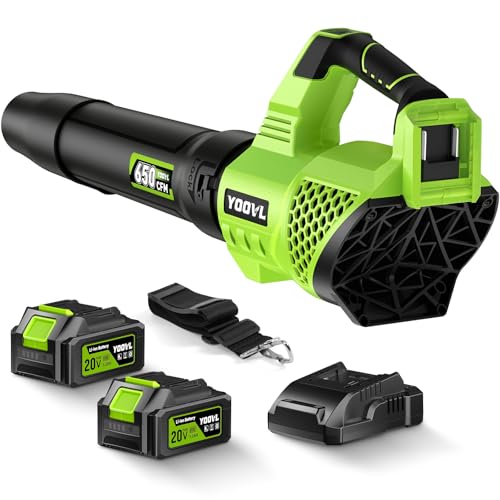
The included shoulder strap helps manage the weight of a high-capacity kit.
This high-volume cordless kit lists up to 650 CFM and includes two large 5.2Ah batteries plus a shoulder strap. For larger lawns and long driveways, that combination is hard to beat: more airflow per pass means fewer sweeps and a faster finish.
Three speed modes let you switch between gentle bed work and full-force grass clearing. The strap helps distribute weight during longer sessions, and the big batteries reduce the need for mid-job swaps. The trade-off is charge time — larger packs take longer to recharge, so plan ahead.
Specs at a glance: 650 CFM • 3-speed • two 5.2Ah batteries • shoulder strap
Pros
- High 650 CFM moves large volumes fast
- Two 5.2Ah batteries support extended work
- Three modes match tasks and noise
- Shoulder strap reduces fatigue
- Great coverage for big lawns
Cons
- Heavier than compact cordless units
- Longer charge times for big batteries
- Loud on high mode
Best for: large yards, long driveways, and extended fall cleanup sessions.
How to Blow Grass Clippings Fast (Without Making a Mess)
The right blower only helps if your technique is sound. Here's a proven sequence:
- Mow dry grass whenever possible. Wet clippings clump and stick to turf. If you must mow damp grass, let the clippings dry before blowing, or use a mulching mower instead.
- Blow hard surfaces first. Clear driveways, patios, and walkways before touching the lawn. Otherwise you'll re-dirty clean surfaces with the clippings you kick off the turf.
- Angle the nozzle. Hold it a few inches above the surface and aim at roughly a 45-degree angle. A flat, low angle lifts clippings and carries them forward; pointing straight down just pushes them deeper into the grass.
- Work in overlapping passes. Move in one direction and blow clippings toward a collection point or a thin line you can pick up afterward. Avoid pushing a growing pile across the lawn.
- Don't build smothering mounds. Thick rows of clippings block light and can leave brown patches. A thin line is fine; a heavy pile is a problem.
- Consider grasscycling instead. Fine, dry clippings left on the lawn return nitrogen to the soil — no blowing required. If you prefer collecting, learn the proper mulching technique first; it cuts down on how often you need to blow at all.
A common mistake is cranking the blower to full throttle and attacking the lawn like a dirt bike. Let the air do the work at an angle, and you'll finish faster with less dust and less strain on the turf.
Blower Maintenance and Battery Care
A leaf blower lasts longer with basic upkeep:
- Clear the air intake and nozzle after each use. Grass dust packs into the vents and reduces airflow.
- Check the fan area occasionally for wrapped debris or small stones.
- Store cordless batteries at room temperature, ideally between 20% and 80% charge for longer storage.
- Avoid leaving batteries in a hot garage or in direct sunlight after a long session.
- Use the charger that came with the kit. Third-party chargers can shorten pack life.
- Coil extension cords loosely for corded models; tight wraps cause damage over time.
If your blower shares batteries with other outdoor tools, keeping the packs healthy protects your whole lineup — not just the blower.
FAQ: Best Leaf Blowers for Grass
Do I need more MPH or more CFM for grass clippings?
CFM matters more because it determines how wide a path you clear. MPH helps knock clippings loose from turf and cracks, but without CFM, the air stream is too narrow for efficient lawn work. A balanced spec — roughly 400–550 CFM and 120–180 MPH — covers most yards well.
What CFM is best for typical lawn edges?
For weekly post-mow cleanup, 350–550 CFM is plenty. Bigger yards or heavy debris benefit from 600+ CFM. Below 300 CFM, you'll be fine on hard surfaces but slow on open grass.
Corded vs cordless: which should I choose?
Corded blowers offer steady power and low cost if you work near an outlet. Cordless blowers give you freedom, quieter low-speed operation, and enough power for most homes — especially with two batteries in the kit. If you already own a battery platform, a bare cordless blower is often the smartest value.
Will a blower damage my grass?
Not with normal use. Keep the nozzle a few inches above the turf and avoid blasting wet soil or bare patches, which can erode and stir up dust. Also avoid leaving thick piles of clippings on the lawn — they block light and invite disease.
How loud are these blowers?
Cordless blowers on low and mid speeds are noticeably quieter than gas models. High and turbo modes get loud, and many gas units push past 100 dB. For anything more than a quick pass, use hearing protection.
Should I blow clippings or leave them on the lawn?
Leave fine, dry clippings in place — grasscycling returns nutrients and saves time. Blow when clippings are thick, wet, or sitting on hard surfaces. Avoiding heavy mats is one of the simplest ways to encourage richer, healthier turf over the season.
Final Verdict: Which Should You Buy?
The best leaf blower for grass depends on your yard size and how much you value cordless convenience:
- Small yards and tight budgets: the BLACK+DECKER LB700 is an easy, affordable choice near an outlet.
- Most mid-size homes: a two-battery cordless kit — the yellow 150 MPH model or the 2-speed kit — offers the best balance of runtime, weight, and price.
- Large lawns: the Comchoi 680 CFM or the 650 CFM kit with 5.2Ah batteries clears turf fast with fewer passes.
- Mixed cleanup duties: the BLACK+DECKER BV3600 blows, vacuums, and mulches in one tool.
If you want a broader view of what's worth buying for general property upkeep, our broader rankings include more models across different budgets. And if price is the deciding factor, the budget-friendly cordless picks will help you stretch every dollar.
Whichever route you take, match the airflow to your yard, keep the batteries charged, and you'll turn post-mow cleanup from a chore into a two-minute sweep.


