What Size Garden Hose For Pressure Washer: Sizing Guide
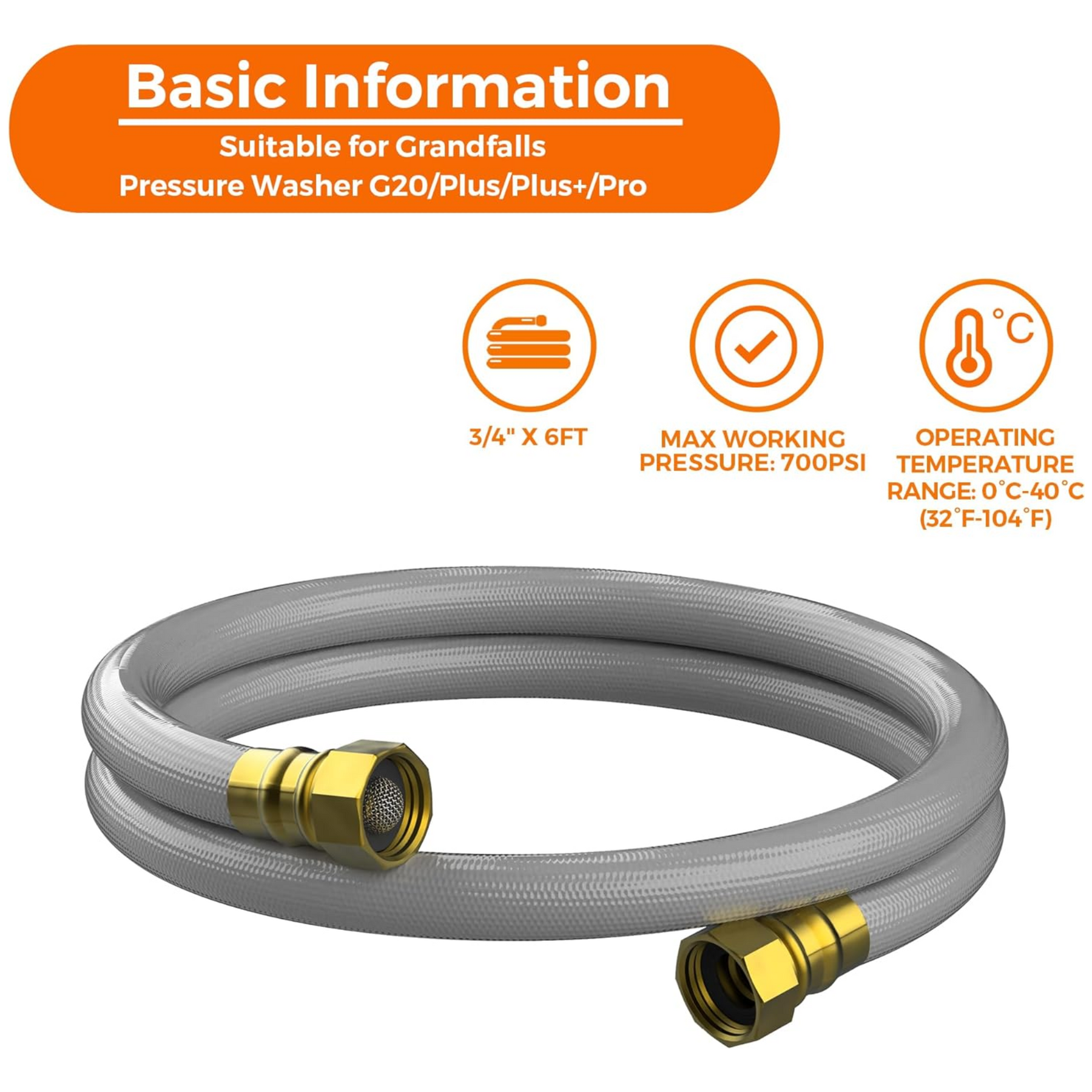
Use a 5/8-inch garden hose for most pressure washers; upgrade to 3/4-inch for 3+ GPM or long runs.
If you are wondering what size garden hose for pressure washer setups works best, you are not alone. I have set up hundreds of units on homes and job sites and learned how hose size makes or breaks cleaning performance. In this guide, I explain what size garden hose for pressure washer results you want, why it matters, and how to choose the right diameter, length, and fittings with confidence.
Why hose size matters more than you think
Your pressure washer pump needs steady water flow at the inlet. If the garden hose is too small or too long, friction losses choke flow, cause cavitation, and drop cleaning power. That stress can make the pump noisy, run hot, and wear out seals ahead of time.
Think of water supply like feeding a fire. A small straw starves the flame; a bigger pipe lets it roar. The same is true when people ask what size garden hose for pressure washer performance is best. A 5/8-inch hose moves more water with less drop than a 1/2-inch hose, and a 3/4-inch hose handles higher-flow machines or long distances.
I learned this the hard way on a fleet job. A tech used a 100-foot, 1/2-inch hose to feed a 2.8 GPM unit. The pump surged and lost pressure. Swapping to a 5/8-inch hose fixed it in minutes and boosted real cleaning speed. That is the power of sizing right when choosing what size garden hose for pressure washer reliability.

Recommended sizes by washer type and water supply
Here is a simple, field-tested baseline to select hose diameter and length.
- Electric washers up to about 2.0 GPM: Use a 5/8-inch hose. Limit length to 50–75 feet when possible.
- Gas washers 2.0–3.0 GPM: Use a 5/8-inch hose as a minimum. Go 3/4-inch if the run is over 75 feet or supply pressure is low.
- Gas washers 3.0–4.0+ GPM: Use a 3/4-inch hose, especially on long runs or if your spigot does not have strong flow.
- Weak or well water systems: Favor a 3/4-inch hose and shorter runs to protect the pump.
Length matters. Longer hoses increase friction loss. If you must run 100 feet or more, choose a larger diameter. When clients ask what size garden hose for pressure washer jobs in big yards, I tell them to go 3/4-inch for any run over 75 feet, or whenever they see pulsing, sputtering, or pressure dips.
Match hose size to your washer’s GPM and your spigot’s flow
Every pressure washer is rated for gallons per minute (GPM). Your spigot also has a real-world flow rate and pressure. The hose sits between them, adding resistance. Your goal is to supply the pump’s rated GPM without starving it.
Do a 60-second bucket test:
- Place a 5-gallon bucket under your spigot.
- Open the spigot fully and time how long it takes to fill.
- 5 gallons in 60 seconds means 5 GPM. 5 gallons in 90 seconds is 3.33 GPM.
Now, match the hose:
- If your spigot delivers only 3 GPM and your washer needs 3 GPM, use 3/4-inch hose and keep it short.
- If your spigot gushes 5+ GPM and your washer needs 2.0 GPM, a 5/8-inch hose is fine up to moderate lengths.
- Avoid 1/2-inch hoses unless the washer is very small, the run is under 25–50 feet, and supply flow is strong.
Typical friction-loss ranges from industry charts:
- At about 3 GPM through 100 feet:
- 1/2-inch hose can drop 25–40 PSI or more.
- 5/8-inch hose often drops around 10–20 PSI.
- 3/4-inch hose may drop under 10 PSI.
When tuning what size garden hose for pressure washer setups, remember that inlet flow is king. The pressure washer creates high pressure on the outlet side, but it cannot make water you do not feed it. If you get pulsing, air pockets, or weak spray, recheck hose size and length first.
Quick steps to decide:
- Check the washer manual for minimum inlet flow and pressure.
- Bucket test your spigot GPM.
- Choose 5/8-inch for most cases; jump to 3/4-inch for 3+ GPM, long runs, or weak supply.
- Keep the hose as short and straight as you can.
- Use full-flow fittings and clean inlet screens.
I often repeat this with clients who ask what size garden hose for pressure washer units rated above 3 GPM. The safe answer is 3/4-inch, unless your tap flow is exceptional and the run is short.

Materials, fittings, and connectors that protect flow
Diameter is not the only factor. Hose material, fittings, and connectors also affect flow and ease of use.
-
Hose materials
- Rubber: Heavier but durable and flexible. Great cold-weather performance.
- Hybrid polymer: Light, flexible, less kink-prone. My go-to for most users.
- PVC: Cheap but stiff and kink-prone. Not ideal for pressure washer feed hoses.
-
Fittings and threads
- Standard US garden hose thread is 3/4-inch GHT on both hose and spigot. This is the thread size, not the hose’s internal diameter.
- Use full-bore quick-connects and Y-splitters. Small or restrictive fittings can undo the benefit of a larger hose.
- Keep washer-side inlet filters clean. A clogged screen can mimic a too-small hose.
-
Flow-saving tips
- Avoid cheap hose reels and narrow swivel elbows that pinch the line.
- Replace flat, worn O-rings that cause air leaks and cavitation.
- If you must use a backflow preventer or vacuum breaker, expect some flow loss and size up the hose.
These small details help answer what size garden hose for pressure washer owners who still see weak flow after upgrading diameter. Even the best 3/4-inch hose will underperform if a tiny quick-connect is bottlenecking the inlet.
Setup tips, troubleshooting, and field examples
Use this simple setup checklist:
- Uncoil the entire hose and straighten kinks before starting.
- Open the spigot fully and prime the line until air stops sputtering.
- Check the inlet filter and O-ring on the pressure washer.
- Keep the supply hose on the ground and avoid tight bends around corners.
Common issues and fixes:
- Pump surging or rattling: The pump is starved. Shorten the hose, size up, or fix restrictive fittings.
- Hot pump body at idle: Low flow. Increase diameter or improve supply.
- Pressure drop when you pull the trigger: Inlet cannot keep up. Switch from 1/2-inch to 5/8-inch or 3/4-inch.
Real examples from my jobs:
- A 2.5 GPM gas washer feeding through a 100-foot 1/2-inch hose would not hold pressure. Swapped to a 5/8-inch hybrid polymer, and the spray pattern stabilized instantly.
- A 3.5 GPM unit on a long driveway with two restrictive quick-connects still pulsed on 5/8-inch. Upgrading to a 3/4-inch hose and full-flow connectors gave steady pressure and faster cleaning.
If you want a one-line rule on what size garden hose for pressure washer work around large homes, here it is: choose 3/4-inch if the run is long or the washer is over 3 GPM; otherwise use 5/8-inch.

Safety and maintenance for longer pump life
A properly sized garden hose protects your pump. A starved pump can cavitate, which chews up seals and pistons and shortens service life.
- Do not exceed the inlet water temperature your pump allows, unless it is a hot-water unit.
- Never run the washer without water or with the inlet valve partially closed.
- Winterize hoses and the pump to prevent freeze damage.
- Store hoses in big loops to reduce kinks, and hang them off the ground to dry.
- Inspect screens and O-rings every few uses.
Follow these basics and you will not need to ask what size garden hose for pressure washer longevity. The right diameter, kept clean and unrestricted, pays for itself in fewer repairs.
Frequently Asked Questions of what size garden hose for pressure washer
Is a 1/2-inch garden hose okay for a pressure washer?
It can work on small electric units under short runs with strong supply. For most users, 5/8-inch is safer and more reliable.
Does a longer garden hose reduce pressure at the pressure washer?
Yes, longer hoses create more friction loss and can starve the pump. Keep runs short, or size up to 3/4-inch for long distances.
Do I need a 3/4-inch hose for a 3 GPM pressure washer?
It is recommended, especially if the hose is over 50–75 feet or your spigot flow is limited. A 3/4-inch hose lowers friction loss and protects the pump.
Can I use an expandable garden hose to feed a pressure washer?
I do not recommend it. Many expandable hoses have narrow inner tubes and restrictive fittings that reduce flow and can damage pumps.
What hose length is best for washing a two-story house?
Use the shortest length that reaches your work area, often 50–75 feet. If you need 100 feet or more, go up to a 3/4-inch hose.
Do quick-connects affect flow to the pressure washer?
Yes, small or cheap quick-connects can bottleneck flow. Choose full-flow connectors that match the hose ID and check O-rings for air leaks.
Conclusion
If you want peak cleaning power and a healthy pump, choose the right supply hose. For most jobs, a 5/8-inch garden hose is the sweet spot. For washers over 3 GPM, long runs, or weaker taps, step up to a 3/4-inch hose and use full-flow fittings.
Test your spigot with a 60-second bucket check, pick the diameter to match your washer’s GPM, and keep hoses short and straight. Put this guide to work today, and you will stop guessing what size garden hose for pressure washer performance you need. Ready for more pro tips? Subscribe or leave a question and I will help you dial in your setup.