Gas Vs Cordless Chainsaw: Which Is Best In 2026?
Gas chainsaws deliver raw power; cordless models offer quiet, low-upkeep convenience.
You have a big tree down after a storm. The driveway is blocked. You need a saw that starts fast, cuts clean, and fits your space and skills. That is where the gas vs cordless chainsaw debate matters. Gas brings muscle for thick hardwood and long cuts. Cordless brings calm starts, less noise, and no fumes. I have used both in yards, farms, and job sites. Below, I break down the best picks, pros and cons, and who should buy what.
62cc Gas Chainsaw with 20-Inch Bar

This 62cc gas chainsaw is built for heavy jobs. The 20-inch bar gives you reach and fast bucking on larger logs. The two-stroke engine pulls hard, so it can bite through dense wood. If you cut a lot of firewood, you feel the torque right away.
Starting is quick with a proper warm-up and fresh fuel. The body has a rugged frame that holds up under rough handling. With the right oil mix and sharp chain, it runs smooth. Keep up on the maintenance, and it will serve for years.
Pros:
- Strong 62cc engine for thick hardwood
- 20-inch bar handles wide cuts and storm cleanup
- Solid build that feels stable during long use
- Good power-to-weight for a saw this size
- Fast chain speed once up to full throttle
- Great value if you cut cords of firewood
Cons:
- Louder than cordless; hearing protection needed
- Requires fuel mixing and regular tune-ups
- Heavier than most 16-inch cordless models
My Recommendation
If you work trees 16 inches and up, this model fits. It shines in rural yards, farms, and after storms. If you compare gas vs cordless chainsaw options for raw power, this one makes a strong case. Keep extra chains sharpened, and it will fly through big rounds.
| Best for | Why |
|---|---|
| Firewood in bulk | 62cc torque handles large hardwood logs with ease |
| Storm cleanup | 20-inch bar clears downed limbs and trunks fast |
| Rural property | Gas power is ready anywhere, no outlet or chargers |
EGO POWER+ 16-Inch Cordless Chainsaw (CS1611)
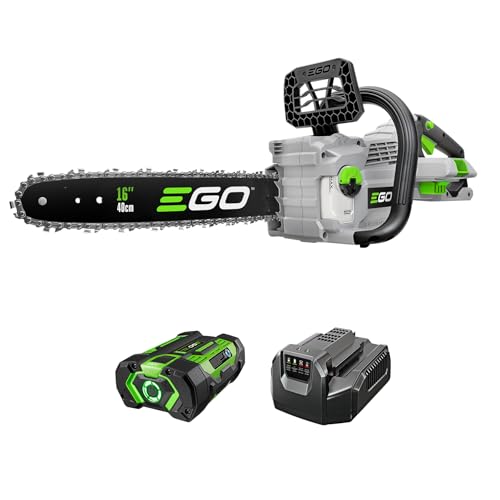
The EGO POWER+ CS1611 is a favorite for home users. It includes a 56V 2.5Ah battery and charger, so you can cut right away. The 16-inch bar is ideal for pruning, limbing, and small to medium logs. It starts with a trigger pull, no fuel or choke.
The brushless motor is efficient and quiet. I like the instant chain brake and tool-free tension system. Auto-oiling keeps the chain ready with little fuss. It is a great pick if you want low noise and low upkeep.
Pros:
- Easy push-button start; no fumes
- Strong cutting for a 16-inch cordless saw
- Battery and charger included
- Auto-oiler and simple chain tensioning
- Quiet operation for neighborhoods
- Good brand support and ecosystem
Cons:
- Run time depends on cut size and battery
- Not ideal for very large hardwood logs
- Bar length limits max diameter in one pass
My Recommendation
Choose this if you care about ease of use. It is perfect for yard work, light firewood, and weekend pruning. If you are weighing gas vs cordless chainsaw options for suburb use, this is a smart fit. Add a spare 5.0Ah battery for longer sessions.
| Best for | Why |
|---|---|
| Homeowners | Quiet, clean starts, no fuel mixing |
| Light to medium cuts | 16-inch bar and brushless motor handle most tasks |
| Tool ecosystem | Works with other 56V EGO tools |
PROYAMA 26cc 12-Inch Top-Handle Gas Chainsaw

This compact top-handle saw is built for limbing and light cutting. The 26cc engine gives snappy throttle for small branches. The 12-inch bar makes it easy to maneuver up a ladder or in tight spaces. It is a good pick for trimming fruit trees and shaping hedges.
It comes with two chains, which is a nice bonus. Keep the chain sharp and let the saw do the work. Because it is top-handle, use proper safety gear and stance. For quick gas cuts on small wood, it gets the job done.
Pros:
- Light and nimble for limbing and pruning
- Two chains included for backup
- Top-handle design aids control in tight spots
- Quick throttle response
- Good value for small gas saw needs
Cons:
- Top-handle saws require skill to use safely
- Not for large logs or heavy felling
- Vibration higher than many cordless units
My Recommendation
Pick this if you need a nimble gas tool for limbing. It is best for users who prefer a compact saw with fast starts and a small bar. If you are debating gas vs cordless chainsaw options for tree trimming, this gas top-handle gives speed and reach. Keep it for ladder work and quick cuts.
| Best for | Why |
|---|---|
| Limbing and pruning | 12-inch bar and light body are easy to place |
| Quick yard fixes | Fast throttle; two chains keep you cutting |
| Users with gas skills | Top-handle favors trained users and pros |
VEVOR 25.4cc 12-Inch Top-Handle Gas Chainsaw

The VEVOR 25.4cc top-handle saw is tuned for light, precise work. It is small enough to carry up ladders or into dense canopy. The 12-inch bar slides through limbs without fighting the cut. For shaping trees or clearing low branches, it is very handy.
The engine starts with a few pulls if you keep it maintained. Oil the chain and wipe it down after each use. I like the balance and the compact shape. If you want gas agility over battery weight, this is a solid bet.
Pros:
- Compact and balanced for overhead cuts
- Good throttle for small-diameter wood
- Easy to carry and store
- Affordable for a specialized tool
- Responsive enough for careful pruning
Cons:
- Not designed for felling big trees
- Top-handle safety demands training
- More noise than a cordless pruner
My Recommendation
Great for landscapers and skilled homeowners who trim often. It thrives where a standard rear-handle saw feels bulky. In the gas vs cordless chainsaw choice for precision work, this gas unit keeps weight and size in check. Use it to speed up limbing and canopy shaping.
| Best for | Why |
|---|---|
| Tree care tasks | Light, agile, and easy to position |
| Tight spaces | Top-handle control in awkward angles |
| Frequent pruning | Quick startup with gas power on tap |
SUPMIXTOOLS 62cc 20-Inch Gas Chainsaw

This 62cc two-stroke saw is made for tough work. The 20-inch bar clears big limbs and thick rounds. It pulls hard through hardwood and stays steady in long cuts. If you need a ranch saw on a budget, it is very appealing.
The anti-vibration features help on long sessions. Keep the chain sharp and check bar oil before each cut. I like the power-to-price balance here. It is a practical tool for farm and woodlot tasks.
Pros:
- Strong cutting performance for the price
- 20-inch bar covers wide trunks
- Anti-vibration helps reduce fatigue
- Solid choice for storm cleanup
- Reliable start when tuned well
Cons:
- Heavier than smaller gas or cordless units
- Maintenance is key to keep it running right
- Loud; not great for small yards with close neighbors
My Recommendation
Pick this if you cut big wood often and value power. It is a workhorse for property owners. In the gas vs cordless chainsaw debate, this is the gas side done right for large jobs. Keep fresh fuel and sharp chains to maximize its strength.
| Best for | Why |
|---|---|
| Ranch and farm | 62cc engine can handle daily heavy cuts |
| Large firewood rounds | 20-inch bar speeds bucking |
| Storm response | Fast clearing of downed trunks and limbs |
CRAFTSMAN 16-Inch 12A Corded Chainsaw (CMECS600)

This corded 16-inch saw is a budget-friendly work tool. It starts every time with the trigger. There is no fuel, and there are no batteries to charge. For small yards with an outlet nearby, it cuts clean and simple.
The 12-amp motor is strong enough for pruning and light firewood. Keep a long outdoor-rated extension cord handy. Auto-oiling helps the bar and chain last longer. It is a smart pick if you want the lowest total upkeep.
Pros:
- Very low maintenance; no gas or batteries
- Trigger start with steady power
- Quiet compared to gas
- Great price for a 16-inch bar
- Lightweight and easy to handle
Cons:
- Cord limits range and movement
- Not for very thick hardwood
- Needs proper extension cord for best performance
My Recommendation
If your cuts are near the house, this is a winner. It is perfect for routine pruning and cutting small logs. Many ask gas vs cordless chainsaw, but do not forget corded. This model gives steady power for a very low cost per cut.
| Best for | Why |
|---|---|
| Budget buyers | Low price and no battery costs |
| Small yards | Plenty of power for limbs and branches |
| Low upkeep users | No fuel storage or carb issues |
SEESII 40V 16-Inch Brushless Cordless Chainsaw

This SEESII kit includes two 4.0Ah batteries and a charger. That is a big plus for run time. The 16-inch bar and brushless motor make clean cuts with a light feel. Tool-free chain tension and auto-oiling reduce the setup work.
I like this for users who want a full cordless setup out of the box. Two batteries keep you cutting while one charges. The instant brake adds safety. It is a yard-ready saw with strong value.
Pros:
- Comes with two 4.0Ah batteries
- Brushless motor for efficiency and life
- Tool-free tension and auto-oiler
- Good cutting for limbs and small logs
- Lower noise and vibration than gas
Cons:
- Battery charge time adds downtime without a spare
- Not aimed at large hardwood cuts
- Bar length sets a natural limit
My Recommendation
This is a great package for new cordless users. It covers trimming, limbing, and firewood up to mid sizes. In the gas vs cordless chainsaw match-up, this wins for convenience and value. Keep the second battery charged, and you are set for a full session.
| Best for | Why |
|---|---|
| New cordless buyers | Complete kit with two batteries and charger |
| Regular yard work | 16-inch bar covers most homeowner cuts |
| Quiet neighborhoods | Low noise and no fumes |
Dong Cheng 40V 16-Inch Brushless Cordless Chainsaw

This 40V kit aims to mimic gas-like cutting in a cordless body. It includes two 4.0Ah batteries, which is great for longer tasks. The brushless motor, instant brake, and tool-free tension make it easy to use. I like the clean finish on crosscuts and limbing.
It holds chain speed well in most homeowner cuts. The safety brake engages fast to protect your hands. Auto-oiling keeps the chain fed during long passes. If you want gas-like feel without fumes, it delivers.
Pros:
- Two batteries included for extended run time
- Strong brushless motor and smooth chain speed
- Instant brake adds a safety layer
- Tool-free chain tensioning for quick tweaks
- Less noise and vibration than comparable gas saws
Cons:
- Still not for very large hardwood trunks
- Batteries add weight compared to small corded saws
- Replacement batteries can be pricey
My Recommendation
Choose this if you want a cordless saw that feels strong and ready. It fits regular yard duty and light firewood tasks. In the gas vs cordless chainsaw choice, this is a capable cordless option that can rival smaller gas units. Keep both batteries topped up before big jobs.
| Best for | Why |
|---|---|
| Home and cabin | Two batteries support longer outings |
| Frequent limb work | 16-inch bar and smooth chain speed |
| Safety-focused users | Instant brake and easy controls |
Greenworks 80V 18-Inch Brushless Cordless Chainsaw

The Greenworks 80V 18-inch kit is a top-tier cordless choice. It comes with a 2.0Ah battery and a rapid charger. The 18-inch bar extends your reach beyond typical homeowner saws. It cuts through medium to larger logs with calm control.
The brushless motor keeps up chain speed under load. I like the balance and the longer bar for bucking. The 80V system supports a wide range of tools, which adds value. If you want cordless power that pushes toward gas levels, this is it.
Pros:
- Strong 80V platform with rapid charger
- 18-inch bar for bigger homeowner tasks
- Brushless motor holds power under load
- Lower noise than gas; instant start
- Large tool ecosystem for battery sharing
Cons:
- Heavier than smaller cordless units
- Battery run time varies with cut size
- Spare 80V batteries can be expensive
My Recommendation
Pick this when you want near-gas power without the fuss. It suits regular firewood cutting and bigger yard work. When comparing gas vs cordless chainsaw picks, this 80V model narrows the gap. Add a second battery if you cut for long periods.
| Best for | Why |
|---|---|
| Larger yards | 18-inch bar covers thicker logs |
| Quiet cutting | Strong power with much less noise |
| Tool system buyers | 80V platform supports many tools |
Snoonwee 58cc Gas Chainsaw, 18/20-Inch Bars

The Snoonwee 58cc saw ships with both 18-inch and 20-inch bars. That dual setup makes it flexible for different jobs. The 58cc engine delivers strong mid-range power. For property owners, it is a handy all-rounder gas saw.
It features an easy-start system and anti-vibration support. I like having two bar sizes for quick swap-outs. That lets you tailor the saw to the cut. Keep the chain tension right, and it tracks smoothly through wood.
Pros:
- Comes with both 18″ and 20″ bars
- 58cc engine balances power and weight
- Anti-vibration helps on longer jobs
- Good felling and bucking for the price
- Flexible setup for different tasks
Cons:
- Louder than cordless; PPE is a must
- Needs regular carb and fuel system care
- Heavier than small-bar saws
My Recommendation
If you want one gas saw for many jobs, this is strong. Swap bars to match yard work, firewood, and light felling. In the gas vs cordless chainsaw question, this gas pick gives range and value. Keep spare chains for each bar to save time.
| Best for | Why |
|---|---|
| One-saw owners | Two bar sizes for more tasks |
| Rural yards | 58cc power handles mixed wood sizes |
| Budget-heavy work | Good price-to-performance ratio |
Gas vs Cordless Chainsaw: How to Choose
Before I sum up the best picks, here is a short guide. It can help you pick your side in the gas vs cordless chainsaw debate.
- Power: Gas still wins for the biggest cuts. Cordless has caught up a lot for mid-size work.
- Noise: Cordless is much quieter. Your neighbors will thank you.
- Upkeep: Gas needs fuel mixing, carb care, and pull starts. Cordless needs charged batteries and clean bar oil.
- Runtime: Gas runs as long as you have fuel. Cordless needs spare batteries for long jobs.
- Weight: Cordless can be lighter or similar, but battery weight adds up on longer bars.
- Cost over time: Gas fuel and maintenance add cost. Cordless batteries cost more up front but are clean to run.
Now, here are more cordless and gas picks that shine in common tasks.
Why Cordless Is Winning for Many Homeowners
Advances in brushless motors and high-voltage packs have changed things. Many cordless models cut near gas speed in small to mid cuts. They also start fast, with no pull cords. For most suburban yards, cordless is now the easy choice.
Still, gas has a role. If you fell big trees or cut cords of hardwood, gas rules. If you are far from chargers, gas is ready. Your work style and yard size make the choice clear.
Real-World Tips to Get More from Any Chainsaw
- Keep chains sharp: A sharp chain makes any saw feel twice as strong.
- Use fresh bar oil: It cools and lubricates the chain for smooth tracking.
- Check tension often: A loose chain is dangerous and cuts poorly.
- Mind the kerf: Let the saw pull itself; do not force the bar.
- Use wedges: For long cuts, wedges keep the kerf open and bar free.
- PPE always: Helmet, eye and ear protection, gloves, and chaps matter.
FAQs Of gas vs cordless chainsaw
Which is better for beginners: gas or cordless?
Cordless is better for most beginners. It starts fast, is quieter, and requires less upkeep.
Can cordless chainsaws cut hardwood?
Yes. Modern brushless models can cut hardwood. Choose higher voltage and keep a sharp chain.
How long do cordless batteries last while cutting?
It depends on the cut and battery size. Expect 20 to 45 minutes of active cutting per battery.
Do gas chainsaws need special fuel?
Yes. Most use a two-stroke gas and oil mix. Use the ratio in your manual.
What bar length should I pick?
For yard work, 14–16 inches works well. For bigger logs or felling, 18–20 inches helps.
Final Verdict: Which Should You Buy?
For most homeowners, cordless is best. It is quiet, clean, and simple. Pick a strong brushless model and keep a spare battery. You will finish most yard cuts fast.
If you cut thick hardwood or many cords, go gas. It brings torque and long run time. In the gas vs cordless chainsaw choice, match the saw to your wood, time, and space.