

3/4 Vs 5/8 Garden Hose: Which Size Delivers More?
Choose 5/8” for everyday watering; pick 3/4” for high flow needs.
You roll out the hose, but the sprinkler sputters, or your pressure washer starves for water. Sound familiar? Choosing between 3/4 vs 5/8 garden hose can fix that. The right diameter changes flow, pressure, and how far water travels. If your hose run is long, or you use splitters and sprayers, size matters even more. I’ve tested hoses and repair kits in real yards and job sites. In this guide, I’ll explain the differences in plain English and review top repair connectors so your setup works right the first time.
Biswing 5/8” Barb x 3/4” GHT Repair Kit (4-Pack)

This Biswing set gives you four aluminum hose ends with 5/8” barbs and 3/4” GHT threads. It includes stainless steel clamps and both male and female fittings. If your hose split, bubbled, or the factory crimp failed, these menders get you back in action fast. The parts feel sturdy, and the threads seat well with most nozzles, splitters, and timers.
I like the light weight of aluminum for quick repairs, especially on longer runs. The barbs hold tight when you prep the hose clean and round. For 3/4 vs 5/8 garden hose users, this is geared to standard 5/8” hose bodies, while finishing in universal 3/4” GHT threads. It’s a handy kit to keep in the shed for midseason fixes.
Pros:
- Includes both male and female ends for flexible repairs
- Works with 5/8” hoses while keeping 3/4” GHT compatibility
- Lightweight aluminum for easy handling and less corrosion risk
- Stainless steel clamps grip well with a flathead or nut driver
- Good value in a 4-pack for multiple fixes
Cons:
- Aluminum threads can gall if overtightened
- Not ideal for heavy commercial use or high heat
- Barb fit may be loose on some thin-walled hoses
My Recommendation
Pick this set if you run standard 5/8” hoses and want quick end repairs. It’s great for home gardens, car washing, and light sprinkler duty. If you need higher flow or your runs exceed 100 feet, compare 3/4 vs 5/8 garden hose and consider a 3/4” body with a different mender.
| Best for | Why |
|---|---|
| Everyday 5/8” hose repairs | Barb matches typical hose wall and size |
| Mixed fittings | Male and female ends included |
| Budget-friendly maintenance | Four menders cover a season’s fixes |
Hourleey Repair Connectors, 3/4” or 5/8” (4-Set)

Hourleey’s 4-set is made to fit both 3/4” and 5/8” hoses, so it’s versatile. If you don’t remember which diameter you have, these connectors take the guesswork out. The clamps are sturdy, and the fittings feel dense and well machined. The threads pair well with nozzles and shutoff valves.
For folks weighing 3/4 vs 5/8 garden hose, this set is a bridge. You can standardize ends across your yard tools. That makes coupling hoses and accessories simple. It’s a smart buy for mixed-diameter households or small property managers.
Pros:
- Fits 3/4” and 5/8” hoses for universal use
- Easy install with included clamps
- Solid threading for fewer leaks
- Handy when you inherit mixed hose sizes
- Good value per piece in a 4-pack
Cons:
- Fit can vary on very thick commercial hoses
- Clamp bands may need retightening after first use
- Not the heaviest-duty option
My Recommendation
If you’re not sure which hose size you own, start here. This kit suits light to moderate yard use and saves time. It also helps when you’re comparing 3/4 vs 5/8 garden hose but want repair parts that handle both.
| Best for | Why |
|---|---|
| Mixed hose sizes | Fits 3/4” and 5/8” bodies |
| Quick leak fixes | Clamps and fittings are simple to install |
| Shared hose setups | Standard 3/4” GHT threads match common gear |
DBR Tech Heavy-Duty 5/8” & 3/4” Repair Kit (2-Set)

DBR Tech’s kit targets tough jobs with leak-resistant metal fittings. It includes male and female ends made to stand up to frequent connect and disconnect cycles. If you run sprinklers, splitters, and pressure attachments, these ends hold up. The clamps bite well and don’t strip easily.
This set fits both 5/8” and 3/4” hoses, which is ideal when you manage long runs. For the 3/4 vs 5/8 garden hose decision, heavy-duty users often prefer 3/4” hose bodies. That size helps maintain flow across distance and tools. These menders match that use case without fuss.
Pros:
- Heavy metal construction for durability
- Male/female fittings included for both ends
- Works with 5/8” and 3/4” hose bodies
- Reliable threads reduce leaks under load
- Good for frequent swapping of accessories
Cons:
- Only two sets included
- Heavier than aluminum options
- Price per mender is higher than basic kits
My Recommendation
Choose this if you use hose reels, multi-zone sprinklers, or pressure tools. It’s built for more demanding setups and long hose runs. If you’re weighing 3/4 vs 5/8 garden hose and lean heavy-duty, this kit fits right in.
| Best for | Why |
|---|---|
| High-flow yards | Handles 3/4” hoses for better flow |
| Frequent connections | Metal threads stand up to wear |
| Long hose runs | Stable sealing reduces pressure loss |
Aluminum Repair Kit, Fits 3/4” & 5/8” (3 Sets)

This aluminum kit offers three full sets of male and female connectors. It fits both 3/4” and 5/8” hoses, which gives you flexibility across the yard. The finish is smooth, and the threads pair clean with most GHT accessories. It’s simple, light, and useful for quick midseason fixes.
For 3/4 vs 5/8 garden hose owners, the dual-fit design saves you from buying twice. If you manage hoses on a small landscape crew or a big yard, that helps. The clamps secure well if you square the hose end and seat the barb fully. It’s a nice middle ground on cost and durability.
Pros:
- Three repair sets in one package
- Fits both common hose diameters
- Lightweight aluminum for easy installs
- Smooth threads mate with GHT gear
- Good balance of price and performance
Cons:
- Aluminum can cross-thread if rushed
- Not best for hot-water use
- Clamps may loosen if hose isn’t prepped well
My Recommendation
Buy this if you want three ready repairs without overpaying. It’s best for general garden duty, sprinklers, and wash nozzles. If you’re still deciding 3/4 vs 5/8 garden hose, this kit keeps your options open.
| Best for | Why |
|---|---|
| Budget-minded repairs | Three sets cover multiple breaks |
| Standard yard use | Light aluminum is easy to handle |
| Mixed diameter setups | Works for 3/4” and 5/8” hoses |
Sanpaint Brass Repair Connectors, 3/4” or 5/8”

Sanpaint’s solid brass connectors are a step up in durability. Brass threads better than aluminum and resists wear from frequent use. The clamps are included, and the sealing surfaces feel true. If you’ve dealt with leaks at the spigot or nozzle, brass often solves it.
For the 3/4 vs 5/8 garden hose question, these connectors support both sizes. That makes them a simple pick for most households. Brass holds up when you tug hoses around corners or drag them on rough ground. Expect fewer thread issues and a longer life.
Pros:
- Solid brass for durable threads
- Fits both 3/4” and 5/8” hoses
- Good sealing surfaces reduce drips
- Clamps included for a complete fix
- Better for frequent accessory changes
Cons:
- Heavier than aluminum
- Costs more than basic kits
- May tarnish over time (cosmetic)
My Recommendation
Choose this set if you want a “buy once” connector. It suits homeowners who use nozzles, sprinklers, and hose reels often. When you’re weighing 3/4 vs 5/8 garden hose, brass ends keep fittings consistent and leak-free.
| Best for | Why |
|---|---|
| Frequent users | Brass threads last longer |
| Leak-prone spots | Better sealing improves flow |
| Mixed hose sets | Works with 3/4” and 5/8” hoses |
Rierdge Repair Kit, 3/4” or 5/8” (6 Sets)
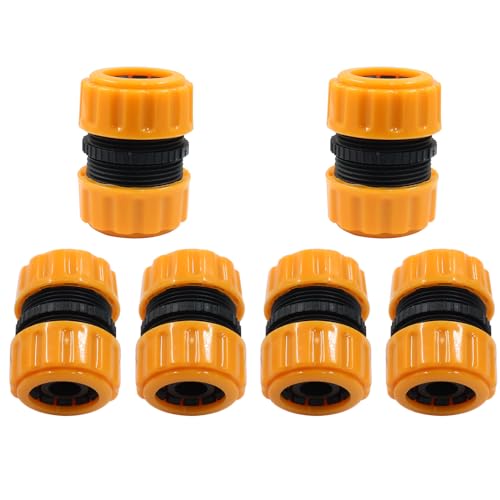
The Rierdge 6-set is for big yards or small crews who burn through hoses. It includes enough pieces to fix multiple breaks and extend hoses. The fittings aim to cover both 3/4” and 5/8” hose bodies, which adds flexibility. If you maintain several lines, buying in bulk saves time.
For 3/4 vs 5/8 garden hose users, this kit helps standardize ends across your setup. You can also use it to build custom lengths from leftovers. The clamps do their job when tightened evenly. It’s a sensible pick if you patch hoses often.
Pros:
- Six sets for high-volume repairs
- Works with 3/4” and 5/8” hoses
- Good for extending or joining hoses
- Cost-effective per repair
- Simplifies standardizing your connections
Cons:
- Metal type may vary in feel from premium brass
- Best results require careful hose prep
- Not the most compact clamps for tight spaces
My Recommendation
Pick this bulk set for rental properties, HOA common areas, or big gardens. It’s a workhorse solution that keeps water flowing. If you’re comparing 3/4 vs 5/8 garden hose and run both, this kit keeps them compatible.
| Best for | Why |
|---|---|
| High repair volume | Six sets reduce downtime |
| Mixed hose fleets | Supports 3/4” and 5/8” bodies |
| Custom lengths | Easy to join leftover sections |
Hooshing 5/8” Barb to 3/4” GHT Female (2PCS)

This Hooshing pair gives you 5/8” barbs with 3/4” GHT female swivel ends. The swivel makes it easier to attach to nozzles, reels, or splitters without twisting the hose. Solid brass bodies deliver reliable threading and long life. The clamps are included, so you have all you need for a clean end repair.
For the 3/4 vs 5/8 garden hose topic, this is a classic 5/8” body repair with universal 3/4” threads. The swivel is the hero here. It reduces stress on the hose when you tighten accessories. That means fewer kinks near the end and fewer leaks over time.
Pros:
- Female swivel ends reduce hose twist
- Solid brass for lasting threads
- Ideal for 5/8” hoses and standard GHT gear
- Clean sealing with quality washers
- Simple DIY install with clamps
Cons:
- Only two pieces included
- Not a dual-size barb
- Heavier than aluminum for some users
My Recommendation
Use this if your hose end cracked at the nozzle and you want a stress-free swivel. It’s a quality fix for 5/8” hoses paired with common tools. When you think 3/4 vs 5/8 garden hose, this targets the 5/8” crowd with better usability.
| Best for | Why |
|---|---|
| End repairs with nozzles | Swivel avoids hose twisting |
| Frequent accessory swaps | Brass threads stand up to wear |
| Home garden use | Simple setup and solid seal |
humyeam Repair Mender Kit, Fits 3/4”–5/8” (4 Pack)

humyeam’s kit aims at an easy fix with a universal 3/4”–5/8” fit range. The set includes four menders and stainless clamps. It’s a simple solution to stop mid-hose leaks or replace damaged ends. The parts feel sturdy enough for regular yard work.
If you juggle 3/4 vs 5/8 garden hose across zones, these connectors smooth out the mess. You can keep one kit on the shelf and fix almost any line. Install is quick if you cut the hose square and seat the barb fully. It’s a dependable everyday choice.
Pros:
- Fits 3/4” and 5/8” hoses
- Four repairs per kit
- Stainless clamps resist rust
- Easy to install with basic tools
- Good leak control with proper prep
Cons:
- Not specialized for very thick hoses
- Barb fit may vary by hose brand
- No swivel ends in this set
My Recommendation
Go with this kit for general hose maintenance at home. It’s good value and solves most leaks fast. As you choose between 3/4 vs 5/8 garden hose for new buys, this kit still covers both sizes in a pinch.
| Best for | Why |
|---|---|
| General repairs | Covers the two common sizes |
| Budget shoppers | Four menders for multiple fixes |
| Simple DIY | Easy clamp-and-go install |
Hooshing 5/8” Barb x 3/4” Female GHT (2PCS)

This Hooshing pair focuses on a solid 5/8” barb with a 3/4” female GHT end. The brass construction holds up to frequent use and keeps the threads true. It’s a clean solution when you want a permanent fix on a 5/8” hose. The included clamps secure the connection well.
When debating 3/4 vs 5/8 garden hose, many homes stick with 5/8” because it balances weight and flow. These ends support that choice and make nozzles easy to attach. They seal well with standard washers. For peace of mind, brass is hard to beat.
Pros:
- Solid brass body and threads
- Designed for 5/8” hoses
- Universal 3/4” GHT compatibility
- Good seal with basic hand tightening
- Includes clamps for a full repair kit
Cons:
- No dual-size support
- Two pieces may not cover a full season of repairs
- Heavier than alloy parts
My Recommendation
Buy this if you prefer the common 5/8” hose and want a long-term fix. It’s ideal for daily watering and wash nozzles. In the 3/4 vs 5/8 garden hose debate, this is a strong 5/8”-focused solution with quality brass threads.
| Best for | Why |
|---|---|
| 5/8” hose users | Exact barb fit for secure seal |
| Durable repairs | Brass threads resist wear |
| Nozzle-heavy setups | Female GHT mates with most tools |
Hooshing 5/8” Barb x 3/4” GHT Male (2PCS)

This male-end pair is great for making custom hoses or replacing worn male threads. The 5/8” barb seats firmly inside standard hose walls. Brass male threads then attach to female ends on timers, splitters, or other hoses. It’s a clean, durable fix.
In the 3/4 vs 5/8 garden hose conversation, many homes want a consistent thread type across the yard. These ends keep everything at 3/4” GHT, which is the U.S. standard. The result is fewer leaks and faster setup. It’s a small part that makes a big difference.
Pros:
- Solid brass male threads resist cross-threading
- Barb fits standard 5/8” hose
- Works with common female GHT gear
- Great for custom hose projects
- Includes clamps for DIY install
Cons:
- Only fits 5/8” hoses
- Two pieces may not be enough for multiple hoses
- No swivel feature
My Recommendation
Choose this set if you cut hoses to length or rebuild ends often. It’s a go-to for 5/8” hose users who want reliable male threads. When comparing 3/4 vs 5/8 garden hose, pair these with 5/8” bodies for a simple, leak-free system.
| Best for | Why |
|---|---|
| Custom hose lengths | Male thread for modular builds |
| 5/8” hose maintenance | Barb matches common size |
| Timers and splitters | Standard 3/4” GHT fit |
FAQs Of 3/4 vs 5/8 garden hose
Which is better for home use, 3/4” or 5/8”?
Most homes do best with 5/8”. It’s lighter and delivers solid flow. Choose 3/4” if you need more water over long runs.
Does 3/4” increase pressure?
It increases flow, not pressure. House pressure comes from your supply. Larger hose reduces friction loss, so more water reaches the end.
What is the standard hose thread size?
3/4” GHT is the U.S. standard. Both 5/8” and 3/4” hoses use 3/4” GHT ends.
How far can I run a 5/8” hose?
Up to 100 feet is common with good flow. Past that, consider 3/4” for better performance.
Will a 3/4” hose help sprinklers?
Often yes. More flow helps multi-head sprinklers and manifolds. It’s key when comparing 3/4 vs 5/8 garden hose for irrigation.
Final Verdict: Which Should You Buy?
For most yards, 5/8” is the best pick. It’s light, simple, and delivers enough water for hoses under 100 feet.
Pick 3/4” if you need high flow, long runs, or run multiple tools. In the 3/4 vs 5/8 garden hose decision, match diameter to distance and demand.


