
Removing Snow With A Leaf Blower: Fast, Safe Tips 2026
Yes, you can remove light, dry snow with a leaf blower quickly and safely.
If you have a dusting to a couple of inches of powder, removing snow with a leaf blower can beat a shovel and even save you from dragging out a full snow blower. I have used this method for years on decks, walkways, cars, and steps. In this guide, I share proven steps, pro tips, limits, and safety notes so you can master removing snow with a leaf blower like a pro.

How removing snow with a leaf blower actually works
Air moves light snow the way it moves dry leaves. It pushes snow crystals off the surface before they bond and turn heavy. This is the key to doing it fast and with less strain.
This method shines on powder snow. It also works on very cold, dry snow that is under 2 inches deep. With a strong unit, 3 to 4 inches is possible when the snow is fluffy.
Wet snow is tough. It clumps and sticks. In mild temps, snow gets dense in minutes. Wind can also blow snow back in your face. Watch the wind and work with it, not against it. Removing snow with a leaf blower is best in the first hour after it falls.

The right tool: picking a leaf blower for snow work
Look at air volume and air speed. Aim for 400 to 700 CFM and at least 90 MPH. That gives the punch you need for removing snow with a leaf blower on drives, decks, and cars.
Choose the type that fits your space:
- Cordless battery blowers are quiet and quick to grab. Keep a warm spare battery for winter.
- Corded electric blowers have steady power but need a cold-rated, outdoor cord.
- Gas blowers offer the most push for deep, fluffy snow. Never run them in a garage or indoors.
Small tips that help:
- A tapered nozzle targets the air stream for crusty patches.
- Keep batteries warm. Cold slashes runtime.
- Wear eye, ear, and face protection. Snow dust flies.
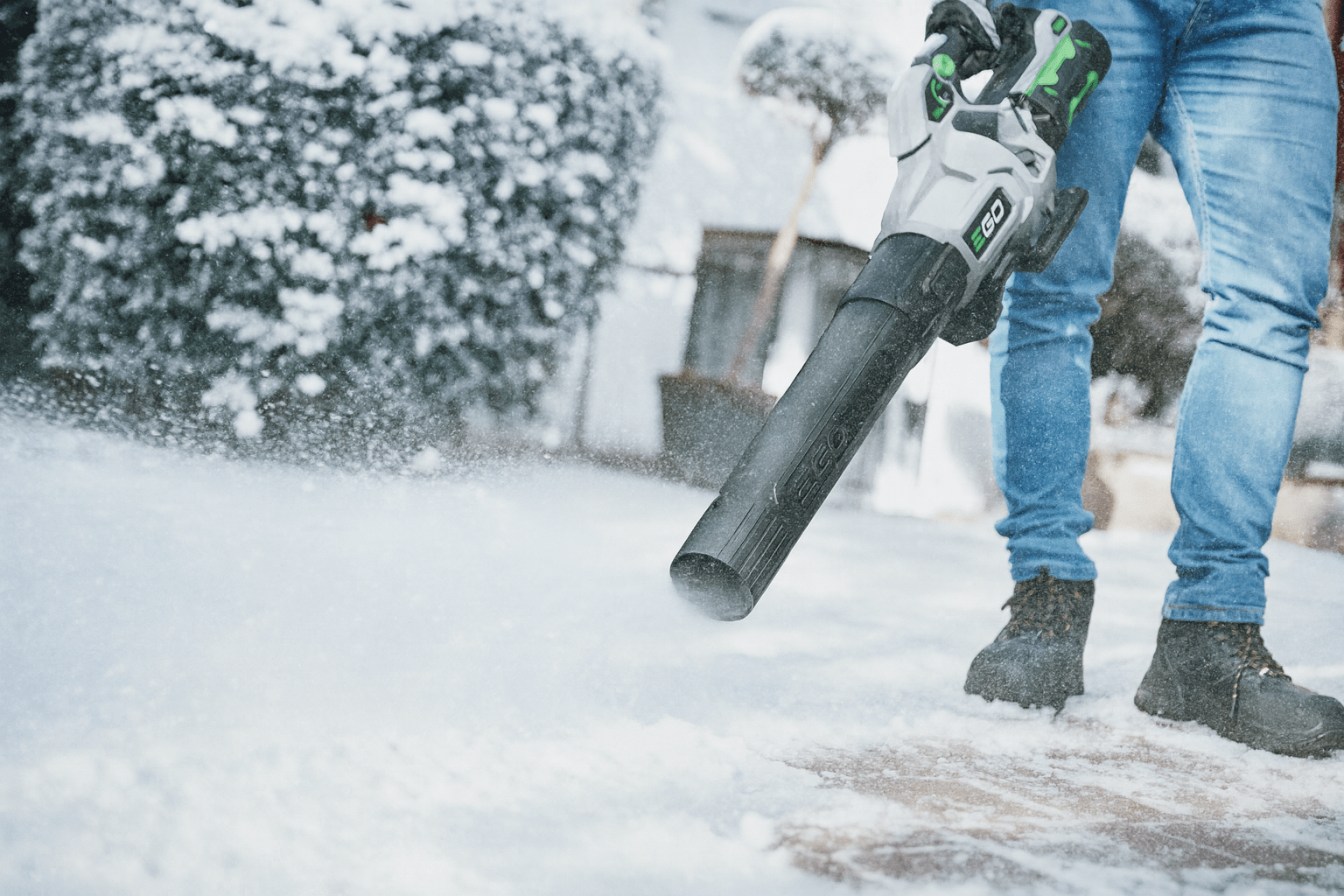
Step-by-step: removing snow with a leaf blower like a pro
Follow this simple flow to stay fast and neat.
- Prep the area
- Park cars so you can work all sides.
- Move doormats, toys, cords, and gravel that could shoot up.
- Put on safety glasses and gloves.
- Start upwind
- Stand with your back to the wind.
- Work with the gusts. Let nature help push the snow.
- Use a low, shallow angle
- Hold the nozzle 6 to 10 inches off the ground.
- Aim a bit downward and sweep side to side.
- Walk forward in steady, even passes.
- Clear edges and corners early
- Do steps, railings, and porch edges first.
- For cars, start with roof, then windows, then hood, then around the base.
- Make a final pass
- Push leftover streaks to one side.
- Tap handrails and bushes so hidden snow falls, then blow it off.
- Finish and store
- Wipe the blower dry.
- Bring batteries inside to warm up.

Pro techniques and time-savers I use every storm
The secret is speed. Get out there before it packs down. I set a shared alarm on light snow days, then do a five-minute pass before breakfast. Removing snow with a leaf blower is most fun when it feels easy.
Try these tips:
- Work in lanes. Overlap each pass by a few inches for a clean finish.
- Pulse the trigger to break thin crust without kicking up big clouds.
- For steps, blast the risers first, then the treads.
- On composite decks, low angle plus slow sweep avoids swirling clouds.
- Pretreat slick spots with a pet-safe deicer the night before a storm.
Common mistakes to avoid:
- Waiting too long. Sun or foot traffic will bond the snow to the surface.
- Pointing straight down. That stirs powder and blinds you.
- Ignoring the wind. It can undo your work and waste time.
Limits, risks, and when to skip this method
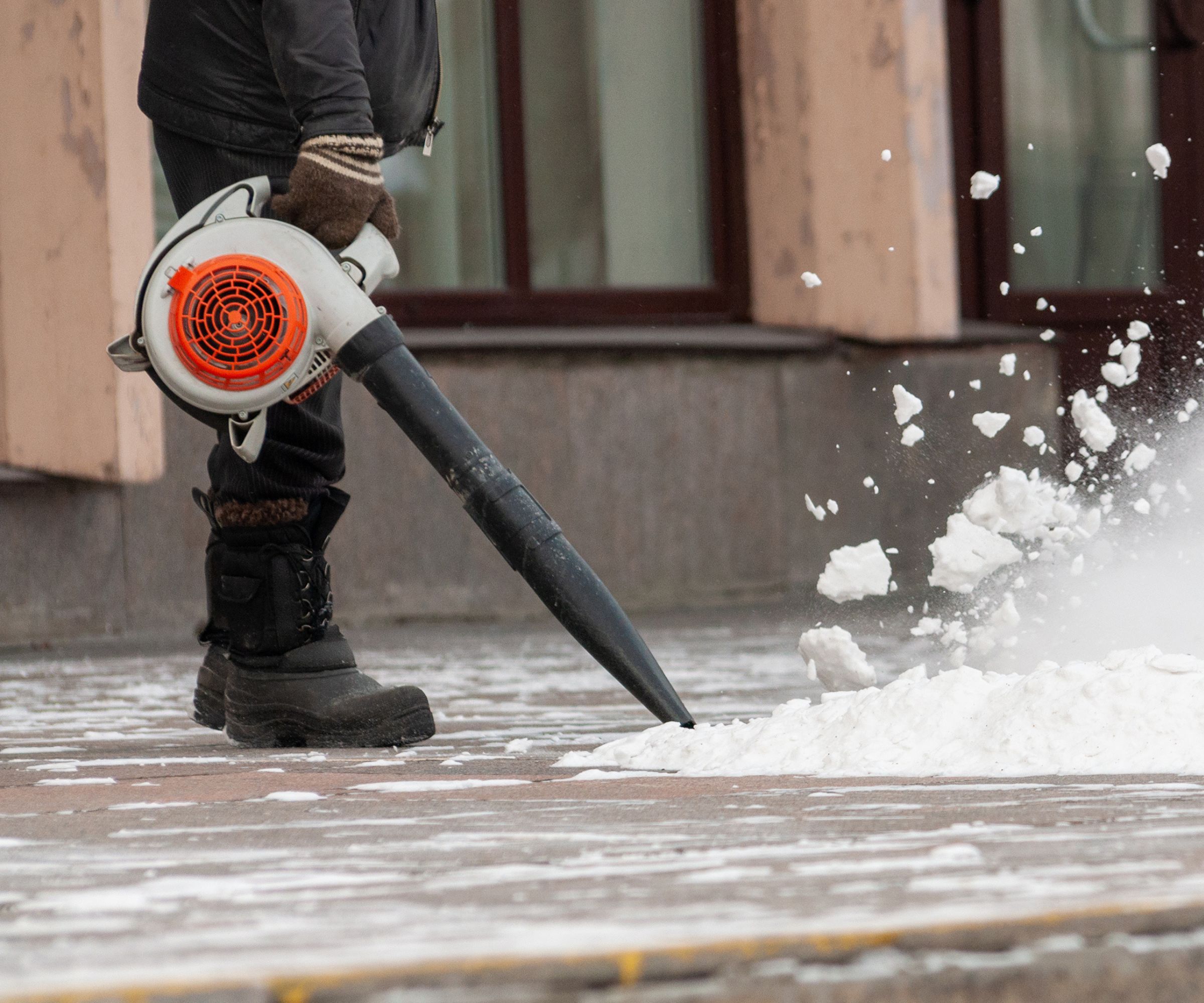
Removing snow with a leaf blower is not a cure-all. Wet, heavy snow will not lift well. Ice will not move. If you sink in more than 4 inches, switch to a shovel or snow blower.
Keep safety first:
- Do not use gas blowers in a closed garage or doorway. Carbon monoxide is deadly.
- Watch for loose gravel and small rocks. They can become projectiles.
- Mind noise rules. Early mornings may be restricted in some towns.
- Skip pitched roofs. Use a roof rake from the ground instead.
Be a good neighbor. Aim snow away from streets and paths. Do not blast snow onto cars, windows, or vents.

Winter care and maintenance for your blower
Cold is hard on tools. Take a minute to care for your gear after each use. It pays off.
Simple habits:
- For battery units, charge at room temp. Store batteries indoors.
- For corded units, use a flexible, outdoor-rated cold-weather cord.
- For gas units, use fresh fuel with stabilizer and check the air filter.
- After removing snow with a leaf blower, wipe it dry. Moisture can corrode switches and contacts.
Before big storms, test the trigger and throttle. Make sure the nozzle is free of ice. Keep a small towel by the door to dry the tool when you step back inside.

Cost, time, and environmental notes
If you already own a blower, you get a near-zero cost way to clear light snow. It is also quick. A 20-foot walk can take less than two minutes. Removing snow with a leaf blower can cut your morning rush time by half on dusting days.
Noise and emissions vary by type:
- Battery and corded units are quieter and have no tailpipe emissions.
- Gas blowers are louder and emit more. Some towns regulate them.
- Many tests show that early action reduces salt use and scraping. That helps your concrete and your plants.
If you live where storms are small but frequent, this method can save your back and your gear. You will shovel less. Your big snow blower will last longer.
Real-world examples and lessons learned
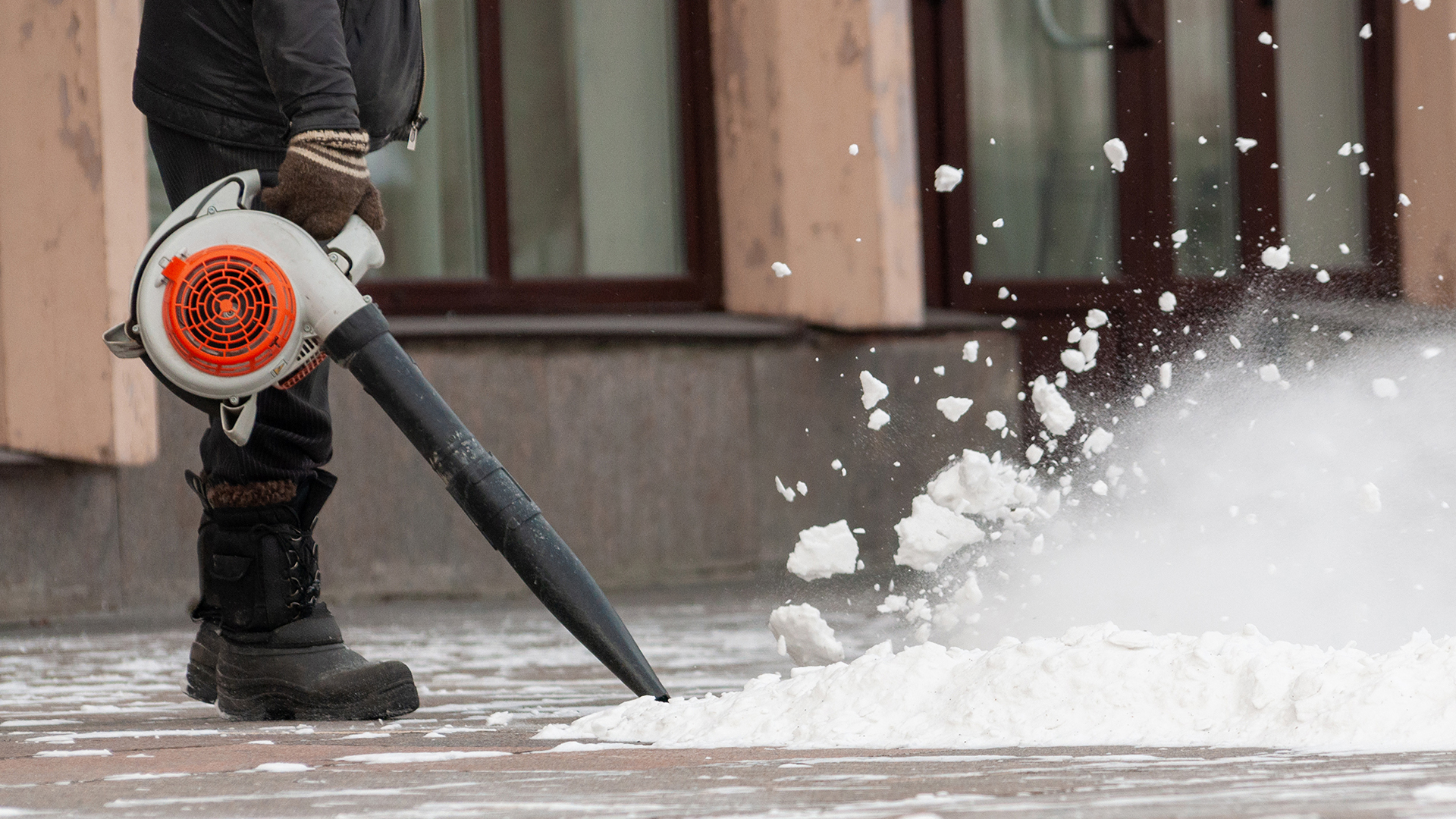
On a January morning, I cleared a powdery inch from my car and front steps in five minutes flat. The trick was starting early and working with the wind. That is the time when removing snow with a leaf blower feels almost effortless.
I have also failed. I once waited until noon on a mild day. The snow got wet and heavy. It stuck to the deck and formed a glaze. The blower just made clouds. I learned to act fast, use a shallow angle, and keep batteries warm in a coat pocket. Those small habits make removing snow with a leaf blower smooth and repeatable.
Frequently Asked Questions of removing snow with a leaf blower
Can I use a leaf blower on wet snow?
You can try, but results are poor. Wet snow clumps and sticks, so a shovel or snow blower is better.
How deep can snow be for this to work?
With a strong blower, 3 to 4 inches of powder can work. For most tools, 1 to 2 inches is the sweet spot.
Is it safe to use on cars?
Yes, if you keep a gentle angle and stand back a bit. Avoid blasting loose trim and mirrors up close.
Which is better for snow: CFM or MPH?
Both matter, but CFM moves volume and helps push big plumes. Aim for 400 to 700 CFM with at least 90 MPH.
Will this damage decks or pavers?
It is gentle when used right. Keep the nozzle off the surface and avoid forcing gravel or debris across it.
Can I use a leaf blower below freezing?
Yes. Battery runtime drops in cold, so warm spare batteries indoors. Gas blowers start harder in deep cold.
Is this allowed in my neighborhood?
Most places allow it, but some restrict early morning noise. Check local rules to be safe.
Conclusion
Light, dry snow does not need to slow you down. With a little skill and timing, removing snow with a leaf blower is fast, clean, and low effort. Choose the right tool, act early, work with the wind, and keep your passes smooth.
Turn your next dusting into a two-minute task. Try these steps on your next storm, track your time, and refine your routine. If this guide helped, share it with a neighbor, subscribe for more practical tips, or leave a comment with your best trick for removing snow with a leaf blower.


