Garden Lime Vs Lawn Lime: Key Differences And Uses
Garden lime and lawn lime do the same job; choose type and speed.
Your soil is likely more acidic than you think. Yellowing turf, weak tomatoes, and moss creep usually signal a low pH problem. That is where lime shines. But garden lime vs lawn lime can confuse even seasoned DIYers. The truth is, they both raise soil pH and add calcium. The real choice is in the form (powder, pellets, liquid) and whether you need magnesium too. In this review, I’ll compare top products, share real-world use tips, and make it easy to decide which lime fits your lawn, raised beds, vegetable rows, and even food plots. I’ll keep it simple, evidence-based, and budget-smart.
Jobe’s Organics Garden Lime (6 lb Powder)

Jobe’s Organics Garden Lime is a fast-acting calcium carbonate powder designed to raise soil pH in beds, containers, and turf. The fine grind makes it quick to integrate into the top few inches of soil. I like this size for small lawns and veggie rows because you can spot-treat problem areas. It’s also handy for new gardeners who want an easy way to correct acidic soil without buying a massive bag.
Because it’s pulverized, it acts faster than chunky agricultural lime, especially when watered in after spreading. It’s not dolomitic, so it won’t add magnesium; that’s ideal if your soil already has enough magnesium or you grow plants that don’t need more of it. For hydrangeas, it can help nudge color from blue to pink by lifting pH. For lawn care, it gives a clean boost to pH and calcium, which improves nutrient use.
Pros:
- Fine powder acts faster than coarse lime
- Great size for small lawns, raised beds, and pots
- Boosts calcium for stronger cell walls and growth
- Easy to blend into soil or topdress before rain
- Reliable brand focused on organic solutions
Cons:
- Can be dusty; wear a mask when applying
- Not dolomitic, so no added magnesium
- Smaller bag may not cover larger lawns
My Recommendation
If you want a simple way to correct acidic beds or small lawn sections, this is a solid pick. It’s best if your soil test shows low calcium and normal magnesium. For garden lime vs lawn lime decisions, this powder works for both; you just need to apply lightly and water in. It’s user-friendly, cost-effective for small areas, and a good starter lime for new homeowners.
| Best for | Why |
|---|---|
| Small lawns and beds | Convenient 6 lb bag, easy spot treatment |
| Quick pH correction | Fine powder integrates and activates faster |
| Calcium boost without Mg | Pure calcium carbonate supports growth, no extra magnesium |
Organic Dolomite Lime 5 lb, OMRI Listed

This OMRI Listed dolomitic lime gives you calcium and magnesium in one product. Magnesium supports chlorophyll production, so I reach for dolomite when tomato and pepper foliage looks pale and a soil test flags low magnesium. The 5 lb size fits balconies, deck planters, and patio gardens. You can mix it into potting blends or topdress around heavy-feeding crops.
Dolomite also raises soil pH, which helps unlock nutrients like phosphorus that get tied up in acidic soils. For lawn use, it’s useful if your local soils are low in magnesium, which is common in some regions. If your soil already has plenty of magnesium, choose a calcitic lime instead. Always apply based on a soil test, especially when comparing garden lime vs lawn lime in different areas of your yard.
Pros:
- OMRI Listed for organic gardening
- Adds both calcium and magnesium
- Great for tomatoes, peppers, and greens
- Small bag is easy to store and use
- Improves nutrient availability by raising pH
Cons:
- Extra magnesium may be unnecessary in some soils
- Small size not ideal for large lawns
- Acts slower than liquids or ultra-fine powders
My Recommendation
Choose this if your soil test shows low magnesium or your tomatoes suffer blossom end rot and low pH. It’s perfect for container veggies and small beds. In the garden lime vs lawn lime debate, dolomite can fit both, but use it on turf only if magnesium is low. It’s a targeted fix that supports greener leaves and steadier fruiting.
| Best for | Why |
|---|---|
| Magnesium-deficient soils | Dolomite supplies Mg for chlorophyll and vigor |
| Tomatoes and peppers | Supports steady growth and reduces deficiencies |
| Small gardens and containers | Easy to measure and mix into potting soil |
Fine Ground Limestone Powder 50 lb

This 50 lb bag of finely ground limestone is a workhorse for larger lawns, gardens, and even chicken coops. The soft white rock dust is primarily calcitic lime (calcium carbonate), which raises pH and reduces acidity. The fine grind acts faster than chunky aglime yet lasts longer than liquids. If you maintain a quarter-acre lawn or more, this bag size makes sense cost-wise.
It’s also useful in coops and barn areas to help control odors and maintain drier bedding. For gardens, the dust blends well into the topsoil before planting. Because it’s not dolomitic, you won’t add magnesium, so use it where magnesium is adequate. When choosing garden lime vs lawn lime, this bag can do both jobs with the same spreader.
Pros:
- Large 50 lb bag covers more area economically
- Fine grind activates faster than coarse lime
- Great for lawns, beds, and coop odor control
- Pure calcium carbonate lifts pH reliably
- Good shelf life if stored dry
Cons:
- Heavy bag requires careful handling
- Dusty; a mask is smart during application
- No magnesium for deficient soils
My Recommendation
Pick this if you have a bigger space and a pH test that calls for calcitic lime. It’s ideal for homeowners who want a one-bag solution for both lawn and garden beds. Garden lime vs lawn lime is often the same product; this powder proves that point. Apply with a broadcast spreader for turf or mix into soil for beds.
| Best for | Why |
|---|---|
| Large lawns | 50 lb bag gives wide, cost-effective coverage |
| Garden beds pre-plant | Fine dust blends easily for even pH correction |
| Coops and barns | Helps with odor and moisture management |
LimeIQ Liquid Lime, 1 Gallon

LimeIQ is a liquid calcium carbonate designed for fast response. It is easy to spray with a hose-end or tank sprayer and is a great option when you want quick improvement in turf vigor. I like liquid lime for spot-fixes on compacted or damp areas that resist pellet penetration. One gallon treating up to 1/2 acre makes it practical for many suburban lawns.
Liquid lime works fast, but it is not a complete replacement for granular lime if you need long-term pH change in heavy soils. Think of it as a booster shot that helps during the growing season. It fits the garden lime vs lawn lime idea when speed matters more than volume. It’s also good before seeding to improve early nutrient use.
Pros:
- Fast-acting spray solution
- Easy application with standard sprayers
- Helps turf green-up and nutrient uptake
- Great for spot treatment areas
- Covers up to 1/2 acre per jug
Cons:
- Shorter residual than granular lime
- Multiple applications may be needed for lasting change
- Less precise for deep soil pH adjustments
My Recommendation
Use LimeIQ if you want quick results for a lawn that looks tired mid-season. It’s a handy tool for recent renovation projects or patches that refuse to thrive. In garden lime vs lawn lime comparisons, liquids are lawn-friendly for fast response, while beds often benefit more from granular. Pair it with a fall granular lime for a full-season plan.
| Best for | Why |
|---|---|
| Quick turf improvement | Liquid acts faster than pellets |
| Spot treatment | Targets stubborn or compacted zones |
| Pre-seeding support | Helps seedling nutrient use right away |
Espoma Lightning Lime, 30 lb Pelletized
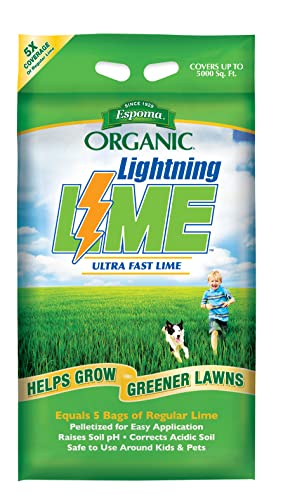
Espoma’s Lightning Lime is a fast-acting pelletized lime designed for quick spreader use and fast breakdown. The 30 lb bag covers up to 5,000 square feet, so it’s a match for many standard lawns. Pellets are much less dusty, easy to apply, and child- and pet-friendly once watered in. I like this product for homeowners who want a clean application and quick results.
Pelletized lime breaks down after watering or rain and begins lifting pH within weeks. It works on lawns and gardens, supporting healthier turf and better nutrient balance in vegetable beds. It’s calcitic, so you avoid adding extra magnesium if your soil is already adequate. For garden lime vs lawn lime choices, pelletized forms like this are easy wins for turf care.
Pros:
- Fast-acting pelletized formula
- Low dust and spreader-friendly
- Great coverage for typical suburban lawns
- Works for lawns and garden beds
- Trusted brand with consistent quality
Cons:
- Still needs rain or irrigation to break down
- Not a dolomite; no magnesium added
- May require follow-up if soil is very acidic
My Recommendation
If you use a broadcast spreader and want a neat, fast application, pick this. It’s an excellent “set it and forget it” option for lawn pH correction, with crossover use in garden beds. When comparing garden lime vs lawn lime, pelletized calcitic lime is my go-to for turf because it applies clean and works quickly. Use a soil test to set the right rate.
| Best for | Why |
|---|---|
| Home lawns up to 5,000 sq ft | Pellets spread evenly with less mess |
| Faster pH lift | Formulation breaks down quickly after watering |
| Calcium-only needs | Avoids unneeded magnesium additions |
Gardenwise Organic Pulverized Lime, 2 lb

This small 2 lb container of pulverized lime is perfect for balcony gardeners, herb pots, or small raised beds. The fine grind helps it work fast in potting mixes that can acidify over time. I keep a small bottle like this on hand for quick corrections when basil or lettuce starts to suffer from acidity. It’s made in the USA and geared toward organic-minded growers.
Because it’s powdered, apply lightly and water in to reduce dust. It’s a smart pick if you rotate crops and need to re-balance pH after heavy feeders. When you think garden lime vs lawn lime, this product leans garden because of its size, but it can also fix small turf patches. Use it as a precision tool rather than a bulk solution.
Pros:
- Perfect size for container and micro-gardens
- Fine powder delivers fast results
- Easy to store and handle
- Good for frequent, light corrections
- Made in the USA
Cons:
- Not economical for larger lawns
- Dusty if over-applied
- No magnesium included
My Recommendation
If you garden in containers or have a small raised bed, this is the right scale. It lets you fine-tune pH without buying a big bag that clumps in storage. For garden lime vs lawn lime, this pick is a garden-first solution with occasional lawn use for small spots. It’s a tidy, fast-acting fix you’ll actually finish using.
| Best for | Why |
|---|---|
| Containers and herbs | Small, precise doses work well in pots |
| Raised beds | Fast correction between crop cycles |
| Spot turf fixes | Use a light topdress in problem patches |
Organic Dolomite Lime Prilled 5 lb, OMRI
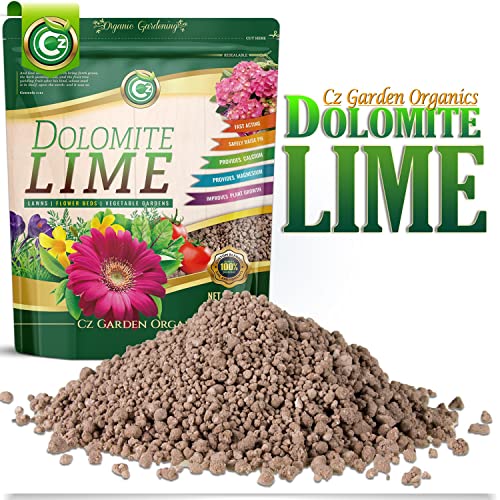
This prilled dolomite lime combines the benefits of magnesium with the clean handling of pellets. Prills are uniform, so they flow well in handheld and small broadcast spreaders. I like prilled forms when I want the dust-free ease of pellets with the nutrient profile of dolomite. It’s especially helpful for veggie beds where magnesium helps leaf color and vigor.
Because it’s OMRI Listed, it fits strict organic plans. It will raise pH while supplying magnesium to soils that test low. For lawns, it’s a good fit if your soil test calls for magnesium. In garden lime vs lawn lime decisions, prilled dolomite is a neat, mid-size answer that applies clean in both settings.
Pros:
- OMRI Listed dolomitic lime
- Prilled pellets reduce dust and mess
- Improves pH and magnesium levels
- Works for gardens and lawns
- Easy to apply with small spreaders
Cons:
- Extra magnesium not needed in all regions
- 5 lb bag limits large lawn coverage
- Acts slower than liquids
My Recommendation
Choose this if you want dolomite’s magnesium without dealing with powder. It’s a clean, small-bag solution for gardens and selective lawn areas. When comparing garden lime vs lawn lime, prilled dolomite bridges both uses, especially where soil is Mg-deficient. It’s simple, tidy, and dependable.
| Best for | Why |
|---|---|
| Organic veggie beds | OMRI Listed with Mg for green growth |
| Clean applications | Prills spread evenly and reduce dust |
| Targeted lawn use | Use where your soil test shows low Mg |
Down To Earth Prilled Garden Lime, 5 lb

Down To Earth’s prilled garden lime is a calcitic pellet that raises soil pH with minimal dust. It’s ideal for gardeners who want cleaner handling and predictable spread. The 5 lb bag suits small beds, turf edges, and flower borders. I like it for families and pets because the pellets stay put until watered in.
Calcitic lime increases calcium availability, which improves cell structure and hardiness in plants. Use it when soil magnesium is already sufficient. For lawn work, prilled lime is spreader-ready and quick to activate. It fits the garden lime vs lawn lime conversation as a versatile, easy, and clean solution.
Pros:
- Low-dust prilled pellets
- Great for small gardens and borders
- Spreader-friendly for lawn edges
- Reliable pH lift with calcium
- Respected, eco-focused brand
Cons:
- Small bag limits larger projects
- No magnesium included
- Needs moisture to break down
My Recommendation
Grab this if you want a tidy, pelletized lime for borders and beds. It’s perfect when you prefer calcitic lime and need a manageable bag size. In garden lime vs lawn lime terms, it swings both ways, but I love it for neat, low-dust lawn edges and ornamentals. It’s simple, safe, and effective.
| Best for | Why |
|---|---|
| Flower borders | Pellets reduce mess around delicate plants |
| Lawn edges | Spreads evenly with handheld spreaders |
| Calcium-only adjustment | Ideal when magnesium is already adequate |
Organic Dolomite Lime 10 lb, OMRI Listed
This 10 lb dolomite is an OMRI Listed option for gardeners and lawn owners who need pH lift plus magnesium. The larger size makes more sense for mid-sized plots than a 5 lb bag. I like using dolomite in beds with tomatoes, peppers, and cucurbits when a test shows low magnesium. It can help prevent leaf yellowing and support steady fruiting.
It’s also useful on lawns where regional soils trend low in magnesium. Remember, not every lawn needs magnesium; many only need calcium. In garden lime vs lawn lime decisions, dolomite shines when your soil test points that way. Apply before planting or topdress and water in during the growing season.
Pros:
- OMRI Listed dolomite with magnesium
- Good mid-size bag for beds and small lawns
- Supports greener leaves and healthy growth
- Improves pH and nutrient uptake
- Reliable quality and consistency
Cons:
- Not needed if your magnesium is already high
- Heavier than small bags for quick tasks
- Slower than liquids for immediate results
My Recommendation
Pick this if your soil test calls for magnesium and you want organic compliance. It’s a smart upgrade from a 5 lb bag when you have more space. The garden lime vs lawn lime choice here is easy: use dolomite only where Mg is low, whether that’s in beds or turf. It’s a balanced way to correct pH and feed foliage.
| Best for | Why |
|---|---|
| Mid-sized gardens | 10 lb covers more ground efficiently |
| Magnesium-poor soils | Dolomite delivers Mg with pH lift |
| Tomato and pepper rows | Supports leaf color and fruit set |
FASSTLIME Liquid Lime, 2.5 Gallons

FASSTLIME is a liquid lime in a larger 2.5-gallon jug, built for bigger lawns or food plots. One jug treats up to an acre, which is huge if you manage larger spaces or want fewer refills. I like it for quick corrections before a critical growth phase, like early spring or pre-planting food plots. It’s easy to spray and gets to work fast.
As with most liquids, it gives fast response but doesn’t replace a deeper, long-lasting pH correction from granular lime. Use it as a season-long helper, not your only liming plan if your soil is very acidic. The garden lime vs lawn lime conversation becomes about speed vs staying power here. Pair it with granular in fall for a complete strategy.
Pros:
- Covers up to an acre per jug
- Fast-acting for quick green-up
- Easy spraying with less downtime
- Useful for lawns and food plots
- Great pre-plant boost for annuals
Cons:
- Shorter residual than granular lime
- Requires sprayer and careful dilution
- Not ideal as your only pH fix for heavy soils
My Recommendation
Choose FASSTLIME if you manage larger turf or plots and want quick results. It’s a time-saver with real impact during growth windows. For garden lime vs lawn lime, liquids like this shine on lawns and plots; use granular in beds for long-term effects. Combine them for the best of both worlds.
| Best for | Why |
|---|---|
| Large lawns and plots | 2.5 gallons treats up to 1 acre |
| Fast seasonal boosts | Liquid starts working quickly |
| Pre-plant support | Helps early nutrient uptake for seedlings |
Jobe’s Organics Garden Lime, 6 lb
(Note: This is the same product as the first listing, included again in some catalogs. If you need a refresher: it’s a fine calcitic powder ideal for small areas.) The 6 lb makes quick work of targeted corrections in beds and turf patches. I like it for homeowners who don’t want a giant bag that sits for years. Keep a jug ready for seasonal touch-ups.
As always, apply after a soil test and water in. Garden lime vs lawn lime is often about form and coverage; this product covers both with precision. Use it around fruit trees where acidity builds from mulch and leaf litter. It’s a practical, repeat-ready size for most suburban yards.
Pros:
- Fine grind for fast action
- Easy to handle and store
- Fits both lawns and gardens
- Good for annual touch-ups
- Reputable brand support
Cons:
- Not ideal for large lawns
- Can be dusty during application
- No magnesium for Mg-poor soils
My Recommendation
Great for small yards and gardeners who value speed and simplicity. If you’re comparing garden lime vs lawn lime, this one plays both sides well due to its versatile powder form. It’s a budget-friendly fix you’ll use up, not store forever. Keep it dry for best shelf life.
| Best for | Why |
|---|---|
| Suburban lots | Size matches typical yard needs |
| Spot pH adjustments | Powder integrates quickly |
| Fruit trees | Corrects acidic mulch zones |
Fine Limestone Powder 50 lb (All-Purpose)
(This duplicates the 50 lb fine ground listing in some assortments. I’m including it here because many buyers cross-compare bulk options.) A 50 lb bag is the most economical way to handle annual liming for big lawns and garden plots. Finely ground calcium carbonate does the heavy lifting on acidic soils. It’s also helpful for compost bins to moderate acidity.
Wear a dust mask and spread on a calm day. Stir it into beds before planting for even results. In garden lime vs lawn lime decisions, this bulk calcitic form truly serves both jobs. It’s a backbone product in any soil correction plan.
Pros:
- Budget-friendly for large areas
- Fast-acting fine grind
- Multi-purpose for lawns, gardens, compost
- Strong pH correction capacity
- Long shelf life if kept dry
Cons:
- Heavy to move and store
- Dusty if windy or dry
- No magnesium content
My Recommendation
Choose bulk if you manage a lot of square footage and want an all-purpose lime. It’s simple, strong, and flexible. For garden lime vs lawn lime, this shows that the difference is less about where you use it and more about your soil’s needs. Keep a clean spreader and water in for best activation.
| Best for | Why |
|---|---|
| Big lawns and plots | Bulk 50 lb saves money |
| Pre-plant bed prep | Easy to mix into soil |
| Compost balancing | Helps moderate bin acidity |
FAQs Of garden lime vs lawn lime
Are garden lime and lawn lime different products?
Usually, no. Both are calcium carbonate (calcitic) or dolomite. The difference is more about form (powder, pellet, liquid) and whether magnesium is included.
When should I apply lime to my lawn or garden?
Fall is ideal, with follow-up in spring if needed. Apply any time the ground isn’t frozen and water it in. Always follow a soil test.
Do I need dolomitic lime for my vegetables?
Only if your soil test shows low magnesium. If magnesium is fine, use calcitic lime. Overdoing magnesium can hurt soil structure.
How much lime should I apply?
Base it on a soil test and product instructions. Typical lawns need 20–50 lb per 1,000 sq ft over time, split into applications.
Can lime burn my lawn or plants?
Lime isn’t a salt-based fertilizer, so burn risk is low. Still, don’t over-apply. Water it in, and keep dust off leaves.
Final Verdict: Which Should You Buy?
Garden lime vs lawn lime is mostly about form and your soil test. Calcitic lime boosts pH and calcium. Dolomite adds magnesium too. Pellets are clean and easy. Powders act fast when watered in. Liquids give quick help but fade sooner.
Pick pelletized calcitic for most lawns. Choose dolomite if magnesium is low. Use liquid lime for quick turf boosts. Powders help beds and small spots. With garden lime vs lawn lime, match form to speed, and follow your soil test for the best results.