Garden Hose 3/4 Vs 5/8: Which Size Is Best 2026
Choose 5/8" for most yards; pick 3/4" for max flow and distance.
Picture this: a sunny Saturday, two sprinklers to run, a pressure washer to prep the patio, and a hose that keeps choking the flow. If you’ve ever wondered why your nozzle sputters or your sprinkler underperforms, it often comes down to the inside diameter of your hose. The garden hose 3/4 vs 5/8 debate is simple at heart. 5/8 inch is the balanced, everyday choice. 3/4 inch is the heavy-flow workhorse. In the guide below, I break down the differences, share expert tips, and review the best repair connectors that keep both sizes leak-free and ready for real work.
Biswing 5/8″ Barb x 3/4″ GHT Repair Kit (4-Pack)

This Biswing kit pairs a 5/8″ barb with a 3/4″ GHT thread in a durable aluminum body. It’s a smart fix when your hose end splits or the factory crimp fails. The stainless-steel clamps bite hard and resist rust, even after wet storage. For mixed setups, it bridges a 5/8″ hose with standard 3/4″ fittings and no fuss.
I like how fast this kit installs with a screwdriver and a clean cut. The machining is tidy, and threads feel solid during repeated connections. If you run long hose lines, a secure, leak-free end helps preserve pressure at the nozzle. It’s a simple win in the garden hose 3/4 vs 5/8 world, especially when you want to keep a 5/8″ line compatible with 3/4″ accessories.
Pros:
- 5/8″ barb to 3/4″ GHT threads for broad compatibility
- Aluminum body resists corrosion and dents
- Stainless-steel clamps hold strong under pressure
- Easy at-home install with basic tools
- Includes both male and female ends to repair either side
Cons:
- Barb is 5/8″ only; not ideal if your hose is 3/4″
- Aluminum can gall if cross-threaded
- Not rated for potable water
My Recommendation
Pick this if you run a 5/8″ hose but need solid 3/4″ thread ends for nozzles or sprinklers. It’s a clean answer when you’re balancing garden hose 3/4 vs 5/8 needs in one system. The clamps are robust, and the fix is straightforward. For most households, this kit restores flow and saves a good hose from the trash.
| Best for | Why |
|---|---|
| 5/8″ hose end repairs | Barb matches hose ID; no awkward fit |
| Standard 3/4″ accessories | GHT threads fit common sprayers and timers |
| Quick DIY fixes | Simple tools and a tight, leak-free seal |
Hourleey Hose Repair Connectors, 3/4″ or 5/8″ (4-Set)

The Hourleey set is made to fit both 3/4″ and 5/8″ hoses, which is ideal for mixed-size yards. Each mender includes clamps and threaded ends, so you can repair male or female sides. The profiles are compact, so reels still wind cleanly. For anyone sorting out garden hose 3/4 vs 5/8 repairs, one 4-pack covers many fixes.
In use, the fittings thread smoothly to nozzles, sprinklers, and Y-splitters. The clamps have enough range to cinch both sizes without slipping. I like that you can standardize your tool drawer with one kit, especially if neighbors borrow gear. It helps keep your watering schedule on track when surprises happen mid-season.
Pros:
- One kit handles 3/4″ and 5/8″ hoses
- Includes male and female ends for full coverage
- Compact size plays nice with hose reels
- Affordable way to extend hose life
- Simple install with flathead screwdriver
Cons:
- Generic clamps may need retightening after first use
- May not match the durability of pro-grade brass
- Not a swivel end; twist hose to connect
My Recommendation
If you own both sizes, this checks a lot of boxes. It’s a practical pick for anyone who faces garden hose 3/4 vs 5/8 repairs through the season. Keep the kit on hand, and you’ll fix cuts, kinks, and crushed ends in minutes. It’s budget-friendly insurance for busy yards.
| Best for | Why |
|---|---|
| Mixed-size households | Works on 3/4″ and 5/8″ hoses |
| Backup repair kit | Four menders handle multiple breaks |
| Casual home use | Good price-to-performance ratio |
DBR Tech Metal Hose Repair Kit, 5/8″ & 3/4″ (2-Set)

This DBR Tech 2-set leans into heavy-duty metal construction for tough jobs. It includes fittings for both 5/8″ and 3/4″ hoses, so you can solve either size on the spot. Threads are clean and pair well with nozzles and quick-connect systems. If you run long lines or high-flow demands, robust hardware matters.
The clamping action feels secure, even under higher flow rates. That’s useful when a 3/4″ hose feeds multiple sprinklers or a pressure washer inlet. I like that the set is small yet sturdy, which fits the “buy once, cry once” mindset. It’s a nice middle ground between cheap aluminum and premium brass.
Pros:
- Metal build stands up to drops and abrasion
- Handles both 5/8″ and 3/4″ hoses
- Leak-resistant mating surfaces
- Male and female connectors included
- Good fit with quick-connects and timers
Cons:
- Heavier than basic aluminum kits
- Two-set may not cover multiple seasonal breaks
- May require extra care to avoid cross-threading
My Recommendation
Choose this if you value sturdier hardware for frequent use. It’s a solid helper when you compare garden hose 3/4 vs 5/8 performance and want fittings to match. For short hose banks or portable reels, the weight is worth the durability. It’s a dependable repair that lifts cheap hoses.
| Best for | Why |
|---|---|
| High-flow setups | Stout build resists leaks at higher GPM |
| Frequent hose swaps | Threads hold up to repeated use |
| Small tool kits | Two menders cover key repairs |
Sanpaint Brass Hose Repair Connectors, 3/4″ or 5/8″

Solid brass fittings are the long-term favorite in gardens and on job sites. This Sanpaint set is sized for both 3/4″ and 5/8″ hoses, with clamps included. Brass threads connect and disconnect smoothly, and they resist corrosion in harsh water. If you stick with one kit all season, brass is a safe bet.
You’ll feel the difference the first time you thread it to a nozzle. The seal is snug, and the weight inspires confidence. While it costs a bit more than aluminum, the lifespan helps offset that price. It’s a dependable answer when garden hose 3/4 vs 5/8 fittings need an upgrade.
Pros:
- Brass construction for long service life
- Fits 3/4″ or 5/8″ hose sizes
- Better thread feel vs light alloys
- Resists corrosion and seizing
- Good for frequent on-off connections
Cons:
- Heavier than aluminum or plastic
- Often not rated for drinking water
- Higher upfront cost
My Recommendation
Get this if you want one-and-done reliability. Brass shines in daily use where the garden hose 3/4 vs 5/8 choice also demands tough fittings. It suits larger yards, frequent nozzle swaps, and hose carts. Consider it a small upgrade that prevents small leaks from wasting water.
| Best for | Why |
|---|---|
| Daily watering | Durable threads reduce wear and leaks |
| Mixed hose sizes | Clamps fit 3/4″ and 5/8″ |
| Hard water areas | Brass resists corrosion |
Aluminum Hose Repair Kit, 3/4″ & 5/8″ (3 Sets)

This three-set bundle is great for homes with several hoses. The aluminum connectors are light, which helps on long reels. Included female and male ends handle most breaks, whether at the bib or nozzle side. For garden hose 3/4 vs 5/8 setups, it covers both sizes without extra shopping.
The machining is clean for the price, and threads seat well with most accessories. The clamps are basic but secure when tightened firmly. I’ve used similar sets to fix loaner hoses that come back kinked or split. It’s a cost-effective way to stop leaks and restore flow right away.
Pros:
- Three complete repair sets for value
- Works on both 3/4″ and 5/8″ hoses
- Lightweight aluminum is easy to handle
- Male and female ends included
- Solid fit with standard garden accessories
Cons:
- Aluminum threads can cross if rushed
- Clamps may need recheck after first use
- Not as rugged as brass under heavy strain
My Recommendation
Choose this if you want to fix multiple hoses for a fair price. It’s handy when the garden hose 3/4 vs 5/8 mix lives on your property and you want a single kit. Keep one set in your shed and another in the garage. It prevents small leaks from becoming weekend projects.
| Best for | Why |
|---|---|
| Multiple hose repairs | Three sets cover many break points |
| Hose reel setups | Lightweight connectors reduce drag |
| Budget-conscious buyers | Good value per repair |
Rierdge Hose Repair Kit, 3/4″ or 5/8″ (6 Sets)
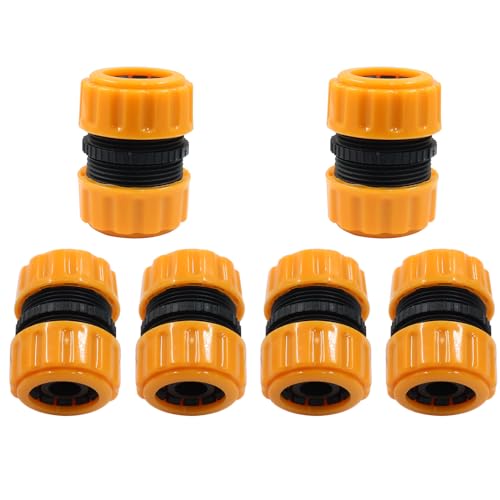
For bigger properties, this six-set Rierdge kit keeps you ready. It fits both 3/4″ and 5/8″ hoses, so you can rescue older lines and newer ones alike. The couplers double as extenders when you want to join two short hoses. It’s a nice way to rethink the garden hose 3/4 vs 5/8 plan without buying all new gear.
The included clamps are generous and grip well with a proper tighten. The connectors are straightforward, which makes fast work of repairs. I like the value here for landscapers or busy DIYers. It lets you standardize repairs across a mix of hoses and brands.
Pros:
- Six full repair sets for large yards
- Works for both 3/4″ and 5/8″ hoses
- Can be used as extenders to join hoses
- Easy to install in minutes
- Good cost per repair
Cons:
- Aluminum may wear faster than brass under heavy use
- No swivel feature on ends
- Clamps can snag if not trimmed or aligned
My Recommendation
Pick this if you maintain several hoses and want a stockpile of fixes. It fits the garden hose 3/4 vs 5/8 reality of most yards and crews. The extenders help you combine lengths for seasonal needs. It’s a workmanlike kit that earns its keep fast.
| Best for | Why |
|---|---|
| Large properties | Six sets reduce downtime |
| Landscapers | Fits both common hose sizes |
| Joining hose runs | Couplers double as extenders |
Hooshing 5/8″ Barb to 3/4″ GHT Swivel (2-Pack)

This Hooshing pair uses a 5/8″ barb and a 3/4″ GHT female swivel in solid brass. The swivel is the star here. It reduces hose twist when you connect to faucets, timers, or filters. For a 5/8″ line, it gives you premium feel and fewer kinks.
The brass build is robust and seals up nicely with standard washers. The clamps are sturdy, and the swivel action makes everyday use smoother. If you run long 5/8″ hoses and want cleaner hookups, it’s a smart upgrade. You also sidestep wear from repeated twists.
Pros:
- Solid brass for longevity and sealing
- Swivel female end reduces twisting and kinks
- 5/8″ barb mates to common household hoses
- Threads fit standard 3/4″ GHT accessories
- Great feel during daily connections
Cons:
- Not designed for 3/4″ hose bodies
- Heavier than aluminum options
- Two-pack may not cover multiple break types
My Recommendation
Choose this if you want a smoother connection on a 5/8″ hose. It’s a polished answer within the garden hose 3/4 vs 5/8 conversation because it brings 3/4″ thread convenience to a 5/8″ line with a swivel. If you use timers or backflow devices, this makes life easier. It feels premium and lasts.
| Best for | Why |
|---|---|
| 5/8″ hoses at taps | Swivel resists twists and binding |
| Frequent connect/disconnect | Brass threads wear well |
| Timers and filters | Smoother alignment prevents stress |
DBR Tech Metal Hose Repair Kit, 5/8″ & 3/4″ (4-Set)

This 4-set DBR Tech kit brings the same heavy-duty feel as the 2-set, with double the coverage. It handles both 5/8″ and 3/4″ hoses, so you can standardize repairs across your tools. I like the sturdiness when hoses feed sprinklers far from the faucet. Threads and seals hit above the price point.
If you’re upgrading fittings as you go, this kit keeps you consistent. It is especially helpful if you’re comparing garden hose 3/4 vs 5/8 performance and switching sizes in parts of the yard. The fittings take repeated use in stride. A good pick for a primary repair kit.
Pros:
- Four sets for better coverage across hoses
- Metal construction endures rough use
- Fits both 3/4″ and 5/8″ hoses
- Works with most sprinklers and nozzles
- Leak-resistant seals with proper tightening
Cons:
- Heavier than budget kits
- Overkill for very light, occasional use
- No integrated swivels
My Recommendation
Go with this if you want one kit to rule your shed. It suits owners who juggle garden hose 3/4 vs 5/8 lines and want consistent, rugged repairs. Great for big yards, small farms, or anyone who waters daily. It’s the reliable middle ground between price and performance.
| Best for | Why |
|---|---|
| Daily watering and washdowns | Sturdy fittings handle heavy use |
| Mixed-size systems | Supports 3/4″ and 5/8″ hose bodies |
| Primary repair kit | Four sets cover seasonal needs |
Sanpaint Brass Hose Repair Connectors (2 Sets)

If you like the feel of brass but do not need a big bundle, this 2-set is just right. It fits 3/4″ or 5/8″ hoses and includes clamps. The connectors thread on cleanly and seal well with a standard gasket. For the price, the build quality is excellent.
I like this as a glovebox kit for garden carts or a backup set in the garage. It plays well with nozzles, splitters, and inline filters. If your watering day goes sideways, you can fix the issue in minutes. The garden hose 3/4 vs 5/8 question becomes simple when the fittings just work.
Pros:
- Brass build for durability and better threading
- Fits both common hose sizes
- Two sets for key repair points
- Solid value for brass hardware
- Works smoothly with standard accessories
Cons:
- Not a large-coverage kit
- Heavier than aluminum
- Often not certified for drinking water
My Recommendation
Pick this if you want brass quality without overbuying. It’s ideal when you run both sizes and want fittings that feel premium. In the garden hose 3/4 vs 5/8 debate, this kit sits in the middle and solves the real issue: leaks and bad threads. Keep it nearby and save your weekend.
| Best for | Why |
|---|---|
| Backup repair solution | Two sets handle common breaks |
| Quality connections | Brass threads feel smoother |
| Mixed hose homes | Clamps fit 3/4″ and 5/8″ |
Heavy-Duty Aluminum Hose Repair Fittings (4-Pack)

This 4-pack focuses on heavy-duty aluminum with both male and female couplers. It fits 3/4″ or 5/8″ hoses and includes clamps to secure the barb. The body is rugged enough for frequent dragging across concrete or gravel. If you need an affordable, tough fix, it’s a smart pick.
I like the balance of weight and strength here. The metal is thick enough to resist dings while staying easy to handle. For garden hose 3/4 vs 5/8 households, one box covers most basic breaks. The connectors pair well with nozzle sets and Y-splitters.
Pros:
- Heavy-duty aluminum in a budget-friendly pack
- Works with 3/4″ or 5/8″ hose diameters
- Male and female ends included
- Good resistance to knocks and scuffs
- Easy install with basic hand tools
Cons:
- Threads can wear faster than brass
- No swivel features included
- Clamps may need re-tightening under high flow
My Recommendation
Go for this if you want simple, strong repairs for a fair price. It is a practical answer to garden hose 3/4 vs 5/8 repairs when you just need it to work. Keep a set in the shed, and you’ll save older hoses. It’s the quiet helper that stops leaks and keeps you watering.
| Best for | Why |
|---|---|
| Budget heavy-duty fixes | Thicker aluminum body resists abuse |
| Mixed hose sizes | Fits 3/4″ and 5/8″ hoses |
| Spare parts bin | Four connectors cover most emergencies |
FAQs Of garden hose 3/4 vs 5/8
Which size should I buy for a typical suburban yard?
Choose 5/8″. It balances flow, weight, and cost. It works well for standard sprinklers and nozzles.
Does a 3/4″ hose increase water pressure?
No. It reduces pressure loss. You get more flow and less drop across long runs, but it doesn’t raise source pressure.
When is a 3/4″ hose worth it?
Pick 3/4″ for long distances, multiple sprinklers, high-flow tasks, or to feed a pressure washer inlet without starving it.
Are 3/4″ and 5/8″ fittings compatible?
Yes. Most hose ends and spigots use 3/4″ GHT threads. The difference is the hose’s inside diameter, not the thread size.
Will a 3/4″ hose be heavier and stiffer?
Yes. It is heavier and can be stiffer, especially in cold weather. Store it on a reel for easier handling.
Final Verdict: Which Should You Buy?
For most homes, 5/8″ is the better daily choice. It is light, flexible, and delivers enough water for common tasks.
For peak performance, 3/4″ wins the garden hose 3/4 vs 5/8 head-to-head. Choose it for long runs, multiple sprinklers, or high-flow tools.