
Average Gallons Per Minute Garden Hose: Flow Rates & Tips
Most garden hoses flow about 8–12 gallons per minute at typical home pressure.
Curious why your hose fills a bucket fast one day and slow the next? You’re in the right place. I’ve tested dozens of hoses, set up home irrigation, and tuned many hose bibs. In this guide, we’ll unpack the average gallons per minute garden hose flow, what changes it, and how to measure and fine-tune yours for better watering, faster fills, and less waste.
What gallons per minute really means
Gallons per minute, or GPM, is simple. It’s how much water your hose delivers each minute. Think of it like speed for water. Higher GPM means faster filling and stronger spray.
Your faucet pressure, hose size, hose length, and nozzle all change GPM. The average gallons per minute garden hose value you see online is a range because homes and setups vary a lot.
A quick note on pressure: most homes sit between 40 and 60 psi. If your pressure is on the low end, your flow will drop. If it’s high, your flow can jump.
The average gallons per minute garden hose by size and setup
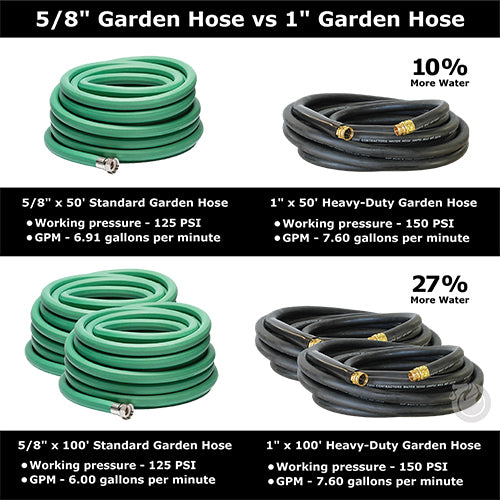
Here are practical ranges I see in real yards and documented in plumbing data and manufacturer tests. These assume a healthy hose, a full-open spigot, and about 40–60 psi at the hose bib.
- 1/2 inch hose: about 5–9 GPM
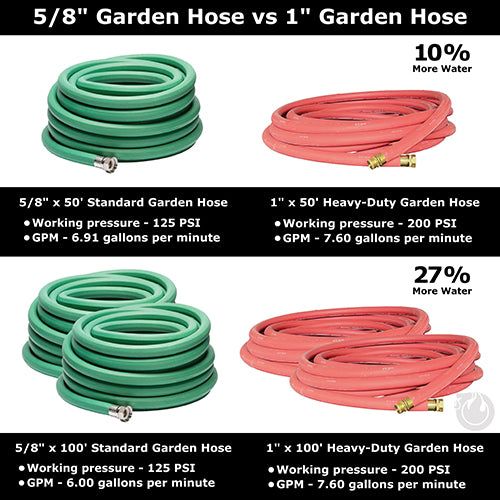
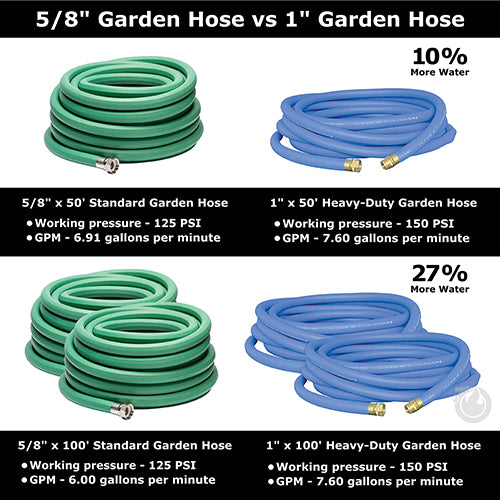
- 5/8 inch hose: about 8–13 GPM
- 3/4 inch hose: about 12–18 GPM (if your supply can keep up)
Hose length matters too. Longer hoses add friction and slow the flow. As a rule of thumb, every extra 50 feet can shave 1–3 GPM from a 5/8 inch hose. Kinks, tight coils, and cheap nozzles can cut even more.
So when people ask, “What is the average gallons per minute garden hose?” a fair, real-world answer is 8–12 GPM for a standard 5/8 inch hose on a typical home spigot.
What changes hose flow: the big four
Many little things add up. Focus on these four first.
- Pressure at the spigot. Lower pressure means lower GPM. High-rise condos and rural wells often run lower than suburb homes.
- Hose diameter. Bigger diameter moves more water with less friction.
- Hose length. More length equals more friction and less GPM.
- Restrictions. Nozzles, shut-off valves, splitters, backflow devices, and quick-connects can all pinch flow.
Other factors matter too.
- Elevation gain. Water going uphill loses pressure fast.
- Water temperature. Cold water is a bit thicker and can flow a touch slower.
- Debris. Sediment in screens and fittings reduces flow.
Dialing in these basics is the fastest way to hit the average gallons per minute garden hose range you want.
How to measure your GPM in two minutes
You do not need a fancy meter. Use a bucket and a timer.
- Grab a 5-gallon bucket.
- Remove the nozzle so the hose end is wide open.
- Open the spigot fully. Start a timer as soon as water hits the bucket.
- Stop at the exact moment the bucket reaches 5 gallons.
- Do the math: GPM = 5 ÷ fill time in minutes.
If you only have a 2-gallon pail, use that. Repeat twice and average the results. This bucket test gives you your true average gallons per minute garden hose number at your house, not a guess from a chart.
Personal tip: I run the test with and without my favorite nozzle. The drop tells me how much that nozzle restricts flow.
Match GPM to common yard jobs
Right-sizing flow saves time and water. Here’s how I think about tasks.
- Hand watering flowers. 2–6 GPM with a gentle nozzle. You want a soft pattern.
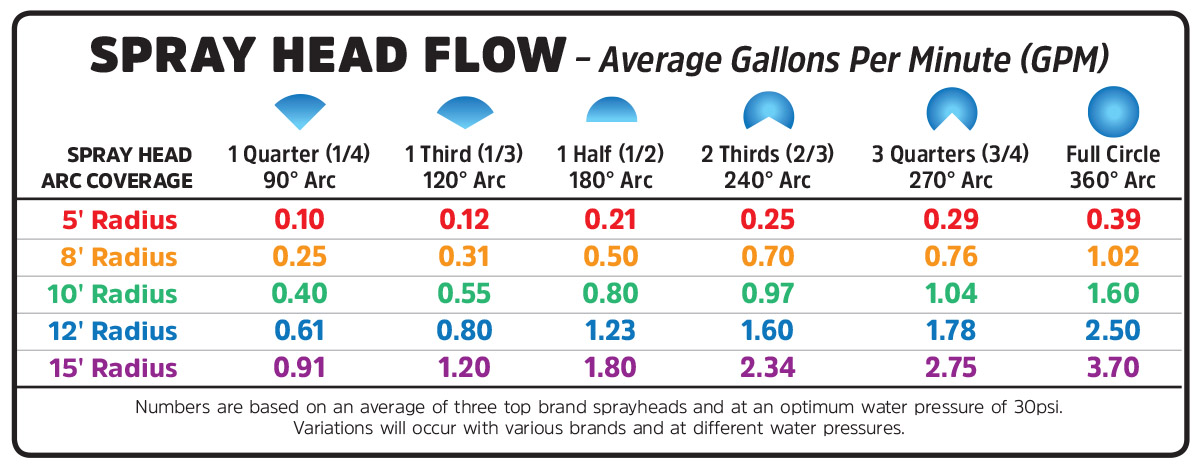
- Lawn sprinklers. Many need 2–4 GPM each. Check your sprinkler’s spec and count heads.
- Filling a pool or stock tank. More GPM is better. A 3/4 inch hose can save hours.
- Car washing. 6–10 GPM gives fast rinse and better foam cannon action.
- Pressure washers. Most homeowner units expect 2–3 GPM at a minimum. Use a short, wide hose to feed them.
If your jobs run slow, step up hose diameter or shorten hose length. The average gallons per minute garden hose that “feels right” for you will match the work you do most.

Hose diameter, materials, and fittings
Not all hoses are equal. Small design choices change GPM more than you think.
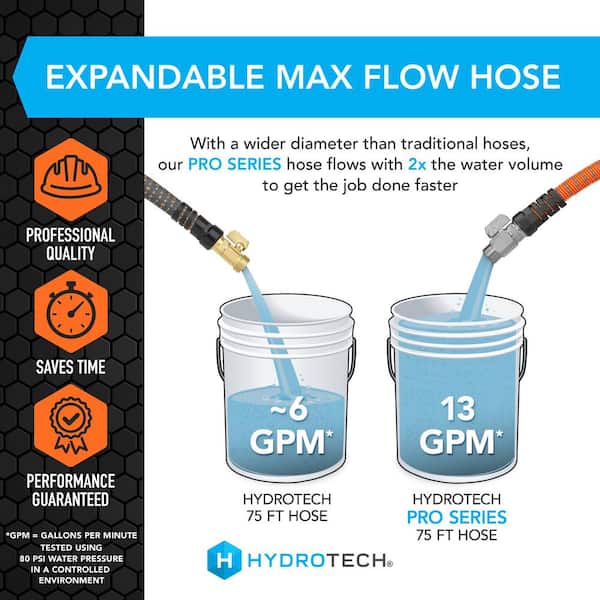
- Diameter. 5/8 inch is the sweet spot for most homes. 3/4 inch shines for long runs, high demand, or low pressure.
- Material. Rubber or heavy-duty hybrid hoses keep a round shape under pressure. Cheap vinyl hoses oval out and kink, which cuts flow.
- Fittings. Full-bore brass fittings outflow narrow, stamped fittings. Quick-connects are handy, but some are very restrictive.
- Kink resistance. Fewer kinks means more steady GPM.
Pro tip from my installs: I use 3/4 inch hose for the first 25–50 feet from the spigot, then switch to 5/8 inch. It holds the average gallons per minute garden hose rate higher across the run.
Nozzles, sprayers, and valves: hidden flow killers
A nozzle boosts velocity, not volume. It can feel “strong” while actually lowering GPM. That is fine for washing mud, but not great for filling or deep watering.
What to look for:
- Fireman-style nozzles often have larger internal bores and better flow.
- Pistol grips vary a lot. Some have narrow throats that choke GPM.
- Y-splitters and shut-offs should be full-port. If the opening looks tiny, it is.
When you care about the average gallons per minute garden hose performance, test your setup open-ended and then with your nozzle on. Choose gear that keeps the drop small.

Pressure, friction loss, and simple math made friendly
Friction steals pressure as water rubs the hose wall. Long, narrow hoses lose more. Big, short hoses lose less. That is why a 3/4 inch hose can keep strong flow over distance.
A few simple guides I use:
- Every 50 feet of 5/8 inch hose can cost about 1–3 GPM, depending on pressure and fittings.
- Each sharp restriction can cost another 0.5–2 GPM.
- GPM rises when pressure rises, but fittings and hose size still set the ceiling.
You do not need formulas to win here. Keep hoses as short and wide as you can. Minimize kinks and cheap connectors. That alone lifts the average gallons per minute garden hose rate in most homes.
Save water without losing results
High GPM is great for filling and rinsing. But smart control saves money and plants.
- Add a shut-off at the hose end so you do not walk back and forth.
- Use a watering wand with a gentle shower for beds. Less splash, better soak.
- Try a flow-control valve to fine-tune GPM on the fly.
- Water early in the morning to cut loss from sun and wind.
- For beds and shrubs, consider drip lines. They use low GPM, but aim water right at roots.
You can hold the average gallons per minute garden hose where you need it and still cut waste. The trick is using the right tool for the job.
Fixing low flow: fast checks I use
Low flow is common. Work through these quick wins.
- Open the spigot fully. Half-open valves are a sneaky culprit.
- Remove the nozzle. Test open-ended to see your true baseline.
- Straighten the hose. Clear kinks, tight coils, and pinch points.
- Clean screens. Many nozzles and Y-splitters hide little filters that clog.
- Shorten the run. Test with a 25-foot hose. If GPM jumps, length is your issue.
- Try a wider hose. Step up to 5/8 inch or 3/4 inch near the spigot.
- Check pressure. A cheap gauge on the hose bib tells you if supply is low.
If these do not help, your hose bib, pressure regulator, or supply line may be the choke. That will hold down the average gallons per minute garden hose no matter what hose you buy.
Frequently Asked Questions of average gallons per minute garden hose
What is the standard GPM for a garden hose?
Most 5/8 inch hoses deliver about 8–12 GPM at 40–60 psi. Your exact number depends on hose length, fittings, and the faucet.
Does hose diameter really change GPM that much?
Yes. A 3/4 inch hose can flow several more GPM than 5/8 inch, especially on long runs. Bigger hose reduces friction and keeps pressure higher.
How do I increase my garden hose GPM?
Use a shorter, wider hose and remove restrictive nozzles or splitters. Check for kinks, clean screens, and verify your home pressure with a gauge.
Will a high-pressure nozzle increase my GPM?
No. It increases jet speed but often lowers GPM. For faster filling, run the hose open-ended or use a high-flow nozzle.
How long will it take to fill a pool with my hose?
Time = pool gallons ÷ your GPM. For example, 5,000 gallons ÷ 10 GPM is about 500 minutes, or 8.3 hours.
Is my home’s water pressure limiting my hose flow?
It might be. Many homes sit at 40–60 psi. If you are under 40 psi, expect lower GPM even with a large hose.
Conclusion
Here is the bottom line: a typical 5/8 inch hose on a home spigot will land near 8–12 GPM, and small choices decide whether you hit the high or low end. Keep hoses short and wide, clear restrictions, and choose better fittings to lift the average gallons per minute garden hose where you need it.
Measure your own flow with a bucket today. Then tune one or two things and test again. Small tweaks can save hours on fills and keep your plants happier. If this helped, subscribe for more practical yard tips or drop a comment with your GPM and setup—I’d love to help you optimize it.


