

Garden Hose Fitting Size Chart: Sizes & Threads 2026
Most garden hoses use 3/4-inch GHT threads; hoses vary by inner diameter.
If you have ever stood in the aisle holding two fittings that almost—but not quite—match, this guide is for you. I’ll break down the garden hose fitting size chart in plain language, show you how to measure parts, and help you pick the right adapter the first time. You’ll learn how GHT, NPT, and BSP threads differ, how hose inner diameter affects flow, and the exact sizes that stop leaks and cross-threading. I work with hoses and adapters in real projects each season, and the tips here come from hands-on use as well as standards and best practices.
Thread standards you must know before using the garden hose fitting size chart
To use any garden hose fitting size chart well, start with the names and what they mean.
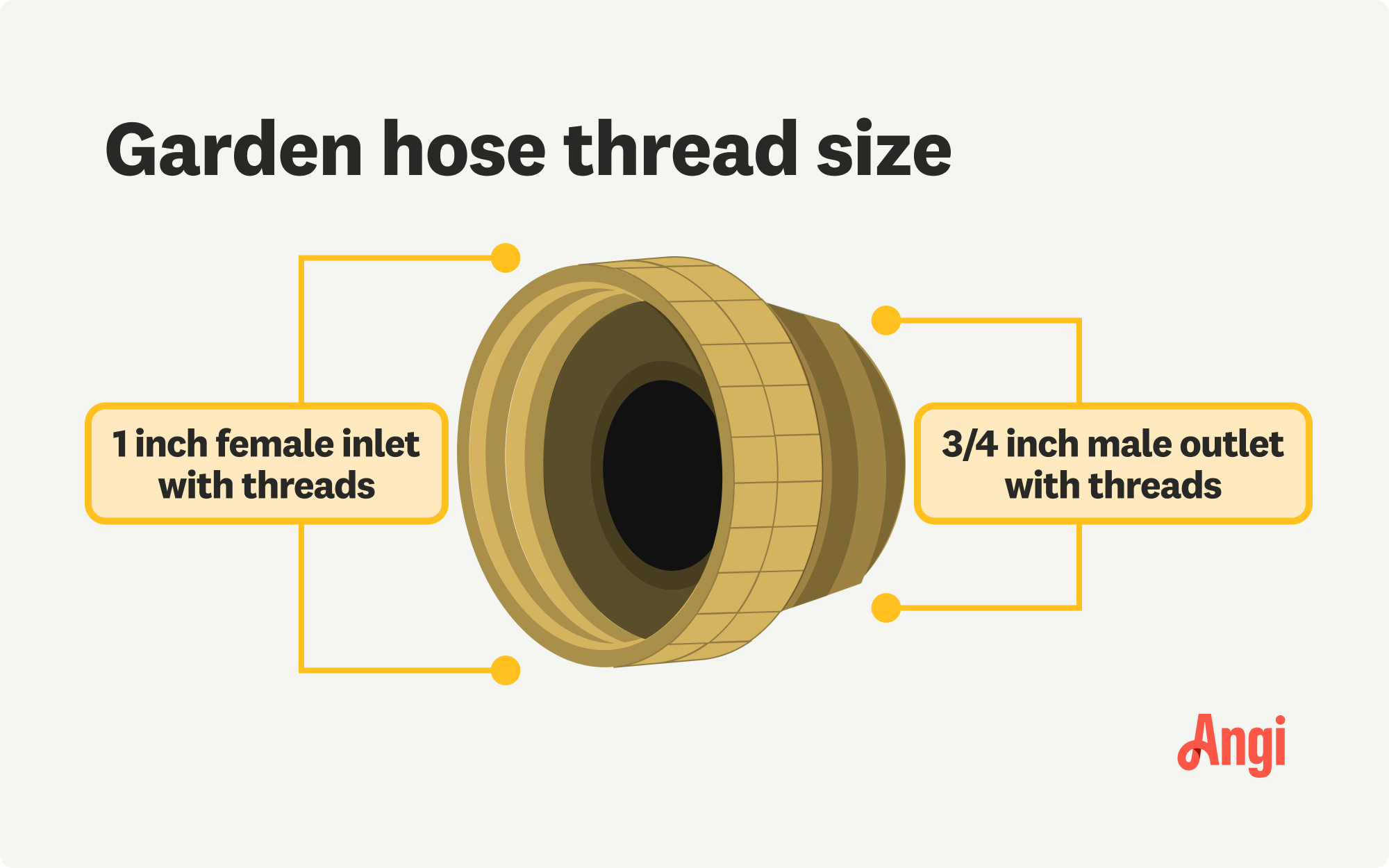
- GHT or NH: Garden Hose Thread (also called National Hose). Size is 3/4-11.5. It is straight thread and seals with a flat washer. Most outdoor spigots and hose ends in the U.S. use this.
- NPT: National Pipe Taper. Tapered pipe thread. It seals on the threads with thread sealant. It is not the same as GHT. Common sizes are 1/2 NPT and 3/4 NPT on plumbing and pumps.
- BSP: British Standard Pipe. BSPP is parallel. BSPT is tapered. Used on gear from the UK, EU, and some import tools. Do not mix BSP with NPT or GHT without an adapter.
- Male vs female: Male has external threads. Female has internal threads. Hose female swivels often have a captive washer that makes the seal.
- ID vs OD: Hose size (1/2, 5/8, 3/4) is inner diameter of the hose. The thread on the ends is still 3/4 GHT for most garden hoses.
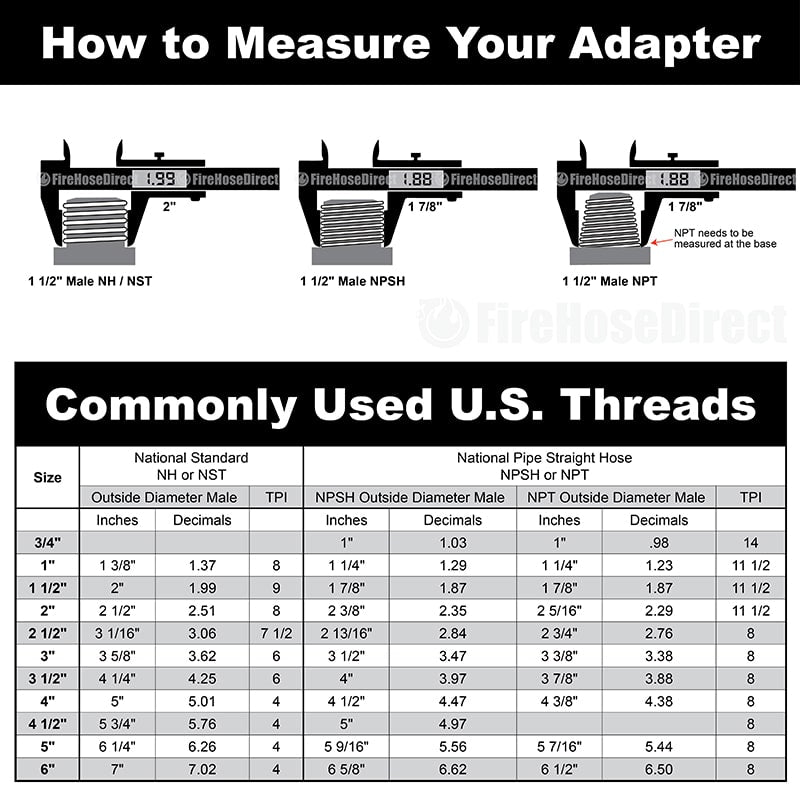
Expert note: GHT is defined by industry standards and uses 11.5 threads per inch. A male 3/4 GHT measures about 1-1/16 inches (1.06 inches) on the outside of the threads.
Garden hose fitting size chart: common sizes, matches, and adapters
Think of this garden hose fitting size chart as your field guide. It maps the most used sizes, how they fit, and what to buy.
Common hose inner diameters (ID) and where they shine
- 1/2 inch ID: Light flow. Good for short runs, soaker hoses, and hand watering.
- 5/8 inch ID: Most common for homes. Good balance of flow and weight.
- 3/4 inch ID: High flow. Best for pressure washers, big sprinklers, and long runs.
Thread basics you will see on almost every setup
- 3/4-11.5 GHT (NH): The default garden hose thread for spigots, hose ends, nozzles, and splitters in the U.S.
- 1/2 NPT and 3/4 NPT: Pipe thread you find on pumps, filters, and hard plumbing.
- BSPP/BSPT (varies): On some import valves, pressure washers, and tank fittings.
Quick reference “chart” for matchups
- Spigot to hose: Spigot male 3/4 GHT to hose female 3/4 GHT. Use a fresh flat washer.
- Hose to nozzle/sprinkler: Hose female 3/4 GHT to nozzle male 3/4 GHT. 11.5 TPI.
- Hose to pipe (NPT): Use a 3/4 GHT female to 3/4 NPT male adapter. Add PTFE tape on the NPT only.
- Pipe to hose: Use 1/2 or 3/4 NPT to 3/4 GHT male adapter. Washer seals at the GHT side.
- BSP to GHT: Use a dedicated BSP-to-GHT adapter. Check if BSP is parallel (BSPP) or tapered (BSPT).
- Faucet aerator to hose: Use an aerator-to-3/4 GHT adapter (check for male or female aerator).
Washer and O-ring sizes that stop leaks
- Standard garden washer for 3/4 GHT: About 1 inch OD with a 5/8 inch hole. Use rubber, silicone, or fiber. Replace when cracked or hard.
- For quick-connects: Match the O-ring size in the coupler set. Keep spares on hand.
Flow clues from the size chart
- 1/2 inch hose: About 4–8 GPM at typical home pressure.
- 5/8 inch hose: About 8–12 GPM.
- 3/4 inch hose: About 12–18 GPM. Real flow depends on length, fittings, and pressure.
Pro tip from experience: If a part “almost” threads on but binds, stop. You likely have NPT or BSP, not GHT. Reach for the right adapter. The garden hose fitting size chart saves threads, time, and money.
How to measure your hose and fittings with simple tools
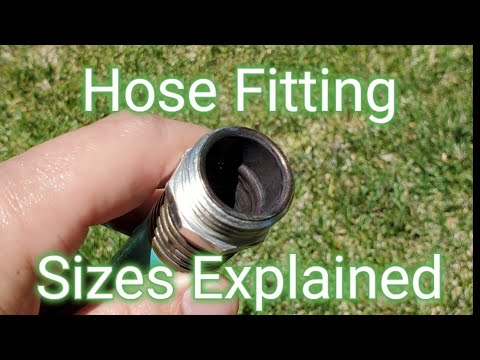
A ruler, a coin, and your phone light can tell you a lot. Use this process any time you are not sure.
- Check gender first: Is it male or female? Most hose ends are female swivels.
- Measure hose ID: Remove the fitting and measure the inside of the hose. It will be 1/2, 5/8, or 3/4 inch.
- Measure thread OD: For a male garden hose fitting, the outside is about 1.06 inches if it’s 3/4 GHT.
- Count threads per inch: Lay a ruler over the threads. GHT is 11.5 TPI. NPT varies by size, and BSP usually does not match U.S. counts.
- Look at the seal: GHT seals on a flat washer. NPT seals on the thread. If you see a flat seat inside the female side, it’s likely GHT.
If you need to be exact, a cheap digital caliper helps. But this garden hose fitting size chart plus a ruler solves most cases.

Choosing the right adapters and reducers using the chart
When in doubt, map parts to the garden hose fitting size chart, then pick the adapter that bridges the standards.
- GHT to NPT: For a pump with 3/4 NPT female, use a 3/4 GHT female to 3/4 NPT male adapter. Seal NPT with PTFE tape or paste.
- NPT to GHT: For a filter with 1/2 NPT male, use a 1/2 NPT female to 3/4 GHT male adapter. The GHT side seals with a washer.
- BSP to GHT: Use a BSPP or BSPT to 3/4 GHT adapter. Confirm BSP type and size first.
- Size downs and ups: Use GHT-to-GHT reducers (for example, 3/4 GHT male to 1/2 GHT female) only when the device is made for it. True GHT is 3/4, so most “reducers” change to pipe or specialty threads.
- Quick-connects: Standard garden quick-connect sets are 3/4 GHT based. Keep a set on each tool to swap fast.
Personal tip: I label odd adapters with a paint pen. Next season, I do not have to guess. The garden hose fitting size chart becomes second nature.

Materials, sealing, and durability: what actually lasts
Good parts seal right and last longer. The chart tells size; material choice does the rest.
- Brass: Strong, corrosion resistant, and threads well. My go-to for spigots, splitters, and adapters.
- Stainless steel: Best for harsh water and high duty. Costs more but is very tough.
- Plastic/nylon: Light and cheap. Fine for low stress uses. Hand-tighten only to avoid cracks.
- Washers: Rubber is common. Silicone stays soft longer. Fiber works in heat. Replace when flattened.
- Sealants: Use PTFE tape or paste on NPT only. Do not use sealant on GHT; the flat washer makes the seal.
If a GHT joint leaks after you snug it, replace the washer first. Nine times out of ten, that fixes it. The garden hose fitting size chart helps you pick the right parts, but the washer often makes the seal.

Troubleshooting with the garden hose fitting size chart
If it drips or won’t thread, walk this quick list.
- Cross-threading: If the fitting cocks to one side, back off and realign. GHT should spin on by hand, then snug.
- Mystery leak at swivel: Replace the flat washer. Check for a hairline crack in the female swivel.
- Drip at pipe threads: Re-wrap NPT threads with PTFE tape. Three to five wraps, clockwise as you face the male threads.
- Low flow: Check hose ID, kinks, and undersized adapters. A 1/2 inch hose will choke a big sprinkler. The chart points you to a 5/8 or 3/4 inch hose.
- Stuck fitting: Add a drop of penetrating oil, hold the female side, and turn the male. Use smooth-jaw pliers to protect the hex.
I once “fixed” a leak by wrenching harder. It cracked the plastic splitter. Lesson learned: let the washer do the work, and let the garden hose fitting size chart guide the match.

Real-world examples and pro tips from the field
These quick wins come from years of weekend jobs and site work.
- Set up a pressure washer: Many light-duty units use 3/4 GHT for the inlet and M22 or BSP for the high-pressure line. Check the tag, then use the right GHT-to-NPT or GHT-to-BSP adapter.
- Feed a drip system: Start with a 3/4 GHT Y-splitter. One leg to a timer, then to a reducer and filter. The chart helps you move from GHT to 1/2 NPT, then to barbed drip fittings.
- Run a long sprinkler line: Use a 3/4 inch ID hose for long runs. Keep all ends 3/4 GHT with brass quick-connects. Flow stays strong.
- Keep a kit: I carry 3/4 GHT washers, 3/4 GHT female-to-3/4 NPT male, 1/2 NPT-to-3/4 GHT male, and a BSPP-to-GHT adapter. With that, I solve 90% of surprises.
Write down what worked and what did not. Your own garden hose fitting size chart will grow with each job.

Pressure, flow, and performance basics tied to the chart
Size choices affect flow, pressure drop, and wear.
- Typical home pressure: About 40–60 psi. Most garden hoses have a burst rating of 200–600 psi but are not meant for that in use.
- Flow by size: Larger ID moves more water with less drop. Use 3/4 inch ID for long runs or big heads.
- Fitting count: Each elbow, splitter, or quick-connect adds loss. Keep runs simple.
Match hose ID and thread type with the garden hose fitting size chart, and your tools will run better with less fuss.

Frequently Asked Questions of garden hose fitting size chart
What size are standard U.S. garden hose fittings?
Most garden hose ends and spigots use 3/4-11.5 GHT (NH). The hose ID is often 5/8 inch, but the thread is still 3/4 GHT.
How do I tell GHT from NPT?
GHT is straight thread and seals with a flat washer. NPT is tapered and needs PTFE tape or paste to seal.
Can I connect BSP to U.S. garden hose threads?
Yes, but you need a BSP-to-GHT adapter. Check if the BSP side is parallel (BSPP) or tapered (BSPT) before you buy.
Do I need thread tape on garden hose fittings?
Use tape only on NPT threads. Do not use tape on GHT; a flat washer makes that seal.
What hose size gives the best flow for sprinklers?
A 3/4 inch ID hose gives the best flow, especially for long runs. It pairs with standard 3/4 GHT ends.
Why does my new nozzle still leak at the swivel?
The washer is likely worn, missing, or the wrong size. Replace it and hand-tighten the fitting.
What is the OD of a 3/4 GHT male fitting?
About 1-1/16 inches (1.06 inches). This matches the 3/4-11.5 GHT standard.
Conclusion
You now have the key sizes, terms, and steps to pick the right parts with confidence. Use the garden hose fitting size chart to match GHT, NPT, and BSP, choose the right hose ID for flow, and seal joints the right way. A good washer, the right adapter, and a light touch go a long way.
Take five minutes to audit your setup today. Swap worn washers, label odd adapters, and note your hose IDs. If this guide helped, share it, subscribe for more practical how-tos, or leave a comment with your trick for tricky fittings.


