How Often To Change Chainsaw Chain: 2026 Pro Guide
Replace your chainsaw chain after 3–5 sharpenings or when teeth reach witness marks.
If you want a simple, safe, and accurate rule for how often to change chainsaw chain, you’re in the right place. I’ve logged hundreds of hours in the woods and on job sites, and I’ve learned what really shortens chain life, what you can fix with a quick sharpen, and when replacement is non‑negotiable. Read on for a clear plan you can trust, backed by field experience and industry best practices.

How often to change chainsaw chain, explained simply
The right interval depends on how and what you cut. For most homeowners, a chain lasts a season or two. For frequent users who sharpen often, expect 3–5 sharpenings before metal loss and stretch demand a new chain.
Use this practical plan:
- Casual cutting: Replace every 12–20 hours of clean wood cutting, or when teeth hit the witness mark.
- Regular firewood work: Replace after 3–5 full sharpenings, or when bar oiling and tension no longer hold well.
- Professional or dirty wood: Replace as soon as teeth dull fast even after sharpening, or after 1–3 heavy jobs.
This approach gives a reliable answer to how often to change chainsaw chain while keeping you safe and productive.

The factors that change your timeline
Your chain’s life is shaped by the work you do, not the calendar.
- Wood species and condition: Dry hardwoods like oak and hickory wear cutters faster than green softwoods. Muddy, bark-heavy logs act like sandpaper.
- Hitting the ground: One quick tap into soil or gravel can dull a fresh edge in seconds.
- Sharpening skill: Clean, even filing extends life. Aggressive filing removes too much metal and shortens the timeline for how often to change chainsaw chain.
- Lubrication and tension: Low bar oil or poor tension builds heat, stretch, and premature wear.
- Bar and sprocket health: A worn bar groove or drive sprocket chews up an otherwise healthy chain.
These inputs explain why two users can have very different answers to how often to change chainsaw chain.
Clear signs you should replace the chain now
Do not wait on these red flags. The cost of a new chain is far less than a kickback injury or a burned-out saw.
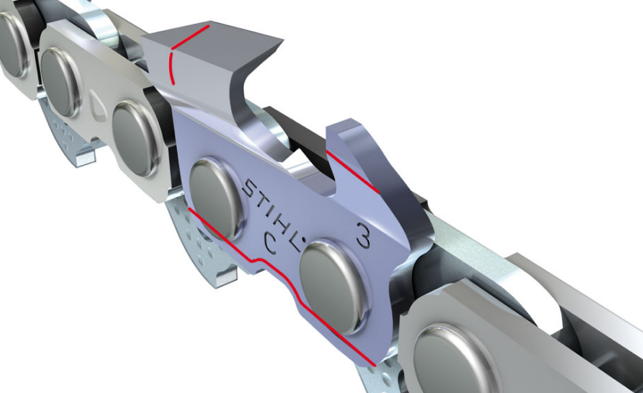
- Teeth at or near the witness mark: When cutter length meets the stamped line, safe geometry is gone.
- Cracked or loose rivets: Structural failure risk rises fast.
- Drive links mushroomed or blue: Overheating has softened the metal; the chain won’t hold an edge.
- Stretch that will not tension: If the adjuster runs out of travel, the chain is done.
- Uneven cutters beyond correction: If one side is far shorter, the saw pulls and increases kickback risk.
If you see any of these, that is your hard stop for how often to change chainsaw chain.

How long a chain lasts by user type
Use these ranges as a starting point, then adjust for your wood, climate, and habits.
- Occasional homeowner: 1 chain can last 1–2 seasons with 2–4 light sharpenings.
- Weekend firewood cutter: Expect 3–5 sharpenings per chain per season, then replace.
- Landowner clearing fence lines: Dirt, wire, and posts shorten life to a few jobs per chain.
- Arborist or pro: One chain may last days, or just hours, depending on site conditions.
These real-world windows line up with how often to change chainsaw chain for most users I’ve trained and worked with.
Sharpen or replace? A simple rule of thumb
Ask three quick questions before you toss a chain.
- Does a standard sharpen restore bite for at least one tank of fuel? If yes, keep it.
- Are cutter teeth still above the witness mark and even left to right? If yes, keep it.
- Can you tension the chain mid-rail with proper sag and lubrication? If yes, keep it.
If any answer is no, that is your moment for how often to change chainsaw chain.

How to inspect your chain step by step
A 90-second check avoids bigger problems.
- Clean the bar and chain. Brush off chips and grit so you can see wear points.
- Check cutter length. Look for the witness mark on the top plate.
- Inspect depth gauges. They should be even and not over-filed.
- Look at drive links. No cracks, peening, or blue heat marks.
- Test tension. Pull the chain mid-bar; it should snap back and show a hair of the drive link.
- Spin by hand with gloves. It should roll smooth, without binding spots.
- Confirm oiling. Run the saw briefly; a fine line of oil on wood means the oiler works.
Run this routine each time you fuel up. It sharpens your sense of how often to change chainsaw chain for your exact setup.

Maintenance habits that extend chain life
Small habits add hours of safe cutting.
- Keep it out of the dirt. Use a bucking stand or wedges to elevate logs.
- Oil generously. Verify bar oil flow every time you refuel.
- Touch up often. A few strokes with a file after each tank keeps teeth cool and sharp.
- Match file size and angle. Use guides when learning; consistency beats speed.
- Rotate chains. Keep two or three chains and swap them as they dull. This evens bar wear.
With these practices, you will go longer between replacements and gain a clearer sense of how often to change chainsaw chain under your workload.
Safety and performance risks of waiting too long
A worn chain makes every job harder and more dangerous.
- Higher kickback risk: Short or uneven cutters disrupt the safety profile.
- Overheating: Dull teeth force you to push. Heat builds in the bar, chain, and clutch.
- Crooked cuts: The saw wanders and binds, which strains your body and your saw.
- Costly repairs: Worn chains eat bars and sprockets. A $25 mistake becomes a $150 fix.
These risks are why pros have a strict sense of how often to change chainsaw chain, even when a chain still “sort of” cuts.
Cost comparison and smart budgeting
Think about the whole cutting system, not just the chain.
- Chains: Plan 2–4 chains per year for active firewood use. Casual users may need 1 chain every 1–2 years.
- Bars: Replace or flip the bar if rails spread, the groove is shallow, or the nose sprocket binds.
- Sprockets: Change the drive sprocket every 2 chains to prevent accelerated wear.
When you plan costs this way, you get a predictable cycle for how often to change chainsaw chain and fewer surprise repairs.
Common mistakes to avoid
I have made each of these at least once. Learn from my losses.
- Powering through dullness: Heat ruins temper. Stop and sharpen.
- Filing without a guide: Tiny angle errors add up to slow cutting and drift.
- Ignoring the rakers: After every 2–3 sharpens, check depth gauges so the edge can bite.
- Skipping bar maintenance: Clean, flip, and gauge the bar to prevent pinching and heat.
- Guessing tension: Check tension warm and cold. Recheck after the first few cuts.
Avoid these, and how often to change chainsaw chain becomes a steady, low-stress routine.
A quick field story for context
On a windstorm cleanup, I rotated three chains across two days. The site was gritty, with hidden sand in bark. I touched up every tank, but chain two hit a nail. Even after a careful sharpen, it would not hold an edge for more than a cut or two. I replaced it on the spot. That call saved the bar and kept our team on schedule. Experience like this shapes my guidance on how often to change chainsaw chain more than any spec sheet ever could.
Frequently Asked Questions of how often to change chainsaw chain
How often should I replace my chainsaw chain if I only cut a few times a year?
Plan on replacing every 12–20 cutting hours, or when teeth reach the witness mark. If you cut clean softwood, you may go longer.
Can I keep a chain after hitting a rock or nail?
Maybe, if damage is light and a full sharpen restores performance. Replace if cutters chip deeply, rivets loosen, or it dulls again in a few cuts.
How many times can I sharpen before replacing?
Most chains handle 3–5 full sharpenings before metal loss and geometry suffer. Stop sooner if cutters become uneven or very short.
Does bar oil really affect how often to change chainsaw chain?
Yes. Proper oiling reduces heat and wear, which slows stretch and preserves cutter temper. Low oil shortens chain life fast.
Should I replace the sprocket when I install a new chain?
Often, yes. A worn sprocket accelerates wear on a new chain. Many users replace the sprocket every two chains.
Conclusion
A good rule for how often to change chainsaw chain is simple: replace after 3–5 sharpenings, when cutters meet the witness mark, or anytime tension and oiling can’t keep it running cool and straight. Watch the signs, keep your file work consistent, and rotate chains to protect your bar and sprocket.
Make this your next step: inspect your current chain today, set a reminder to touch up after each tank, and keep a spare chain in the kit. Want more pro-level tips? Subscribe, ask a question, or share your own field lessons so we can all cut safer and faster.